
Key takeaways:
- Alternatives offer structurally differentiated return drivers and enhance portfolio efficiency. By tapping contractual cash flows, inefficiencies, and idiosyncratic factors rather than traditional market beta, alternatives can materially improve diversification.
- The case for alternatives is strengthening as traditional diversifiers become less reliable. Structural pressures on bonds and other safe havens are undermining their hedging role, while a higher-rate, more volatile environment is improving alpha opportunities across alternative strategies.
- Implementation remains complex, favouring integrated multi-alternative solutions. Given the challenges of access, liquidity, fees and manager dispersion, a diversified, actively managed multi-alternatives approach can provide a practical route to dynamic allocation, institutional-grade risk management, and broad exposure.
The ‘What?’ – Complexity meets opportunity
The universe of alternative asset classes is extremely diverse and can often be used as a catchall for anything that is not simply mainstream equities or bonds. After all, the name itself would imply that it is an ‘alternative’ to something, rather than a standalone proposition.
For this reason, building an allocation to alternatives can be difficult, and unlike these traditional asset classes, there are no obvious benchmarks or passive solutions to make life easier.
On top of this, many of the underlying components are inherently complex, requiring specialist knowledge and techniques to analyse them. Liquidity terms can also be a challenge, as are costs and charges, in what has historically been a more ‘fee-rich’ part of the market.
However, we believe that in the volatile and fast-paced environment we find ourselves in, alternatives are of growing importance. This stems not only from the belief that traditional portfolio diversifiers may be structurally challenged, but also that compelling total return opportunities are increasingly being found here.
Here, we outline the thinking behind these views, and how we believe a successful allocation to the asset class can be constructed.
The ‘Why?’ – The only free lunch is…
The textbook answer to ’why?’ is simply “diversification”, and while it may not be very original to say so, it is undoubtedly one of the great benefits of the asset class. Returns within alternatives are often driven by contractual cash flows, behavioural inefficiencies, or idiosyncratic factors – rather than traditional market betas – which can make them highly complementary to a multi-asset portfolio.
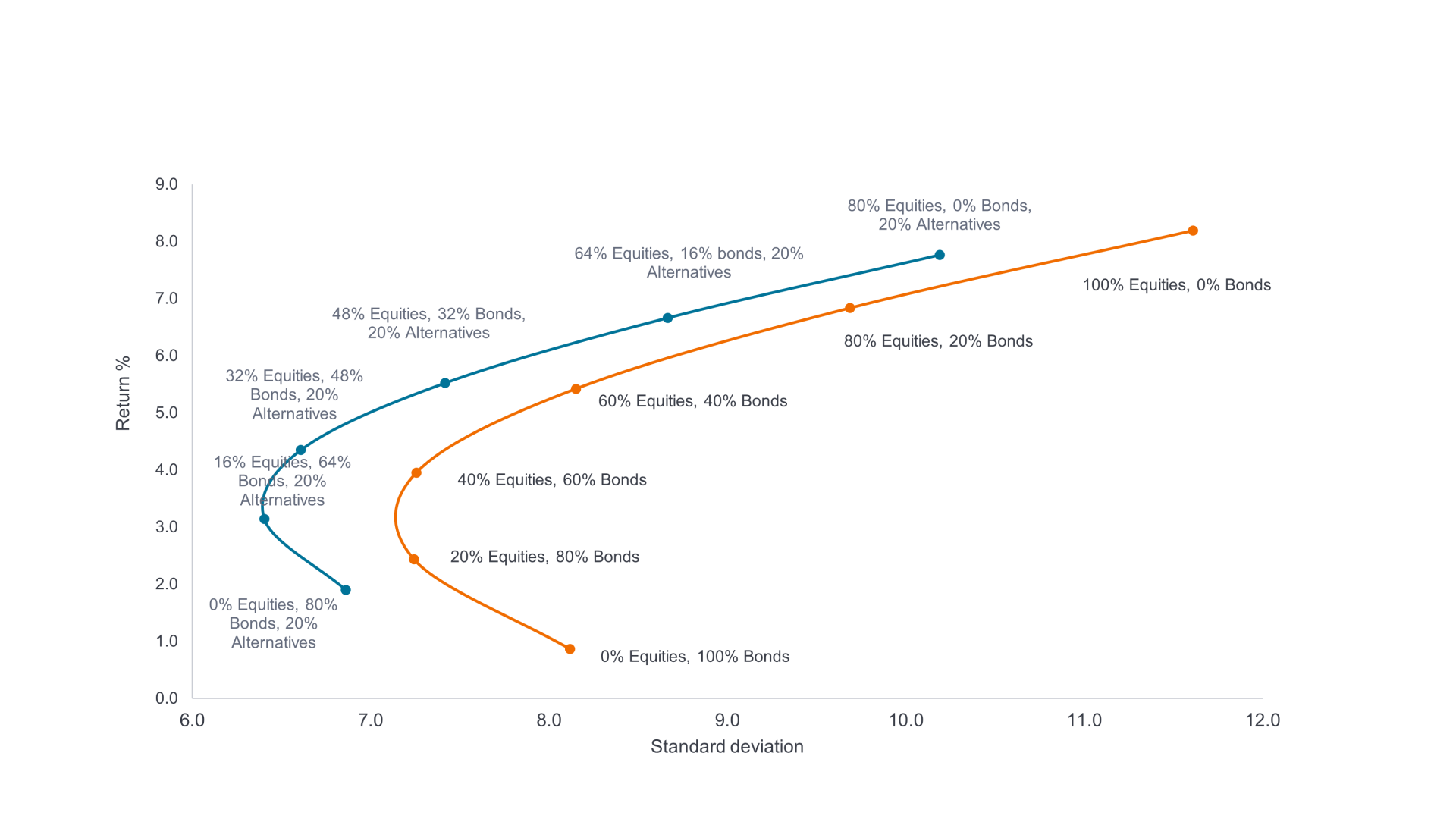
Figure 1 shows this basic portfolio theory in action by adding a diversified alternatives allocation to a traditional portfolio of stocks and bonds. In doing so, the efficient frontier shifts outwards, thereby improving the risk-adjusted return potential.
Figure 1: Diversification in action: Alternatives shift the efficient frontier outward
Source: Morningstar Direct, Janus Henderson Investors. Equities: FTSE All-Share, Bonds: Bloomberg Sterling Gilts Total Return, Alternatives: Janus Henderson Diversified Alternatives Strategy Representative Account. Indices in base currency terms, data from 1 March 2013 to 28 February 2026. Please note diversification neither assures a profit nor eliminates the risk of experiencing losses. Past performance does not predict future results.
Making room for risk
However, what we feel is often overlooked in this regard is that by adding less correlated assets to a portfolio, it is possible to simultaneously increase the exposure to more risky assets, without adding to overall portfolio risk.
In other words, alternative investments need not come at the expense of equities, for example, and could actually allow a portfolio to own even more of them, without upping the risk profile.
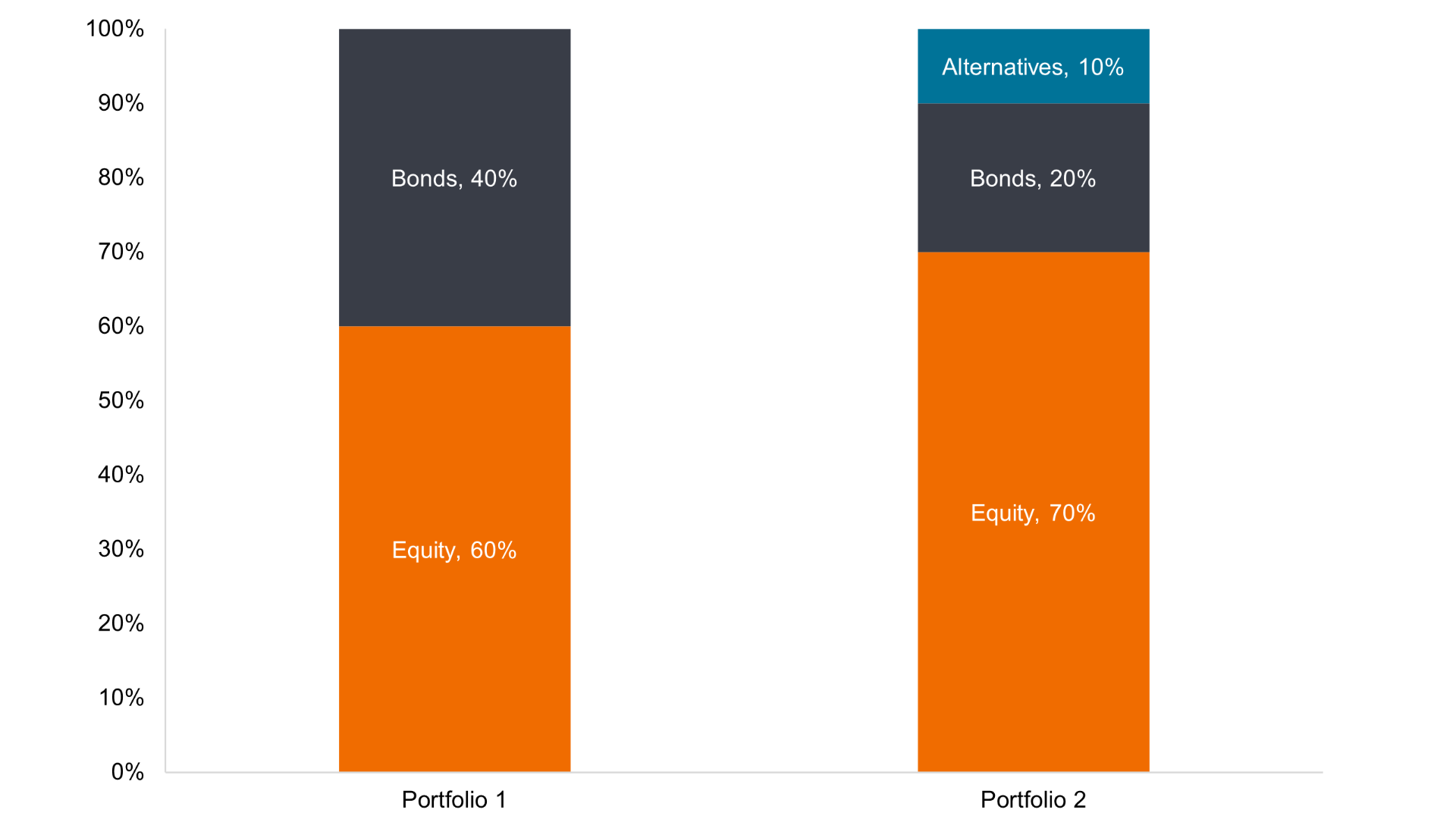
Figure 2 illustrates this with an example of two portfolios with an equal level of volatility, one of which has a greater allocation to both equities and alternatives. In turn, total returns are meaningfully higher, while the maximum drawdown and hit rate is also improved.
Figure 2: Higher returns at equal risk: The impact of adding alternatives
| Portfolio 1 | Portfolio 2 | |
|---|---|---|
| Total Return | 5.11% | 8.07% |
| Volatility | 8.31% | 8.31% |
| Sharpe Ratio | 0.32 | 0.70 |
| Max Drawdown | -15.63 | -11.57 |
| Up Period % | 60% | 65% |
| Down Period % | 40% | 35% |
Source: Morningstar Direct, Janus Henderson Investors. Equities: FTSE All-Share, Bonds: Bloomberg Sterling Gilts Total Return, Alternatives: Janus Henderson Diversified Alternatives Strategy Representative Account. Indices in base currency terms, data from 28 February 2021 to 28 February 2026. The example provided is hypothetical and used for illustrative purposes only and do not represent the returns of any particular investment. The hypothetical performance results in Portfolio 1 and 2 may not be realised in the actual management of accounts. No representation or warranty is made as to the reasonableness of the assumptions made or that all assumptions used in constructing the hypothetical returns have been stated or fully considered. Assumption changes may have a material impact on the returns presented. Past performance does not predict future results.
And while we expect this analysis to remain highly relevant going forward, it does admittedly, use historical data. We therefore turn our attention now to forward-looking matters and consider why we feel the asset class deserves more consideration than it has done in previous years.
When is a diversifier not a diversifier?
The first of these arguments’ centres around the idea that in the current environment of high macroeconomic and geopolitical uncertainty, traditional relationships between asset classes may be more challenged, making it dangerous to rely on conventional portfolio diversifiers like government bonds.
Below, we summarise some of the key reasons for this, which we have coined as ‘The Four Ds’:
- Deficits – government deficits being run at levels typically seen during wartimes means large-scale bond issuance and deteriorating creditworthiness.
- Demand – traditional buyers of government bonds are disappearing, such as pension funds, which now have healthy funding surpluses.
- Democracy – consumer pessimism and cost of living challenges are fuelling a rise in populism and unfunded election promises, weighing on fiscal credibility.
- De-globalisation – peak globalisation is likely behind us, with onshoring and protectionist activities now putting structural pressure on inflation.
With these secular forces at play, we believe that while bonds will likely still be useful in the event that economic growth rolls over, they may equally be the trigger for future weakness in risk assets.
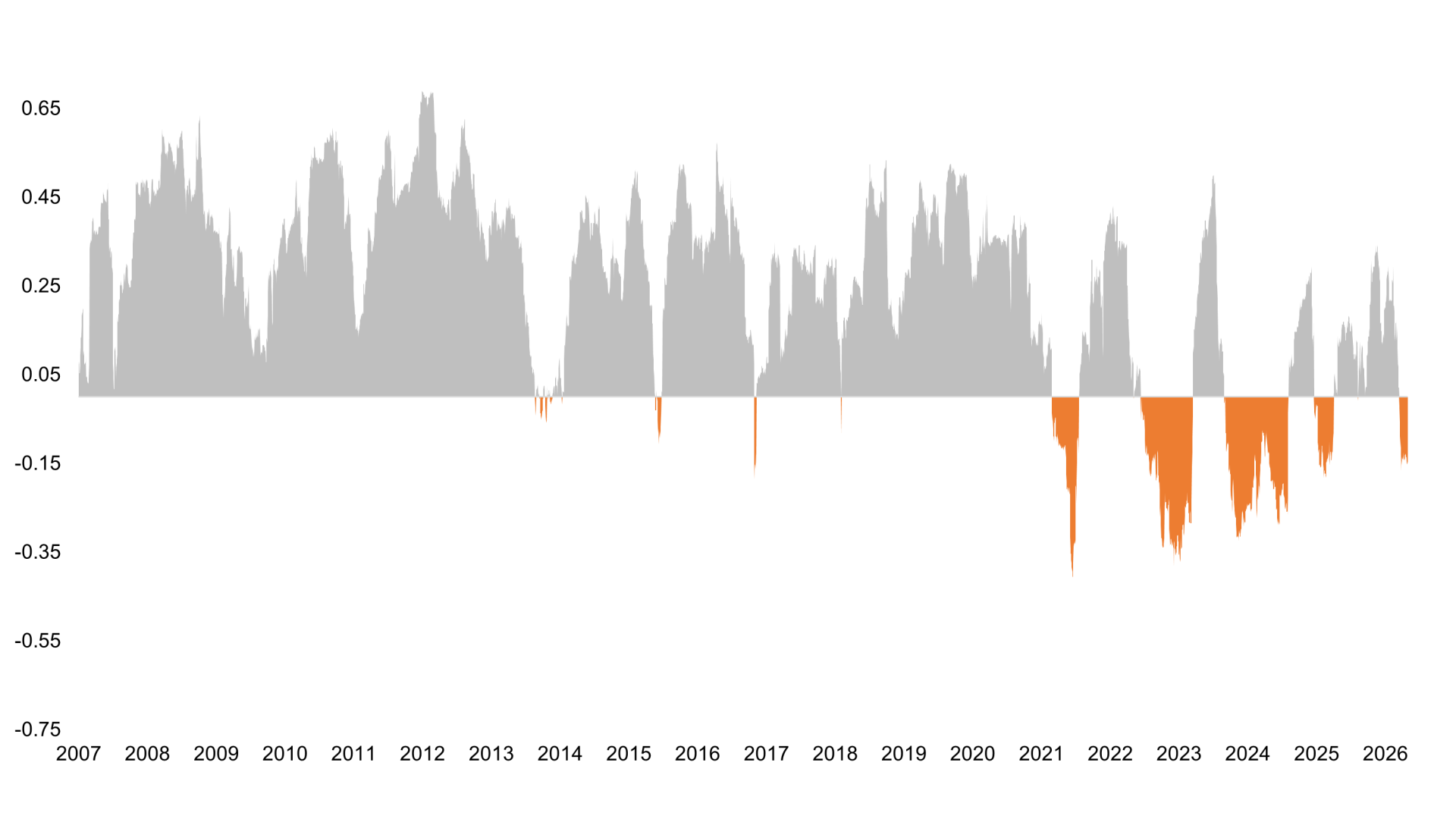
Figure 3 shows the rolling correlation of government bonds with the VIX Index (a gauge of investor fear), where the recent shift from positive to negative is clear to see. This implies that bonds have become increasingly likely to deliver negative returns during episodes of market stress, undermining their credibility as a portfolio hedge.
Figure 3: Bonds’ hedge role under pressure as correlations turn negative
Rolling correlation Bloomberg Global Aggregate Index versus VIX
Source: Bloomberg, Janus Henderson Investors. VIX Index, Data from 1 January 2007 to 29 April 2026. Past performance does not predict future results.
The war in the Middle East has recently provided further evidence of this, with bonds and equities once again selling off in tandem. Governments around the world now face a dilemma – what kind of supportive measures can they really provide given their limited fiscal headroom, and the risk of adding further fuel to the inflation fire?
King dollar, dethroned?
Elsewhere, other once-reliable assets have seen their traditional safe haven status come under pressure. Most notably, the US dollar and Japanese yen have offered little offset in recent market selloffs, which is partly the result of some of the same dynamics noted above. However, recent political developments have also played a role, with President Trump’s erratic foreign policy and Japan’s change of leadership also causing markets to rethink. For a sterling-based investor this pain is particularly acute, as the appreciation of currencies like the dollar has historically served to cushion the losses from holdings in US assets during drawdown periods.
Beta – no longer the only game in town
On a more positive note, we also see indications that the return potential of alternatives has improved. While some of this is idiosyncratic and strategy-specific, there are some general themes to draw out here.
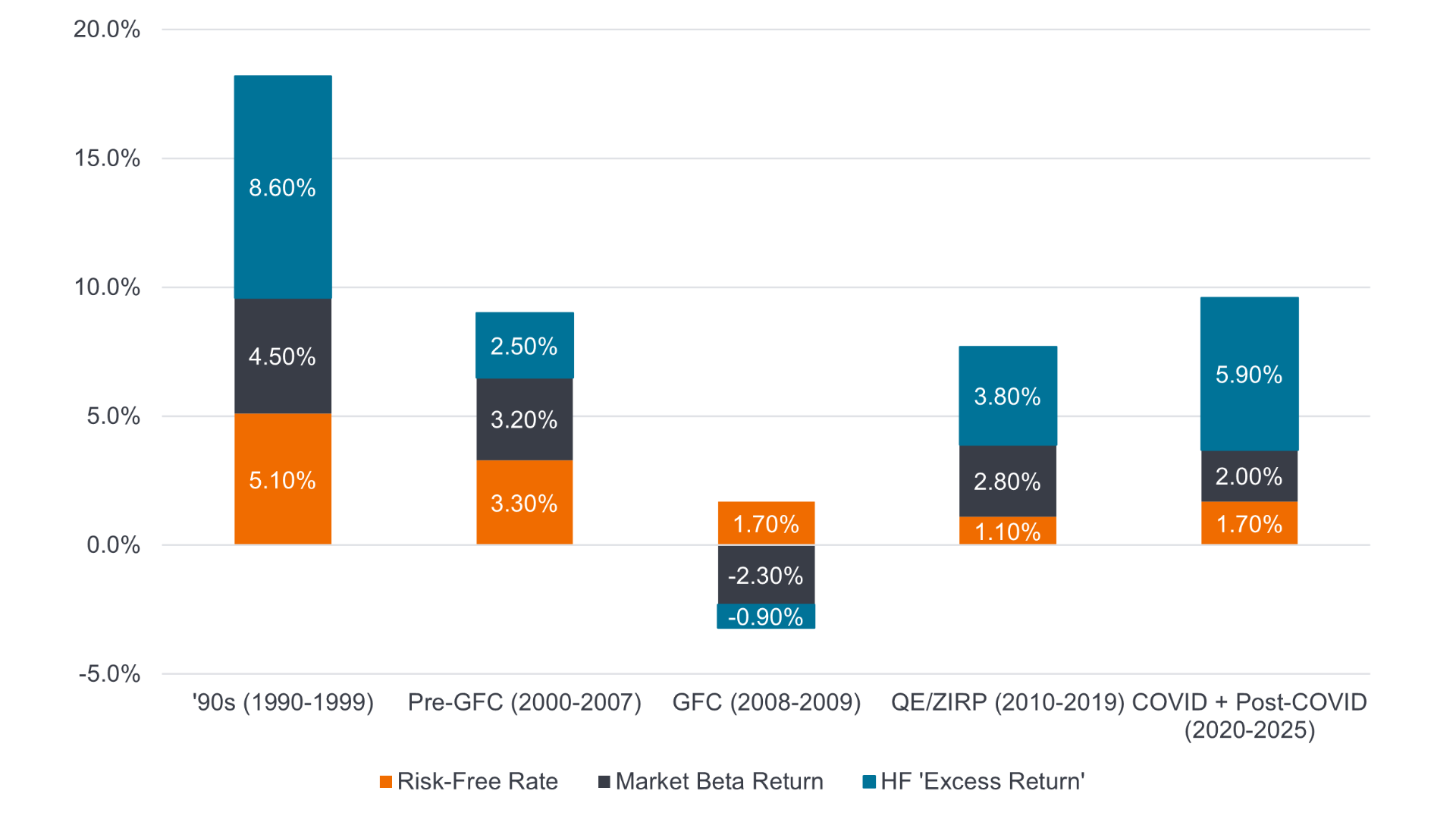
Firstly, the reset in interest rates to historically more ‘normal’ levels has brought about a marked improvement in volatility and asset price dispersion, that has paved the way for strong returns generally from hedge fund and absolute return strategies. Crucially, these improved returns have been driven by alpha, and not simply greater exposure to traditional market betas, preserving their diversifying qualities.
Figure 4: Alpha resurgence: Improved conditions boosting alternative returns
Source: Goldman Sachs, Janus Henderson Investors as at January 2026. Beta calculated relative to a 60/40 portfolio of 60% MSCI World TR , 40% Bloomberg Global Aggregate TR Unhedged, in US terms. Past performance does not predict future results.
Elsewhere, the structural mega-trends reshaping western economies are also throwing up attractive opportunities in the alternatives space. As one example, the arms race for AI capabilities is driving enormous demand for new infrastructure, both directly through assets like data centres and network fibre, but also indirectly through secondary requirements like the energy needed to power it.
We believe that these themes are beginning to unlock a new growth channel for real assets strategies, building upon their core characteristics of being defensive, non-cyclical, and offering the potential for inflation protection. They also allow investors a way to participate in this powerful theme, without the stock selection risk within richly valued equity markets.
The ‘How?’ – Putting theory into practice
We firmly believe that alternatives now have an important strategic role to play in portfolios. This is a view that has been shared by many institutional investors in recent years, such as pension funds and endowments, where alternatives have gone from being a peripheral allocation to a central one.
But the key question remains; how to access them? As noted at the start of this piece, building and maintaining an effective allocation can be difficult in practice. The approach we take is therefore designed to specifically address these structural and practical constraints.
We believe an optimal solution is to wrap all components together into a single allocation to a liquid and professionally managed, multi-alternatives strategy. In doing so, it is possible to achieve:
- Instant Diversification… providing access to a broader universe of investments, while reducing the reliance on any single theme, strategy, or market outcome.
- Dynamic Asset Allocation… exposures – including infrastructure, renewable energy, property, specialist credit, private equity, commodities, and hedge strategies – can be managed dynamically throughout the cycle as the risk and reward evolves. The impetus on portfolio rebalancing is also removed from the end investor.
- Diligent Strategy Selection… importance placed on selecting quality investments, based on decades of experience. We believe this is crucial to success in alternatives, given the wide dispersion between the best and worst performers.
- Institutional Quality Risk Management… access to deep, independent resource is essential to allow for robust risk management and portfolio construction processes.
- Daily Liquidity… a strict filter on liquidity is important to ensure that dealing is possible on a daily basis and any mismatches with client expectations are avoided.
- Competitive fees… in what is typically a higher-fee sector due to its specialist nature, investors can still achieve low and flat-fee structures, and no performance fees.
When combined, we believe these considerations can form a simple and practical solution that can be used as a core component of any portfolio or model solution – and improve resilience in an increasingly unstable world.