

Key takeaways:
- Once a niche allocation, private credit has become an essential component of portfolios, with growing diversity across strategies and structures as investors seek tailored exposure beyond traditional fixed income. Asset-backed finance stands apart as a unique proposition within this arena.
- In the Middle East, private credit is supported by government investment, favourable demographics and limited banking liquidity, creating attractive opportunities alongside an underweight allocation for many global investors.
- As the private credit market grows, differentiated origination capabilities, disciplined underwriting and local expertise are critical to navigating risks and sustaining long‑term returns.
Definitions
Asset allocation: The allocation of a portfolio between different asset classes, sectors, geographical regions, or types of security to meet specific objectives of risk, performance, or time horizon.
Asset-backed securities (ABS): A financial security that is ‘backed’ (or collateralised) with existing assets (such as loans, credit card debts, or leases), usually ones that generate some form of income or cash flow over time.
Bond: A debt security issued by a company or a government used as a way of raising money. The investor buying the bond is effectively lending money to the issuer of the bond. Bonds offer a return to investors in the form of fixed-periodic payments (a coupon), and the eventual return at maturity of the original amount invested—the par value. Because of their fixed-periodic interest payments, they are also often called fixed-income instruments.
Business Development Company (BDC): A listed investment vehicle that provides financing to small and mid‑sized companies.
Credit: Credit is typically defined as an agreement between a lender and a borrower. It is often narrowly used to describe corporate borrowings, which can take the form of corporate bonds, loans, or other fixed-interest asset classes.
Diversification: A way of spreading risk by mixing different types of assets or asset classes in a portfolio on the assumption that these assets will behave differently in any given scenario. Assets with low correlation should provide the most diversification.
Gulf Cooperation Council (GCC): A regional bloc including Saudi Arabia, UAE, Qatar, Kuwait, Oman and Bahrain.
Private credit: An asset defined by non-bank lending where the debt is not issued or traded on the public markets.
View transcript
Ali Dibadj: Hi everybody, it’s Ali Dibadj. I’m here in Abu Dhabi at our investment conference, with about 100 clients from around the world learning about Janus Henderson. We have a big commitment to this region.
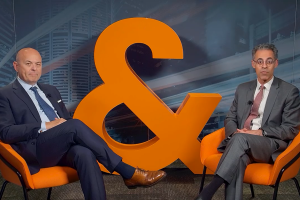
And with us today is Brendan Carroll, one of the Co-Founders of Victory Park Capital and our asset backed Private Credit world, and Yaser Moustafa, who is one of the Co-Founders and leaders of our MENA and Emerging Market Private Credit business.
You guys just came off stage. Lots of interest about private credit. Given your different expertise, what areas of private credit do you think are most interesting right now?
Brendan Carroll: Private credit has become an essential part of asset allocation models, more so than even five years ago. So, for us at Victory Park, having more different types of investment structures for different types of investors around the world to access that asset class has become extremely important and opened a lot of doors through the partnership with Janus Henderson. So, for us, that’s been extremely exciting.
Yaser Moustafa: I think for MENA private credit, it benefits from the larger story of private credit globally. What is specific to MENA is private credit is a key driver of the economic and government initiatives for the economies here.
So, when you’re participating in private credit within the region, you’re benefiting from that rising tide of investment in the economies. At the same time, it’s an underweight asset for most investors. So, the ability to diversify, is a huge part of that Middle East private kind of story as well.
Dibadj: So different areas of the private credit market, although it’s quite interesting for people to look into, always have haves and have nots, the winners and losers. So, as you think about your areas, whether it be an asset-backed side globally, or emerging markets and MENA, where are the risks and opportunities?
Moustafa: For sure. When you’re looking at the Middle East and GCC (Gulf Cooperation Council), you’re looking at growing economies backed by government investing alongside youth demographics, including 67% of a population below the age of 34. You’re looking at low competition for us as private credit providers. So, we’re able to extract good economic rents from our borrowers.
If we look at the potential challenges for the region, obviously macro is not the micro, but any geopolitical risk would be significant and could cause immediate disruption or temporary disruption. And number two is if new players enter the market and they’re uneconomic in their approach, it could lower the overall returns of the asset class.
Carroll: So for Victory Park, for two decades, we’ve been focused on providing financing to non-bank financial services businesses that have filled in a central role, really, since the Global Financial Crisis (GFC), of helping people finance their daily lives, as well as small businesses to get financing when the banks have largely pulled back.
We see that continuing to advance over and over as companies are finding more and more ways to directly finance certain parts of a person’s day, necessities, needs, wants, things of that nature and small businesses as well who still don’t have that same access to traditional working capital finance from your local and regional banks in the US and abroad.
So, for us, we don’t view that all private credit is created equal. But what we’re doing, we think is a necessity in terms of these businesses. It’s not going to be a question of these businesses going away or being replaced by banks. We continue to see our type of capital being needed more and more as these businesses continue to grow.
Dibadj: So, one of the things that we find so important in private credit is the origination capabilities, really finding unique things to bring to our clients. Can you talk a little bit about your own unique origination capabilities?
Moustafa: So, if you look at the GCC, we have a very interesting dynamic. We have growing economies. We have governments investing in those economies. But, on the other hand, we have banks that are significantly liquidity constrained. So, private credit fills a role in a lane for those potential borrowers. So, we actually have supply or I should say demand outstripping supply for our product.
Again, looking at the youth demographics, we’re looking at health care, education, internet-enabled businesses, logistics and manufacture.
Carroll: And for us, a Victory Park, we’re not tourists in this space. We’ve been doing this now for two decades. And one of the great things about our partnership with Janus Henderson was your belief that our brand was important to us. We have been doing this a long time, and in the industries where we’ve been active, whether it’s consumer lending, small business lending, transaction finance, receivables financing, things of that nature, both in the US and around the world – we’ve deployed over US$12 billion over the past two decades, and over 250 deals. So that brand was important. So, at this point, sourcing is both an inbound and outbound part of our business.
Dibadj: So, our clients talk about public versus private investing in the fixed income world. Feels like that’s melding a little bit though. Are you guys seeing that? How do you think about that?
Carroll: So, when we started Victory Park in 2007, there was roughly US$300 billion committed to private credit strategies. Today, it’s over US$2 trillion. And one of the most exciting things for me is when I walk into a room to talk to a potential investor or an existing client. It’s not necessarily about educating about what private credit is anymore. Private credit has become an essential part of asset allocation models, and even within private credit, you’re seeing much more diversity of different types of private credit strategies. So for us, I think that’s the most exciting thing because fixed income now doesn’t just mean one thing, it means many, many things.
Moustafa: If you look at, we launched our first Middle East regional private credit product in 2009, fast forwarding to 2026, the awareness of that asset class has increased dramatically both for investors and potential borrowers. We are now looking increasingly at doing distribution through commercial banks to retail investors.
Ultimately, there is the potential for us to list what would be akin to a BDC [Business Development Company] in some of the markets within the region, and that would grow our ultimate end investor mark.
Dibadj: Well, thank you guys for joining today. Thank you for listening here from Abu Dhabi, our investment conference here. You’re seeing a lot of great activity at Janus Henderson and a lot of opportunity for our clients to take advantage of our private credit capabilities. Thanks very much.
Related insights

These are the views of the author at the time of publication and may differ from the views of other individuals/teams at Janus Henderson Investors. References made to individual securities do not constitute a recommendation to buy, sell or hold any security, investment strategy or market sector, and should not be assumed to be profitable. Janus Henderson Investors, its affiliated advisor, or its employees, may have a position in the securities mentioned.
Past performance does not predict future returns. The value of an investment and the income from it can fall as well as rise and you may not get back the amount originally invested.
The information in this article does not qualify as an investment recommendation.
There is no guarantee that past trends will continue, or forecasts will be realised.
Marketing Communication.