
Key takeaways:
- Tokenisation is still in its early phase, but adoption may accelerate once the operating benefits become clear, particularly around settlement, collateral mobility and programmable fund structures.
- The value of tokenisation is utility, not novelty. Institutional adoption will depend on whether on-chain products can do something meaningfully better than their traditional equivalents.
- Blockchain may prove to be the platform shift for finance, with traditional and tokenised structures likely to coexist before on-chain rails become increasingly embedded in the industry’s operating model.
Tokenisation: Closer to an inflection point than many investors realise
Of the two technology trends reshaping asset management today – artificial intelligence (AI) and blockchain – AI has attracted far more attention. That is understandable. AI is already transforming how firms analyse data, automate workflows and improve productivity. Yet blockchain may ultimately prove the more significant development for financial markets because it changes the infrastructure on which finance operates.
Tokenisation is one of the clearest examples of that transformation. In simple terms, tokenisation involves representing ownership of a financial asset on a blockchain. However, the key question is not whether a stock, bond, fund or sovereign bond exposure can be tokenised. It is whether the tokenised version delivers a better outcome for investors.
The investment case for tokenisation is increasingly understood. What is now emerging is the operating case. As investors begin to recognise tangible benefits – including faster settlement, improved collateral management and lower administrative friction – adoption could accelerate more rapidly than many expect.
Lessons from the ETF market
The evolution of exchange-traded funds (ETFs) provides a useful comparison. ETFs did not become mainstream overnight. Their adoption occurred in stages.
Initially, the appeal was largely structural: investors could access diversified market exposure efficiently and at lower cost. Over time, attention shifted to practical advantages such as intraday liquidity, transparency, operational simplicity and, in some jurisdictions, tax efficiency. These benefits gradually changed investor behaviour.
Eventually, the ETF wrapper itself became part of the attraction. ETFs evolved from niche products into a standard investment vehicle used across both passive and active strategies.
Tokenisation may follow a similar trajectory. Today, most investors understand the concept, but many have yet to experience its operational benefits directly. Adoption is likely to accelerate when tokenised products offer capabilities that improve the investment experience, such as:
- Faster settlement
- Same-day liquidity
- Enhanced collateral mobility
- Greater interoperability between products
- Reduced operational complexity
As with many financial innovations, progress often appears gradual until a critical mass is reached.
What needs to happen next?
Three conditions are particularly important if tokenisation is to reach a meaningful tipping point.
First, the industry must overcome the cold-start problem. Issuers are reluctant to tokenise assets without investor demand, while investors are hesitant to commit capital without sufficient product availability. Both sides must develop together. Institutional participation has increased over recent years, but adoption remains uneven.
Second, liquidity must deepen. While tokenised assets can theoretically trade around the clock, much of the investor base continues to operate off-chain. As a result, many tokenised products remain relatively isolated. Building bridges between traditional and blockchain-based markets remains one of the industry’s key challenges.
Third, utility must improve. Institutional investors will adopt tokenised products when they provide capabilities that traditional structures cannot easily match. These may include the ability to utilise new protocols, programmable settlement, faster redemptions, efficient collateral deployment and streamlined product design.
Ease of use is equally important. Most investors do not need to understand how ETF creation and redemption works to benefit from ETFs. Tokenisation is likely to follow the same path, with blockchain becoming largely invisible to end users.
A useful analogy is the smartphone.
Many of the underlying technologies—touchscreens, mobile connectivity, and internet infrastructure—existed well before smartphones achieved mass adoption. The key shift was that smartphones effectively turned the internet into a mobile experience, placing it in users’ pockets and unlocking entirely new use cases. This, in turn, enabled an ecosystem large enough to make the technology indispensable. Blockchain appears to be moving in a similar direction.
Utility, not technology, will drive adoption
The most important test for any tokenised product is simple: Does it offer something materially better than the traditional alternative?
The same principle applies to distribution. One of the most exciting aspects of tokenisation is its potential to broaden access to investment products and connect managers with new types of investors through more efficient channels.
However, simply placing an existing fund on a blockchain is unlikely to drive meaningful adoption among non-crypto-native investors.
Distribution alone is not enough.
Investors will only embrace tokenised structures if they deliver clear advantages over traditional vehicles, whether through faster settlement, greater liquidity, protocol interoperability, improved collateral utility, enhanced transparency or a meaningfully better ownership experience.
If a tokenised fund merely provides the same exposure through a different distribution channel, its appeal may be limited. The real value emerges when tokenisation changes how an asset can be used.
This is where tokenisation becomes more than a digital wrapper. A tokenised Treasury exposure that can be mobilised as collateral is fundamentally different from a traditional yield-generating instrument. Similarly, tokenised credit structures with programmable cash flows may enhance transparency and operational efficiency.
Ultimately, institutional adoption will be driven by utility and protocol interoperability rather than technology alone.
Where adoption is already visible
Despite occasional hype, meaningful progress is already taking place across several areas of financial markets.
The first major wave of blockchain adoption was stablecoins, which have become increasingly important for on-chain payments, settlement and treasury management.
The second wave is tokenised yield. Tokenised cash-management products and Treasury exposures are attracting investors seeking access to real-world yield while remaining within blockchain-based ecosystems.
Tokenised credit is also moving beyond theory. Private credit, securitised products and collateralised loan obligations are gradually appearing on-chain. While still early in development, these structures have the potential to improve transparency, administration and cash-flow management.
Other areas, including tokenised real estate and public equities, continue to attract attention but have yet to achieve significant institutional scale.
The broader direction appears increasingly clear: stablecoins came first, tokenised yield followed, and the next stage may involve fully tokenised asset-management structures becoming a standard option alongside traditional investment vehicles.
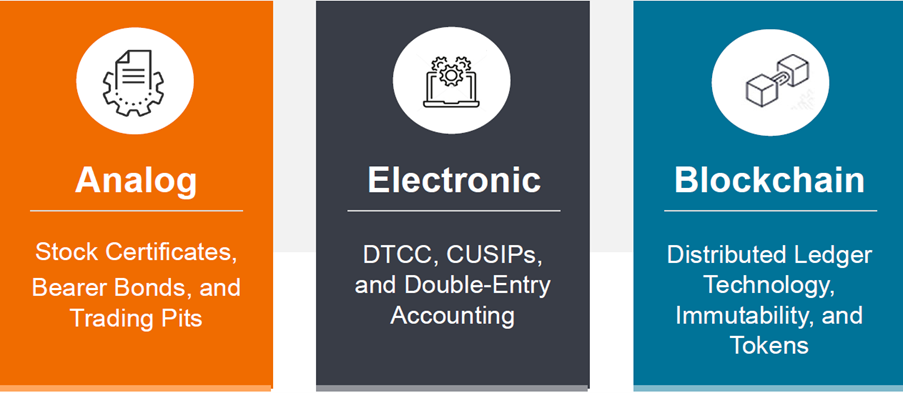
Exhibit 1: The entire global financial system will eventually operate on-chain
Source: Janus Henderson Investors
Liquidity remains tokenisation’s most significant obstacle
While blockchain technology can improve settlement efficiency, it cannot create liquidity on its own. Liquidity develops through sustained participation, capital flows and market confidence.
Many tokenised assets remain fragmented because large parts of the investor base continue to operate within traditional financial infrastructure. Without a sufficiently deep ecosystem of buyers, sellers and market makers, individual products risk becoming isolated.
This matters because liquidity underpins institutional confidence. Investors need certainty that assets can be transferred, redeemed and deployed reliably if they are to function effectively as collateral, working capital or settlement instruments.
Mechanisms such as instant redemption facilities can help address this challenge by making tokenised assets more practical and usable within broader financial markets.
What institutional investors should focus on
For allocators, the key question is not whether tokenisation appears innovative but whether it solves a genuine operating problem.
Five factors deserve particular attention:
- Utility – Does it improve settlement, liquidity or collateral mobility?
- Access – Can investors use it without unnecessary complexity?
- Liquidity – Are there credible redemption and transfer mechanisms?
- Compliance and identity – Are regulatory requirements properly embedded?
- Integration – Does it connect effectively with existing custody, administration and reporting systems?
The most likely outcome is not a separate blockchain-based financial system, but gradual convergence between traditional and on-chain infrastructure.
The cost of waiting
Many institutions focus on the risks of adopting tokenisation too early. Those risks are real and include operational, regulatory, technological and reputational considerations.
However, there is also a risk in waiting too long.
Investor preferences can change more quickly than institutions can build new capabilities. By the time the benefits become obvious, firms that have already developed expertise, partnerships and infrastructure may hold a meaningful competitive advantage.
A pragmatic approach is therefore to identify areas where tokenisation can improve client outcomes, operate them alongside existing business lines and build capabilities incrementally. Tokenisation should be viewed less as a technology experiment and more as a long-term infrastructure investment.
Blockchain as the future operating layer of finance
Financial markets are unlikely to move entirely on-chain anytime soon. Traditional funds, ETFs, separately managed accounts and tokenised vehicles will coexist for many years as regulation, infrastructure and investor behaviour evolve.
Nevertheless, the direction of travel is towards a financial system that is more programmable, transparent and operationally efficient.
That is why blockchain may ultimately become a foundational operating layer for finance. Tokenisation is not the whole story, but it is one of the most visible early manifestations of that broader transition.
For active managers, investment skill remains essential. Research, portfolio construction, risk management and stewardship do not disappear. What changes is the infrastructure through which those capabilities are delivered.
We are at the beginning of what appears to be a seismic shift in the way we think about money, value, and the fabric of our financial system. This shift is not just about incremental changes or tweaks to the existing system. What we are witnessing has the potential to fundamentally transform the way we live, work, and interact in society.
– Federal Reserve Board of Governors, Michelle Bowman
Conclusion: The wrapper is not the revolution – the rails are
Tokenisation is often discussed as a product innovation, but it is better understood as infrastructure innovation.
The opportunity is not simply to create digital versions of existing funds. It is to create investment products that are faster to settle, easier to use as collateral, more transparent to administer and more flexible in how they interact with the wider financial system.
The ETF market provides a useful precedent. ETFs succeeded because they changed what investors could do, not merely because they offered a new wrapper. Tokenisation will follow a similar path only if it delivers meaningful operational advantages.
The industry remains early in its development. Liquidity is still fragmented, regulation continues to evolve and distribution channels are adapting. Yet the long-term direction appears increasingly difficult to ignore.
AI may transform how financial firms work. Blockchain may transform the infrastructure on which finance itself operates. Firms that build credible capabilities before that shift becomes obvious may be best positioned to serve clients in the next phase of financial markets.
Blockchain: A distributed digital ledger that records transactions across a network of computers. In finance, blockchain can be used to represent ownership, transfer assets and execute transactions without relying solely on traditional intermediaries.
Cold-start problem: A market adoption challenge where issuers wait for investor demand before creating supply, while investors wait for credible supply before allocating capital.
Collateral mobility: The ability to move and reuse collateral efficiently across counterparties, venues or transactions.
Composability: The ability for different digital assets, protocols or applications to interact with each other in a modular way.
Exchange-traded funds (ETFs): A security that tracks an index, sector, commodity, or pool of assets (such as an index fund). ETFs trade like an equity on a stock exchange and experience price changes as the underlying assets move up and down in price. ETFs typically have higher daily liquidity and lower fees than actively-managed funds.
ETF wrapper: An ETF wrapper is the structural plumbing of an Exchange-Traded Fund. It packages underlying assets—such as stocks, bonds, derivatives, or private market securities—into a single, regulated security that trades continuously on public exchanges.
Intraday liquidity: Refers to the readily available funds a financial institution can access during the business day to process payments, clear securities, and settle obligations in real-time. It ensures smooth financial operations and prevents systemic disruptions caused by delayed transactions
On-chain: Activity that takes place directly on a blockchain network.
Off-chain: Activity that takes place outside a blockchain network, typically through traditional financial infrastructure or private systems.
Programmable settlement: Settlement that can be executed automatically according to predefined rules embedded in software or smart contracts.
Smart contract: Software code deployed on a blockchain that can automatically execute agreed actions when specified conditions are met.
Sovereign bond: Bonds issued by governments to raise money to pay off debt or finance spending. Sovereign debt can also refer to the total of a country’s government debt.
Stablecoin: A digital asset designed to maintain a stable value relative to another asset, often a fiat currency such as the US dollar.
Tokenisation: The process of representing ownership rights to an asset – such as a fund, bond, Treasury exposure or other financial instrument – as a digital token on a blockchain.
Tokenised credit: Tokenized credit represents off-chain debt assets, such as corporate loans or real estate debt, as digital tokens on a blockchain.
Tokenised yield: Refers to the digital representation of investment returns, most commonly used in decentralized finance (DeFi). It involves a mechanism where an interest-bearing asset (like staked cryptocurrency or a money market fund) is split into two separate, tradable tokens: a Principal Token (PT) and a Yield Token (YT).
These are the views of the author at the time of publication and may differ from the views of other individuals/teams at Janus Henderson Investors. References made to individual securities do not constitute a recommendation to buy, sell or hold any security, investment strategy or market sector, and should not be assumed to be profitable. Janus Henderson Investors, its affiliated advisor, or its employees, may have a position in the securities mentioned.
Past performance does not predict future returns. The value of an investment and the income from it can fall as well as rise and you may not get back the amount originally invested.
The information in this article does not qualify as an investment recommendation.
There is no guarantee that past trends will continue, or forecasts will be realised.
Marketing Communication.