
Key takeaways:
- Finding the right balance: Strong fundamentals in corporate credit need to be weighed against tight spreads and a supply pipeline driven by AI capex.
- Opportunities require selectivity: Certain areas of the market, including securitised assets, offer comparatively attractive spread per unit of risk and a more favourable technical backdrop.
- Focus on resilience and income: Geopolitical and rates uncertainty favours a focus on downside resilience while continuing to seek attractive income opportunities.
Definitions
Credit spread: The difference in yield between securities with similar maturity but different credit quality. Widening spreads generally indicate deteriorating creditworthiness of corporate borrowers, and narrowing indicate improving.
Collateralised Loan Obligation (CLO): A securitised portfolio of corporate leveraged loans rated below investment grade (a rating on a bond where the borrower is perceived as having a relatively low risk of defaulting on repayment). The underlying loan pool is financed through the issuance of bonds that are structured into tranches with differing risk profiles, where interest and principal payments are prioritised according to each tranche’s position in the capital structure.
Duration: Duration can measure how long it takes (in years) for an investor to be repaid a bond’s price by the bond’s total cash flows. Duration can also measure the sensitivity of a bond’s or fixed-income portfolio’s price to changes in interest rates. The longer a bond’s duration, the higher its sensitivity to changes in interest rates, and vice versa.
Market technicals: The supply and demand environment for an asset class, reflecting issuance of debt from borrowers versus appetite to buy from investors.
View transcript
WHAT IS YOUR OUTLOOK FOR SPREADS?
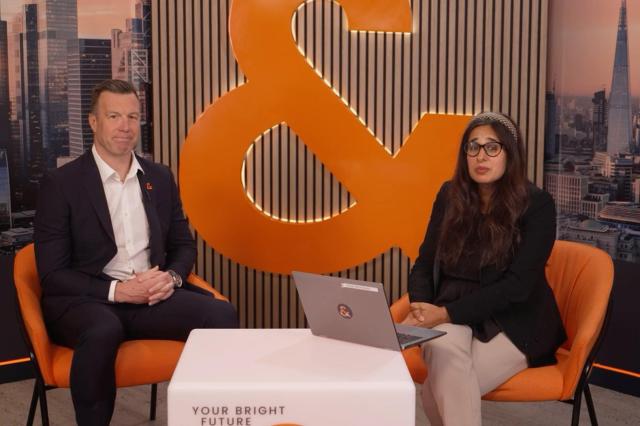
Kareena Moledina: Okay. I’m Kareena Moledina, Lead Fixed Income Client Portfolio Manager at Janus Henderson. Joining me, I have Tom Ross, who’s Head of High Yield and also Portfolio Manager on Janus Henderson’s Multi-Sector Credit Strategies, where we’re responsible for managing over 10 billion in US dollars. Today, I’m going to be posing to Tom the five most common questions that we’re getting from clients at the moment. So, Tom, kicking off, when you look at the first quarter of the year, earnings have been really strong. It’s hard to ignore that. Very strong in the US, but also in Europe, where we’ve seen concerns around energy costs and growth. So taking that into account, and when we look at our multi-sector credit strategies, we’re actually positioned neutral credit spread risk.
So given that the environment was quite robust when it comes to corporates and fundamentals, why are you not more constructive on your overall outlook for spreads?
Tom Ross: So I guess more broadly when we look at credit, we want it sort of not too hot and not too cold. The sort of Goldilocks scenario. As you said, we came into the year actually fairly optimistic on growth and then following the conflict that’s obviously caused inflationary pressures due to the closing of the Strait of Hormuz.
And I think that’s the key factor that’s really changed, as well as being the greater growth that we’ve seen from AI, from data centre rollouts, etc, and everything else. So yes, growth is relatively optimistic, earnings are strong, but equally too hot a market, obviously that creates tension on the other side, with the potential for rate volatility.
WHAT IS YOUR VIEW ON MARKET TECHNICALS?
Moledina: Okay. And turning from fundamentals to technicals. There’s been a decent amount of primary supply. It’s been met with demand. But actually when you hear about some of these concerns like AI, these themes about the Capex and funding needs there, whether the market can truly absorb all of that supply.
How does that come into your view on technicals, or are you feeling quite balanced, or are you still constructive as well on the outlook for technicals through the rest of the year?
Ross: So, absolutely, as you say, a huge amount of supply, especially within credit markets. So investment grade but also within high yield because of a lot of that AI Capex. Ultimately, and when we analysed these big Capex cycles that we’ve seen in the past, the risk to markets is really then when they cause some description of economic shock further down the line. So, the energy Capex cycle obviously resulted in lower oil prices, which then caused an issue there.
At the moment, we’re still very much on the optimistic end of AI adoption as we all within our lives are using AI in various different ways. So we still see that as an opportunity. And there are great opportunities both for investment grade but also high yield to be buying into some of these new deals that are coming at attractive levels.
But equally, we’re able to focus on the areas of the market where we’ve seen less of that supply technical. So yeah, lots of supply within investment grade and high yield, less so within securitised. Less so within loans, for example. So that’s really caused a better market dynamic within those areas of the market.
WHERE ARE YOU FINDING OPPORTUNITIES IN SECURITISED?
Moledina: I just want to pick out securitised. So coming into the year, we’ve been big fans of securitised due to its relative value and also some of the benefits from the structure and resilience that provides. Is this an area where you have high conviction? And if that’s the case, then what are the most compelling opportunities you’re seeing in the broader securitised market?
Ross: So if we break it down overly simplistically to securitised and the more traditional sort of credit asset classes, securitised tend to deliver that better income per unit of risk, but equally don’t necessarily have the upside potential when markets are really rallying. Given where overall spread levels have got to, we’re less concerned about the potential for a big spread rally here.
So at the moment we’re really focusing on that spread per unit of risk that you’re getting from securitised assets. As we mentioned before, the market dynamics tend to be more positive there as well. And then the other beauty of securitised is just all of the different pockets of that market where you can really choose your risk profile and your best valuations as well.
So more recently we’ve been looking into areas like single A and AA CLOs that have been representing greater value. Also parts of commercial mortgage-backed securities as well, that again, are exhibiting greater valuation relative to the risks that we see there.
Moledina: And that’s interesting in the market for where you’re seeing rates volatility as well. Securitised plays a great role because of its floating rate nature and the risk hedge that provides as well.
Ross: Absolutely, yeah.
HOW ARE YOU THINKING ABOUT YOUR DURATION POSITIONING?
Moledina: One just on rates, I guess this is where it gets a little bit more complicated. And we’re getting lots of questions just about what’s our view? I mean, when you’re continually having to reassess what central banks are doing here. But how are you thinking about your duration positioning?
Ross: So I guess first point to note is obviously rates is a great tool for us in order to dampen the risk of an overall portfolio. Our strategic asset allocation for multi-sector income has a duration of around four years, which over the long term is a good dampener on some of the spread risk.
At the moment, we’re actually roughly around neutral, around that four years of duration. We have clearly the pressures from the Middle East and the energy inflation that’s coming through there. Obviously, we have political turmoil in parts of the world, you know, more recently within the UK. We have fiscal concerns within Japan.
Equally, if we were to have something positive come out of the Middle East, obviously that could potentially ease some of those inflation fears.
And the other additional aspect is really that inflation that’s been caused from demand from the data centre capex. Previously obviously it was all about the chips, it was all about Nvidia, etc. Now it’s even the semiconductors, the analogue components that go into cooling systems.
And we’ve spoken before about things like the labour shortages in terms of even just having enough engineers and electricians to build these data centres. So that’s the sort of underlying rumbling inflation that just means at the moment, whilst rates valuations are quite high in terms of yields we’re not at a level necessarily where we want to be hugely overweight rates duration because we do still see risk to rates going up from here if that inflation remains a little bit stickier.
HOW ARE YOU NAVIGATING GEOPOLITICAL RISKS?
Moledina: Thanks, Tom, and for our final question. Probably one of the most asked questions at the moment is really, you already alluded to, about the geopolitical risks ahead. You’ve got energy supply, shipping disruptions, broader tensions. Doesn’t really feel like that’s going away anytime soon.
So thinking about that constructive corporate backdrop and fundamentals versus navigating some of these types of risks. Are you looking to take risks, add risk here at this junction?
Ross: So as we’ve said, one of the key consequences of this geopolitical risk has been higher inflation. So we mentioned about duration before. But we can also position a portfolio from an asset allocation, sectoral positioning and also security selection position to benefit from that as well. So we generally tend to be more underweight either the large cap structure, highly levered type of sectors, things like TMT that, as we’ve seen in the past, struggle with the higher rates and their ability to offset their interest costs.
And also some of the more cyclical sectors as well. Yes, growth is doing fairly well, but obviously with rates being high, the chance that we get central bank rate hikes can choke off the economy a little bit. So we’re underweight areas like autos, like retail and consumer goods. More broadly, I would say given that spreads are on the tighter end, this is a time actually where it’s playing defence, but in a way that isn’t really giving up that income.
So we don’t think that spreads are going to rally materially from here. And therefore the upside opportunity you get from investment grade, high yield, emerging markets, is less attractive right now. But we’re able to play defensively through areas of securitised where, as you say, we really maximise that spread per unit of risk. If we do see any volatility at any point from geopolitics or from ant other risk factor that puts the strategy in a great position to exploit that volatility.
Moledina: So I think that’s a really great note to end on there, Tom. Great point about maximising spread per unit of risk. Really looking to optimise income through multi-sector credit portfolios in today’s environment.
Thank you to you Tom for your time. And thank you to you, our listeners today.
References made to individual securities do not constitute a recommendation to buy, sell or hold any security, investment strategy or market sector, and should not be assumed to be profitable. Janus Henderson Investors, its affiliated advisor, or its employees, may have a position in the securities mentioned.
Fixed income securities are subject to interest rate, inflation, credit and default risk. The bond market is volatile. As interest rates rise, bond prices usually fall, and vice versa. The return of principal is not guaranteed, and prices may decline if an issuer fails to make timely payments or its credit strength weakens.
High-yield or “junk” bonds involve a greater risk of default and price volatility and can experience sudden and sharp price swings.
Securitized products, such as mortgage- and asset-backed securities, are more sensitive to interest rate changes, have extension and prepayment risk, and are subject to more credit, valuation and liquidity risk than other fixed-income securities.
Diversification neither assures a profit nor eliminates the risk of experiencing investment losses.
Related insights

These are the views of the author at the time of publication and may differ from the views of other individuals/teams at Janus Henderson Investors. References made to individual securities do not constitute a recommendation to buy, sell or hold any security, investment strategy or market sector, and should not be assumed to be profitable. Janus Henderson Investors, its affiliated advisor, or its employees, may have a position in the securities mentioned.
Past performance does not predict future returns. The value of an investment and the income from it can fall as well as rise and you may not get back the amount originally invested.
The information in this article does not qualify as an investment recommendation.
There is no guarantee that past trends will continue, or forecasts will be realised.
Marketing Communication.
Important information
Please read the following important information regarding funds related to this article.
Janus Henderson Capital Funds Plc is a UCITS established under Irish law, with segregated liability between funds. Investors are warned that they should only make their investments based on the most recent Prospectus which contains information about fees, expenses and risks, which is available from all distributors and paying/facilities agents, it should be read carefully. This is a marketing communication. Please refer to the prospectus of the UCITS and to the KIID before making any final investment decisions. The rate of return may vary and the principal value of an investment will fluctuate due to market and foreign exchange movements. Shares, if redeemed, may be worth more or less than their original cost. This is not a solicitation for the sale of shares and nothing herein is intended to amount to investment advice. Janus Henderson Investors Europe S.A. may decide to terminate the marketing arrangements of this Collective Investment Scheme in accordance with the appropriate regulation.
- An issuer of a bond (or money market instrument) may become unable or unwilling to pay interest or repay capital. If this happens or the market perceives this may happen, the value of the bond will fall.
- When interest rates rise (or fall), the prices of different securities will be affected differently. In particular, bond values generally fall when interest rates rise (or are expected to rise). This risk is typically greater the longer the maturity of a bond investment.
- While high yield (non-investment grade) bonds generally offer higher rates of interest than investment grade bonds, they are more speculative and more sensitive to adverse changes in market conditions.
- Asset-Backed Securities (ABS) and other forms of securitised investments may be subject to greater credit / default, liquidity, interest rate and prepayment and extension risks, compared to other investments such as government or corporate issued bonds and this may negatively impact the realised return on investment in the securities.
- Some bonds (callable bonds) allow their issuers the right to repay capital early or to extend the maturity. Issuers may exercise these rights when favourable to them and as a result the value of the Fund may be impacted.
- High exposure to a particular country or geographical region carries a higher level of risk than a more broadly diversified portfolio.
- Derivatives may be used to help achieve the investment objective. This can result in leverage (higher levels of debt), which can magnify an investment outcome. Gains or losses may therefore be greater than the cost of the derivative. Derivatives also introduce other risks, in particular, that a derivative counterparty may not meet its contractual obligations.
- When the Fund, or a share/unit class, seeks to mitigate exchange rate movements of a currency relative to the base currency (hedge), the hedging strategy itself may positively or negatively impact the value of the Fund due to differences in short-term interest rates between the currencies.
- Securities could become hard to value or to sell at a desired time and price, especially in extreme market conditions when asset prices may be falling, increasing the risk of investment losses.
- The Fund may incur a higher level of transaction costs as a result of investing in less actively traded or less developed markets compared to a fund that invests in more active/developed markets.
- Some or all of the ongoing charges and other costs of the Fund may be taken from capital, which may erode capital or reduce potential for capital growth.
- In addition to income, this share class may distribute realised and unrealised capital gains and original capital invested. Fees, charges and expenses are also deducted from capital. Both factors may result in capital erosion and reduced potential for capital growth. Investors should also note that distributions of this nature may be treated (and taxable) as income depending on local tax legislation.
- Losses could be incurred if a counterparty became unwilling or unable to meet its obligations, or as a result of failure or delay in operational processes or the failure of a third party provider.