Zentrale Erkenntnisse:
- Das richtige Gleichgewicht finden: Solide Fundamentaldaten bei Unternehmenskrediten müssen gegen enge Spreads und eine durch KI-Investitionen getriebene Emissionspipeline abgewogen werden.
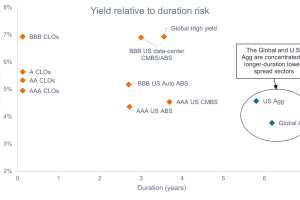
- Chancen erfordern Selektivität: Bestimmte Marktbereiche, darunter verbriefte Vermögenswerte, bieten im Vergleich ein attraktiveres Spread-pro-Risikoeinheit-Verhältnis und ein günstigeres technisches Umfeld.
- Fokus auf Widerstandsfähigkeit und Erträge: Geopolitische Unsicherheit und Unsicherheit hinsichtlich der Zinssätze sprechen dafür, den Schwerpunkt auf die Widerstandsfähigkeit gegenüber Abwärtsrisiken zu legen und zugleich weiterhin attraktive Ertragschancen zu suchen.
Definitionen
Kreditspread: Die Renditedifferenz zwischen Wertpapieren mit ähnlicher Laufzeit, aber unterschiedlicher Bonität. Eine Ausweitung der Spreads deutet im Allgemeinen auf eine Verschlechterung der Kreditwürdigkeit von Unternehmen hin, eine Verengung auf eine Verbesserung.
Collateralised Loan Obligation (CLO): Ein verbrieftes Portfolio aus fremdfinanzierten Unternehmenskrediten mit einem Rating unterhalb von Investment Grade (ein Rating für eine Anleihe, bei der der Kreditnehmer als mit einem relativ geringen Risiko eingeschätzt wird, seine Rückzahlungen nicht zu leisten). Der zugrunde liegende Kreditpool wird durch die Emission von Anleihen finanziert, die in Tranchen mit unterschiedlichen Risikoprofilen strukturiert sind, wobei Zins- und Tilgungszahlungen entsprechend der Position jeder Tranche in der Kapitalstruktur priorisiert werden.
Duration: Die Duration kann messen, wie lange es (in Jahren) dauert, bis einem Anleger der Preis einer Anleihe durch die gesamten Cashflows der Anleihe zurückgezahlt wird. Die Duration kann auch die Sensitivität des Preises einer Anleihe oder eines Anleihenportfolios gegenüber Zinsänderungen messen. Je länger die Duration einer Anleihe, desto höher ist ihre Sensitivität gegenüber Zinsänderungen und umgekehrt.
Markttechnik: Das Angebots- und Nachfrageumfeld für eine Assetklasse, das die Emission von Schuldtiteln durch Kreditnehmer im Verhältnis zur Kaufbereitschaft von Anlegern widerspiegelt.
Transcript lesen
Wie ist Ihr Ausblick für Spreads?
Kareena Moledina: Okay. Ich bin Kareena Moledina, Lead Anleihen Client Portfoliomanager bei Janus Henderson. Bei mir ist Tom Ross, Head of High Yield und außerdem Portfoliomanager für die Multi-Sector Credit Strategies von Janus Henderson, in denen wir für die Verwaltung von mehr als 10 Milliarden US-Dollar verantwortlich sind. Heute werde ich Tom die fünf häufigsten Fragen stellen, die wir derzeit von Kunden erhalten. Also, Tom, wenn wir zum Einstieg auf das erste Quartal des Jahres blicken, sind die Gewinne wirklich stark ausgefallen. Das lässt sich nur schwer ignorieren. Sehr stark in den USA, aber auch in Europa, wo wir Bedenken hinsichtlich der Energiekosten und des Wirtschaftswachstums gesehen haben. Wenn wir das also berücksichtigen und uns unsere Multi-Sector-Credit-Strategien ansehen, sind wir beim Credit-Spread-Risiko tatsächlich neutral positioniert.
Angesichts der Tatsache, dass das Umfeld in Bezug auf Unternehmen und Fundamentaldaten recht robust war, warum sind Sie dann in Ihrem Gesamtausblick für Spreads nicht optimistischer?
Tom Ross: Ich würde ganz allgemein sagen, dass wir bei Krediten weder eine zu starke noch eine zu schwache Entwicklung wollen. Sozusagen ein Goldlöckchen-Szenario. Wie Sie sagten, sind wir eigentlich recht optimistisch in das Jahr gestartet, was das Wachstum betrifft, und infolge des Konflikts ist es dann aufgrund der Schließung der Straße von Hormus offensichtlich zu Inflationsdruck gekommen.
Und ich denke, das ist der Schlüsselfaktor, der sich wirklich verändert hat, zusammen mit dem stärkeren Wachstum, das wir bei KI, beim Ausbau von Rechenzentren usw. und allem anderen gesehen haben. Ja, das Wachstum ist also relativ optimistisch, die Gewinne sind stark, aber ein zu heisser Markt schafft natürlich auch Spannungen auf der anderen Seite, mit dem Potenzial für Zinsvolatilität.
Wie beurteilen Sie die Markttechnik?
Moledina: Okay. Und nun von den Fundamentaldaten zur technischen Analyse. Es gab ein beträchtliches Volumen an Neuemissionen. Es ist auf Nachfrage gestoßen. Aber wenn Sie tatsächlich von einigen dieser Bedenken hören, etwa in Bezug auf KI, diese Themen rund um den Investitionsaufwand und den Finanzierungsbedarf sowie die Frage, ob der Markt dieses gesamte Angebot wirklich aufnehmen kann;
Wie fügt sich das in Ihre Einschätzung der technischen Faktoren ein, oder sind Sie eher ausgewogen positioniert, oder bleiben Sie auch mit Blick auf die Aussichten für die technischen Faktoren im weiteren Jahresverlauf zuversichtlich?
Ross: Absolut, wie Sie sagen, es gab ein enormes Angebot, insbesondere innerhalb der Kreditmärkte. In Investment Grade, aber wegen eines großen Teils dieser KI-Capex auch im Hochzinsbereich. Letztlich liegt das Risiko für die Märkte, wenn wir diese großen Capex-Zyklen analysieren, wie wir sie in der Vergangenheit gesehen haben, vor allem dann darin, dass sie später eine Art wirtschaftlichen Schock auslösen. Der Investitionszyklus im Energiesektor führte also offensichtlich zu niedrigeren Ölpreisen, was dort dann ein Problem verursachte.
Im Moment stehen wir der Einführung von KI noch sehr optimistisch gegenüber, da wir KI in unserem Leben alle auf ganz unterschiedliche Weise nutzen. Das sehen wir also weiterhin als eine Chance. Und es gibt sowohl für Investment Grade als auch für High Yield große Chancen, in einige dieser neuen Emissionen zu attraktiven Niveaus zu investieren.
Gleichzeitig können wir uns aber auch auf die Bereiche des Marktes konzentrieren, in denen wir weniger von dieser angebotsseitigen Technik gesehen haben. Also ja, viel Angebot im Investment Grade- und High-Yield-Bereich, weniger im Bereich verbriefter Produkte. Zum Beispiel weniger stark im Kreditbereich. Dadurch hat sich in diesen Marktbereichen eine bessere Marktdynamik entwickelt.
Wo finden Sie Chancen bei Verbriefungen?
Moledina: Ich möchte jetzt auf das Thema Verbriefungen eingehen. Zu Jahresbeginn waren wir aufgrund des relativen Werts sowie einiger Vorteile aus der Struktur und der dadurch gebotenen Widerstandsfähigkeit große Befürworter von forderungsbesicherten Wertpapieren. Ist dies ein Bereich, bei dem Sie eine hohe Überzeugung haben? Und wenn das der Fall ist, wo sehen Sie dann im breiteren Markt für verbriefte Wertpapiere die überzeugendsten Chancen?
Ross: Wenn wir es übermäßig vereinfacht auf verbriefte und eher traditionelle Kredit-Assetklassen eingehen, liefern verbriefte Anlagen tendenziell den besseren Ertrag pro Risikoeinheit, haben aber zugleich nicht unbedingt das Aufwärtspotenzial, wenn die Märkte wirklich stark anziehen. Angesichts des Niveaus, das die Spreads insgesamt erreicht haben, sind wir hier weniger besorgt über das Potenzial für eine starke Spread-Einengung.
Derzeit konzentrieren wir uns wirklich auf den Spread pro Risikoeinheit, den man bei verbrieften Vermögenswerten erhält. Wie bereits erwähnt, sind die Marktdynamiken dort tendenziell ebenfalls positiver. Und das andere Besondere an Verbriefungen ist die Vielzahl unterschiedlicher Segmente dieses Marktes, in denen Sie Ihr Risikoprofil ebenso wie die attraktivsten Bewertungen gezielt auswählen können.
In jüngerer Zeit haben wir daher Bereiche wie Single-A- und AA-CLOs untersucht, die einen höheren Wert geboten haben. Auch Teile von Commercial Mortgage-Backed Securities weisen im Verhältnis zu den Risiken, die wir dort sehen, eine attraktivere Bewertung auf.
Moledina: Und das ist auch interessant im Markt, wenn man sieht, wo Sie ebenfalls Zinsvolatilität beobachten. Verbriefte Anlagen spielen aufgrund ihres variablen Zinssatzes und der dadurch ebenfalls gebotenen Risikoabsicherung eine wichtige Rolle.
Ross: Absolut, ja.
Wie denken Sie über Ihre Duration-Positionierung?
Moledina: Noch eine Frage zu den Zinsen, ich schätze, hier wird es ein wenig komplizierter. Und wir bekommen viele Fragen dazu, wie unsere Einschätzung ist? Ich meine, wenn man hier ständig neu bewerten muss, was die Zentralbanken tun. Aber wie denken Sie über Ihre Durationspositionierung?
Ross: Ich denke, der erste Punkt, den man festhalten sollte, ist natürlich, dass Zinssätze für uns ein hervorragendes Instrument sind, um das Risiko eines Gesamtportfolios zu dämpfen. Unsere strategische Kapitalallokation für Multi Sector Income hat eine Duration von rund vier Jahren, was langfristig einige der Spread-Risiken gut abdämpft.
Im Moment liegen wir tatsächlich in etwa neutral, also bei ungefähr vier Jahren Duration. Wir sehen eindeutig den Druck aus dem Nahen Osten und die Energieinflation, die von dort ausgeht. Offensichtlich erleben wir in Teilen der Welt politische Unruhen, und, nun ja, in jüngerer Zeit auch im Vereinigten Königreich. Wir haben in Japan fiskalpolitische Bedenken.
Wenn sich im Nahen Osten gleichermaßen etwas Positives ergeben würde, könnte das einige dieser Inflationssorgen potenziell lindern.
Und ein weiterer zusätzlicher Aspekt ist, dass die Inflation durch die Nachfrage infolge der Investitionsausgaben für Rechenzentren verursacht wurde. Früher drehte sich natürlich alles um die Chips, alles um Nvidia usw. Jetzt sind es sogar die Halbleiter, die analogen Komponenten, die in Kühlsysteme eingebaut werden.
Und wir haben bereits zuvor über Dinge wie den Arbeitskräftemangel gesprochen, selbst wenn es nur darum geht, genügend Ingenieure und Elektriker zu haben, um diese Rechenzentren zu bauen. Das ist also die Art von zugrunde liegender, brodelnder Inflation, die im Moment einfach bedeutet, dass die Bewertungen im Zinsbereich zwar in Bezug auf die Renditen recht hoch sind, wir aber nicht unbedingt auf einem Niveau sind, auf dem wir die Zinsduration deutlich übergewichten wollen, weil wir weiterhin das Risiko sehen, dass die Zinsen von hier aus steigen, falls sich die Inflation als etwas hartnäckiger erweist.
Wie gehen Sie mit geopolitischen Risiken um?
Moledina: Danke, Tom, und nun zu unserer letzten Frage. Eine der derzeit wahrscheinlich am häufigsten gestellten Fragen ist wohl die, auf die Sie bereits hingewiesen haben: geopolitische Risiken. Sie haben die Energieversorgung, Störungen im Schiffsverkehr, allgemeinere Spannungen. Es fühlt sich wirklich nicht so an, als würde sich das so bald ändern.
Es geht also darum, diesen konstruktiven Unternehmenshintergrund und die Fundamentaldaten zu berücksichtigen und sich gleichzeitig in einigen dieser Risiken zurechtzufinden. Möchten Sie an dieser Stelle Risiken eingehen und das Risiko erhöhen?
Ross: Wie wir bereits gesagt haben, war eine der wesentlichen Folgen dieses geopolitischen Risikos eine höhere Inflation. Wir haben vorhin bereits die Duration erwähnt. Wir können ein Portfolio jedoch auch aus der Perspektive der Kapitalallokation, der sektoralen Positionierung und der Wertpapierauswahl so positionieren, dass es ebenfalls davon profitieren kann. Daher sind wir in der Regel eher bei Large-Cap-Strukturen oder stark fremdfinanzierten Sektoren untergewichtet, also bei Bereichen wie TMT, die, wie wir in der Vergangenheit gesehen haben, mit höheren Zinsen und ihrer Fähigkeit zu kämpfen haben, ihre Zinskosten auszugleichen.
Und auch einige der zyklischeren Sektoren. Ja, das Wachstum entwickelt sich recht gut, aber bei dem derzeit hohen Zinsniveau besteht natürlich die Gefahr, dass weitere Zinserhöhungen der Zentralbanken die Wirtschaft etwas abwürgen. Daher sind wir in Bereichen wie Automobilen, Einzelhandel und Konsumgütern untergewichtet. Ganz allgemein würde ich sagen, dass angesichts der eher engen Spreads jetzt eher der Zeitpunkt ist, defensiv zu agieren, aber auf eine Weise, die diese Erträge nicht wirklich aufgibt.
Wir glauben daher nicht, dass sich die Spreads von hier aus wesentlich einengen werden. Und daher ist das Aufwärtspotenzial, das Sie derzeit bei Investment Grade, High Yield und Schwellenländern erhalten, weniger attraktiv. Wir können jedoch defensiv über Bereiche der Verbriefungen agieren, in denen wir, wie Sie sagen, diesen Spread pro Risikoeinheit wirklich maximieren. Sollten wir irgendwann Volatilität infolge geopolitischer Entwicklungen oder eines anderen Risikofaktors erleben, ist die Strategie in einer hervorragenden Position, diese Volatilität zu nutzen.
Moledina: Ich denke, das ist ein wirklich großartiger Punkt, um hier zum Schluss zu kommen, Tom. Ein spannender Punkt, die Maximierung des Spreads pro Risikoeinheit. Derzeit liegt der Schwerpunkt wirklich darauf, die Erträge durch Multi-Sector-Credit-Portfolios zu optimieren.
Vielen Dank, Tom, dass Sie sich die Zeit genommen haben. Und vielen Dank auch an Sie, unsere Zuhörer von heute.
Verweise auf einzelne Wertpapiere stellen keine Empfehlung zum Kauf, Verkauf oder Halten eines Wertpapiers, einer Anlagestrategie oder eines Marktsektors dar und sollten nicht als gewinnbringend angesehen werden. Janus Henderson Investors, sein verbundener Berater oder seine Mitarbeiter können eine Position in den genannten Wertpapieren halten.
Festverzinsliche Wertpapiere unterliegen dem Zins-, Inflations-, Kredit- und Ausfallrisiko. Der Anleihenmarkt ist volatil. Wenn die Zinsen steigen, fallen die Anleihepreise normalerweise und umgekehrt. Die Rückzahlung des Kapitals ist nicht garantiert und die Preise können fallen, wenn ein Emittent seine Zahlungen nicht pünktlich leistet und sich seine Bonität verschlechtert.
Hochzinsanleihen oder „Junk“-Anleihen bergen ein höheres Ausfallrisiko und eine höhere Preisvolatilität und können plötzliche und starke Preisschwankungen erfahren.
Verbriefte Produkte wie hypotheken- und Asset-Backed Security (ABS) reagieren empfindlicher auf Zinsänderungen, unterliegen dem Verlängerungs- und Vorauszahlungsrisiko und einem höheren Kredit-, Bewertungs- und Liquiditätsrisiko als andere Anleihen.
Diversifikation garantiert weder einen Gewinn noch schließt sie das Risiko von Anlageverlusten aus.
Markteinblicke
Die vorstehenden Einschätzungen sind die des Autors zum Zeitpunkt der Veröffentlichung und können von den Ansichten anderer Personen/Teams bei Janus Henderson Investors abweichen. Die Bezugnahme auf einzelne Wertpapiere stellt keine Empfehlung zum Kauf, Verkauf oder Halten eines Wertpapiers, einer Anlagestrategie oder eines Marktsektors dar und sollten nicht als gewinnbringend angesehen werden. Janus Henderson Investors, die mit ihr verbundenen Berater oder ihre Mitarbeiter haben möglicherweise eine Position in den genannten Wertpapieren.
Die Wertentwicklung in der Vergangenheit ist kein zuverlässiger Indikator für die künftige Wertentwicklung. Alle Performance-Angaben beinhalten Erträge und Kapitalgewinne bzw. -verluste, aber keine wiederkehrenden Gebühren oder sonstigen Ausgaben des Fonds.
Der Wert einer Anlage und die Einkünfte aus ihr können steigen oder fallen. Es kann daher sein, dass Sie nicht die gesamte investierte Summe zurückerhalten.
Die Informationen in diesem Artikel stellen keine Anlageberatung dar.
Es gibt keine Garantie dafür, dass sich vergangene Trends fortsetzen oder Prognosen eintreten.
Marketing-Anzeige.
WICHTIGE INFORMATIONEN
Bitte lesen Sie die folgenden wichtigen Informationen zu den Fonds im Zusammenhang mit diesem Artikel.
Janus Henderson Capital Funds Plc ist ein nach irischem Recht gegründeter OGAW-Fonds mit Haftungstrennung zwischen den Fonds. Anlegern wird dringend empfohlen, Anlagen nur nach sorgfältiger Lektüre des aktuellen Verkaufsprospekts zu tätigen, der bei allen Vertriebs- und Zahlstellen/fazilitätsstelle bezogen werden kann und Informationen über Gebühren, Kosten und Risiken enthält. Dies ist eine Werbeunterlage. Potenzielle Anleger sollten den Prospekt des OGAW und die wesentlichen Anlegerinformationen lesen, bevor Sie eine endgültige Anlageentscheidung treffen. Eine Anlage in den Fonds ist möglicherweise nicht für alle Anleger geeignet, und die Anteile des Fonds stehen nicht in allen Gerichtsbarkeiten zur Verfügung; nicht verfügbar sind sie für US-Personen. Wertentwicklungen in der Vergangenheit sind kein verlässlicher Indikator für die zukünftige Wertentwicklung. Anlagerenditen können schwanken, und der Kapitalwert einer Anlage unterliegt Schwankungen aufgrund von Markt- und Wechselkursbewegungen. Anteile können beim Verkauf mehr oder weniger wert sein als ihr ursprünglicher Anschaffungspreis. Dies ist keine Aufforderung zum Verkauf von Anteilen, und die Informationen hierin sind nicht als Anlageberatung gedacht. Janus Henderson Investors Europe S.A. kann beschließen, die Marketingvereinbarungen dieses Investmentfonds nach den einschlägigen Vorschriften zu beenden.
- Ein Emittent einer Anleihe (oder eines Geldmarktinstruments) kann möglicherweise nicht mehr in der Lage oder nicht mehr bereit sein, Zinsen zu zahlen oder Kapital zurückzuzahlen. Wenn dies geschieht oder der Markt dies für möglich hält, sinkt der Wert der Anleihe.
- Wenn die Zinssätze steigen (oder sinken), hat dies unterschiedliche Auswirkungen auf die Kurse verschiedener Wertpapiere. Insbesondere fallen die Anleihekurse im Allgemeinen, wenn die Zinsen steigen. Dieses Risiko ist allgemein umso höher, je länger die Laufzeit einer Anleiheinvestition ist.
- Hochzinsanleihen (ohne Investment-Grade-Rating) bieten zwar im Allgemeinen eine höhere Verzinsung als Investment-Grade-Anleihen, sind aber gleichzeitig spekulativer und anfälliger für ungünstige Änderungen der Marktbedingungen.
- ABS-Anleihen und andere Formen verbriefter Anlagen können im Vergleich zu anderen Anlagen wie Staats- oder Unternehmensanleihen größeren Kredit-/Ausfall-, Liquiditäts-, Zins-, Vorfälligkeits- und Verlängerungsrisiken unterliegen, was sich negativ auf die realisierte Rendite der Anlage in die Wertpapiere auswirken kann.
- Einige Anleihen (kündbare Anleihen) geben ihren Emittenten das Recht, Kapital vor dem Fälligkeitstermin zurückzuzahlen oder die Laufzeit zu verlängern. Emittenten können diese Rechte ausüben, wenn dies für sie vorteilhaft ist. Dies kann sich auf den Wert des Fonds auswirken.
- Ein hohes Engagement in einem bestimmten Land oder in einer bestimmten Region ist mit einem höheren Risiko verbunden als ein breiter diversifiziertes Portfolio.
- Derivate können eingesetzt werden, um dazu beizutragen, dass das Anlageziel erreicht wird. Das kann zu einer Hebelwirkung (höhere Verschuldung) führen, die ein Anlageergebnis vergrößern kann. Die Gewinne oder Verluste können daher höher sein als die Kosten des Derivats. Derivate bringen jedoch andere Risiken mit sich, insbesondere das Risiko, dass ein Kontrahent von Derivaten seinen vertraglichen Verpflichtungen möglicherweise nicht nachkommt.
- Wenn der Fonds oder eine währungsabgesicherte Anteilsklasse versucht, die Wechselkursschwankungen einer Währung gegenüber der Basiswährung des Fonds abzumildern, kann die Absicherungsstrategie selbst aufgrund von Unterschieden der kurzfristigen Zinssätze zwischen den Währungen einen positiven oder negativen Einfluss auf den Wert des Fonds haben.
- Wertpapiere können möglicherweise schwer zu bewerten oder zu einem gewünschten Zeitpunkt und Preis zu verkaufen sein, insbesondere unter extremen Marktbedingungen, wenn die Preise von Vermögenswerten möglicherweise sinken, was das Risiko von Anlageverlusten erhöht.
- Dem Fonds können durch die Anlage in weniger aktiv gehandelten oder weniger entwickelten Märkten höhere Transaktionskosten entstehen als einem Fonds, der in aktivere/höher entwickelte Märkte investiert.
- Die laufenden Kosten und die sonstigen Kosten des Fonds können teilweise oder vollständig aus dem Kapital entnommen werden. Dadurch kann das Kapital aufgezehrt oder das Potenzial für Kapitalwachstum verringert werden.
- Zusätzlich zu Erträgen kann diese Anteilsklasse realisierte und nicht realisierte Kapitalgewinne sowie das ursprünglich investierte Kapital ausschütten. Außerdem werden Gebühren, Kosten und Aufwendungen aus dem Kapital beglichen. Beide Faktoren können zu einer Aufzehrung des Kapitals führen und das Potenzial für Kapitalzuwachs einschränken. Anleger sollten auch beachten, dass Ausschüttungen dieser Art in Abhängigkeit des lokalen Steuerrechts möglicherweise als Einkommen behandelt (und besteuert) werden.
- Verluste können entstehen, wenn eine Gegenpartei ihren Zahlungsverpflichtungen gegenüber dem Fonds nicht nachkommen kann oder will, oder als Folge von Störungen oder Verzögerungen betrieblicher Abläufe oder des Ausfalls eines Dritten.