Key takeaways:
- Japan’s governance reforms have shifted from form to substance, with boards increasingly engaging on accountability, capital efficiency, cross‑shareholding reduction and increasing shareholder value.
- South Korea’s Value-Up initiative gained significant traction, with more companies disclosing value‑up plans, dividend tax reform, and rising foreign inflows into its equity markets.
- 2026 is expected to deepen governance‑driven market strength as both countries pursue further reforms. We believe governance reforms will not only be a catalyst for market re-rating but will also become a driver of earnings power and corporate resilience.
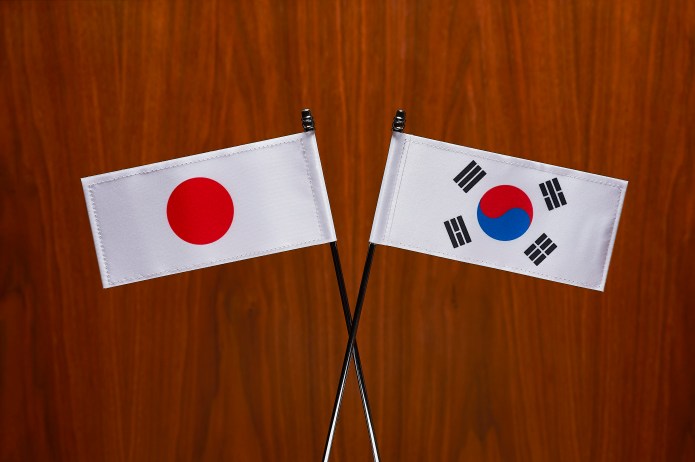
While 2014 to 2015 laid the foundations for corporate governance reforms in Asia, 2025 will be remembered as the year that corporate governance reforms moved from being a compliance exercise to tangible value creation. While many countries in Asia are trying to introduce value‑up programmes, it was Japan and South Korea that noticeably made bold advances to strengthen minority shareholder protections, sharpen board accountability, and direct capital toward productive, shareholder-aligned uses. Based on our engagements with portfolio companies and insights from market practitioners, we are confident that 2026 will build on this momentum and ensure corporate governance becomes a durable, growth-enabling competitive advantage across both markets.
Japan: From form to substance
Over the last decade, Japan has steadily strengthened its corporate stewardship and governance frameworks. In 2025, the emphasis shifted decisively toward outcomes. The Tokyo Stock Exchange (TSE) and the Financial Services Agency (FSA) continued the Action Program for Accelerating Corporate Governance Reforms, urging boards to manage with explicit awareness of cost of capital and stock price, and to disclose how strategy and capital allocation can raise long-term returns.
We are seeing tangible progress through increasing shareholder dialogues, improving shareholder returns and board composition: Over 98% of TSE Prime Market companies now appoint at least one-third independent directors, and more than 85% have nomination and remuneration committees.1 These changes reflect a shift from box-ticking compliance to genuine accountability.
Highlights of our engagements with Japanese companies: In 2025, we saw some boards respond constructively to capital-efficiency requests—implementing clearer capital-return frameworks, measurable plans to reduce cross-shareholdings, and director skills mapping tied to strategy. Our company engagements increasingly involve lead independent directors and committee chairs, which benefits by improving dialogue quality and follow-through.
Looking ahead: Regulatory discussions around revisions to Japan’s Corporate Governance Code in June 2026 and amendments to the Companies Act are expected to clarify minority shareholder protections, reinforce board leadership norms, push for more efficient allocation of cash, and strengthen disclosure regimes. If implemented well, these reforms could lift corporates’ return on equity (ROE), support a market re-rating, as well as reinforce Japan’s governance leadership in Asia.

Ongoing corporate governance reforms remain a structural driver for inflows into Japanese stocks. The Corporate Governance Code review in June, the first in six years, is expected to address the huge cash reserves that companies have been stockpiling – Japan has the highest ratio of cash to market cap among developed markets.2 We expect this to be good news for shareholders, and will support domestic consumption as cash can be redirected to better use, be it dividends, share buybacks, investment for growth and/or raising wages that have been persistently low for decades. This aligns with new Prime Minister Takaichi’s aim for corporates to redeploy cash into the broader economy through wage increases and capital investment.
Junichi Inoue, Head of Japanese Equities
South Korea: Codifying accountability and unlocking value
South Korea’s reforms in 2025 marked a turning point. Amendments to the Commercial Act, approved in July 2025, explicitly introduced directors’ fiduciary duties to shareholders, and strengthened minority shareholder protections through measures such as cumulative voting and tighter rules on audit committee elections.
Alongside legal reform, the Value‑Up initiative launched in 2024, is aimed at addressing the ‘Korea discount’ that investors have ascribed to the market (due to relatively weaker corporate governance and lack of transparency) and improve corporate governance. Value-Up has moved from “signaling” to measurable structural change, evidenced by:
- Significantly higher corporate participation: As of end‑December 2025, a total of 174 companies had disclosed Corporate Value‑up Plans,3 with more to come.
- Dividend tax reform: The National Assembly (the legislative body of Korea) in December 2025 approved the reduction of the tax rate on dividend income to 14–30% (from 45%) to incentivise higher payouts.
- Investor sentiment has improved: The Korea Value‑Up Index is up by more than 130% since its introduction in September 2024,4 foreign investor participation nearly doubled,5 and at the time of writing (12 February 2026) the KOSPI benchmark surpassed the 5,500 level, for the first time.6
Highlights of our engagements with Korean companies: Engagement quality improved notably in 2025. Executives showed greater openness in discussions around capital allocation, dividend policy, and transparent investor relations.
Looking ahead: Further revisions to the Commercial Act including mandatory treasury-share cancellation (some companies are accused of using the shares to consolidate control in family-run businesses) and enforcement of the Stewardship Code are expected. Regulators and the Korea Exchange are likely to introduce more robust Value-Up monitoring, clarify metrics, and improve disclosure timetables. These reforms should go some way to support efforts to reduce the ‘Korea discount’ and deepen its capital markets.

“Korea’s corporate Value-Up programme is more than just market reform – it’s a structural inflection point. Minority shareholders finally have a seat at the table, retail equity participation is rising, and the long-standing ‘Korean market discount’, is narrowing. This is laying the groundwork for a potential sustained re-rating of Korean equites through the lower costs of capital and greater global credibility.”
Matthew Culley, Portfolio Manager, Emerging Market Equities
Engagement matters: “Regulation sets the floor; culture and practice lift the ceiling”
Our company engagements in Japan and Korea are becoming increasingly fruitful because companies have begun to internalise governance as a value lever rather than a compliance checkbox.
We believe that sustained governance discipline, aligning incentives with return-on-equity and total shareholder returns, empowering independent board leadership, and delivering decision-useful disclosures, can ultimately convert governance reforms from being a market re-rating catalyst into a real driver of earnings power and resilience within companies.
1 TSE Corporate Governance Report, 2023.
2 McKinsey & Company; “Closing Japan’s valuation gap by changing corporate traditions2; 31 October 2025.
3 Maeil Business Newspaper; Korea Exchange; 8 January 2026.
4 The Korea Times; 4 February 2026. Aligned with the Value-Up initiative, the Korea Value-Up Index is a benchmark for pension funds and other institutional investors, assisting them in identifying high-value investment targets, while also resulting in greater overall investment through the creation of index-linked ETFs. The index comprises 100 companies that demonstrate strong performance in a range of qualitative metrics, such as profitability and shareholder returns. Past performance does not predict future returns.
5 The Korea Times; 25 January 2026.
6 The Korea Times; 12 February 2026.
Corporate governance: A set of rules, practices, and processes used to run and control a company. This includes key areas such as environmental awareness, ethical behaviour, corporate strategy, compensation, and risk management.
Cross-shareholdings: Refers to a publicly-traded company holding a significant number of shares of another publicly-traded company. This can lead to complex corporate structures and inefficient capital usage.
KOSPI: The Korean Composite Stock Price Index is a group of indexes that track the stock exchange in South Korea.
Market capitalisation: Market cap is the total market value of a company’s issued shares. It is calculated by multiplying the number of shares in issue by the current price of the shares. The figure is used to determine a company’s size.
Re-rating: Occurs when investors are willing to pay a higher price for shares, usually in anticipation of higher future earnings.
Return on Equity (ROE): A company’s net income (income minus expenses and taxes) over a specified period, divided by the amount of money its shareholders have invested. It is used as a measurement of a company’s profitability compared to its peers. A higher ROE generally indicates that a management team is more efficient at generating a return from investment.
Share buybacks: A company may buy back its own shares from the market because it believes its shares are undervalued and it wants to provide investors with a better return.
Total shareholder returns: A measure that includes overall appreciation in the stock’s price per share, plus any dividends paid by the company, during a particular measured interval; this sum is then divided by the initial purchase price of the stock.
Treasury shares: Shares that a company has issued and later repurchased, typically through buybacks or corporate restructurings.
These are the views of the author at the time of publication and may differ from the views of other individuals/teams at Janus Henderson Investors. References made to individual securities do not constitute a recommendation to buy, sell or hold any security, investment strategy or market sector, and should not be assumed to be profitable. Janus Henderson Investors, its affiliated advisor, or its employees, may have a position in the securities mentioned.
Past performance does not predict future returns. The value of an investment and the income from it can fall as well as rise and you may not get back the amount originally invested.
The information in this article does not qualify as an investment recommendation.
There is no guarantee that past trends will continue, or forecasts will be realised.
Marketing Communication.