Key takeaways:
- Large-scale copper projects like the Vicuña district are critical to meeting long-term demand driven by electrification, grid expansion and the global energy transition.
- Developing a world‑class copper district takes time, capital and operational expertise. Strong alignment between experienced partners helps mitigate execution risk and supports disciplined project delivery.
- Safety, environmental stewardship and engagement with local stakeholders are central to maintaining a licence to operate – and to building sustainable earnings power over decades.
Vicuña: A district defined by altitude, scale and patience
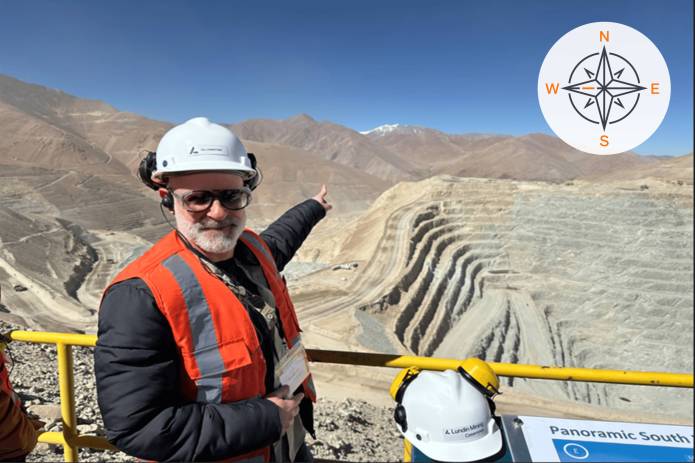
Standing at between 4,000 and 5,000 metres above sea level, the Vicuña district quite literally takes your breath away. The physical challenge of operating at this altitude is unmistakable, but so too is the geological promise embedded in this stretch of the high Andes.
Named after the Vicuña – a resilient, wild camelid (closely related llamas and alpacas) prized for its rare and valuable wool – the district reflects many of the same characteristics: scarcity, endurance and long-term value. While the animal itself is widely admired, the mineral endowment beneath these mountains may prove even more consequential over coming decades.
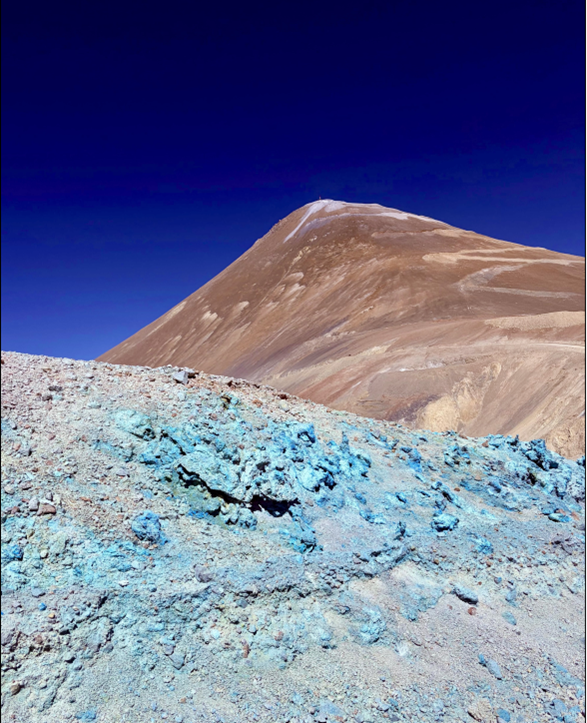
The Blue Wall – copper oxide expression at surface at the Filo del Sol deposit evidencing the rich geological richness of the Vicuña district. Image credit: Janus Henderson Investors
Copper supply in a world hungry for electrons
Copper remains one of the most critical materials underpinning the global energy transition. From renewable power generation to electrification, grid expansion and electric vehicles, demand continues to grow while new supply remains constrained.
Projects like Vicuña are therefore increasingly strategic. Bringing a major copper district from discovery to production is rarely quick. A recent report1 by the International Energy Agency (IEA) states it can take on average 16 years to take a copper project from discovery to first production, requiring a degree of tenacity and vision that is rare and, which fortunately the backers of Lundin Mining have in spades.
The Vicuña project was described by the Lundin Mining’s Chairman as a “20-year overnight success story”. It is an excellent example of the patience and staying power required to bring new critical mineral deposits into production.
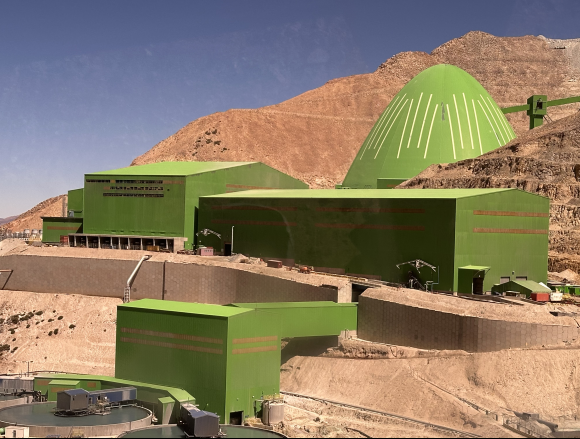
Caserones mine stockpile and processing facilities – proving the concept of producing at high altitude. Image credit: Janus Henderson Investors
Execution challenges – and why they may be surmountable
Critics point to the complexity of developing a bi‑national project that aims to produce copper in Argentina and then process and export the material through Chile, as well as the operational realities of high-altitude mining. They will argue that the timeline to first production in overly optimistic given the challenges, and that funding the latter phases of the project requires expensive desalination, electricity and ore-roasting infrastructure.
Yet these challenges are not unfamiliar to experienced operators. Solutions are being explored by Lundin Mining to address altitude-related productivity, while broader political alignment and pro‑business reform in both jurisdictions could help unlock the economic prize that sits on the border of Chile and Argentina.
With copper prices providing strong economic incentives for each country and their new, pro-business governments – the stars are aligning to get this project financed and built.
Partnership, alignment and operating discipline
Copper projects like this are sorely needed if the world is to continue along the energy transition from hydrocarbon molecules to electrons. The current energy shock caused by the US-Iran conflict services as a reminder of the risks of relying on potentially unstable sources of hydrocarbons and is likely to accelerate the transition to renewables, battery storage and nuclear energy.
The Vicuña copper district’s size and economic attractiveness have been validated by mining giant BHP Billiton who are a 50-50 partner. BHP and Lundin Mining’s interests are closely aligned, and they appear to be working together very effectively, leveraging each one’s strengths. Lundin’s in-country experience, its exploration team and can-do attitude are complemented by BHPs experience in bulk mining, autonomous trucking and safety systems.
Such partnerships matter. They can reduce execution risk, improve capital discipline and enhance the probability that projects of this scale are delivered responsibly and efficiently.
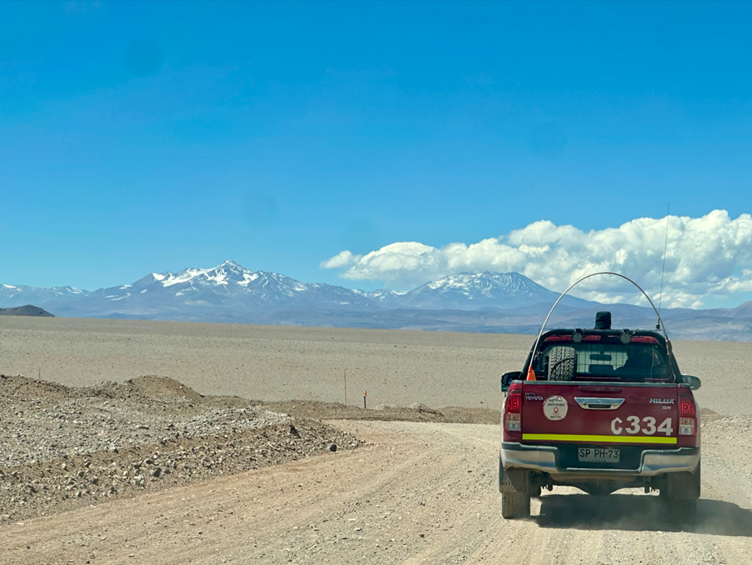
On the Argentinean side of the Andes where the accommodation and processing facilities will be located. Image credit: Janus Henderson Investors
ESG foundations and the licence to operate
Across the site, safety, environmental stewardship and social responsibility are clearly embedded in day‑to‑day decision-making. These factors are not peripheral; they are foundational. Strong relationships with employees, governments and local communities underpin the licence to operate and, ultimately, the sustainability of future cash flows.
This aspect of mining is sometimes neglected but forms a core part of company’s license to operate – as investors we believe strong values often translate into sustainable earnings power. Responsible practices are not just ethical imperatives – they are economic ones.
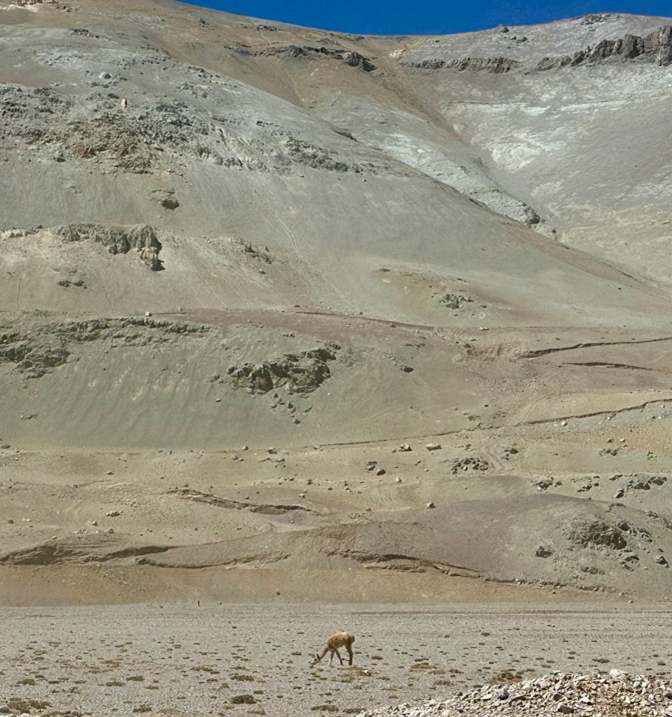
A solitary Vicuña, a highly protected species, seen grazing. Image credit: Janus Henderson Investors
A long-term investment perspective
A final investment decision remains subject to further engineering work and permitting, but the direction of travel is clear. Copper projects of this scale are essential to continue transitioning away from hydrocarbons toward a more electrified energy system.
Standing in the thin air of the Andes, it is hard not to be reminded that progress often requires endurance. Projects like Vicuña will test patience, but also offer rare exposure to assets capable of shaping global supply for decades to come.
Another quote from the Chairman resonates strongly: “You miss 100% of the shots you don’t take.” Lundin Mining and BHP are certainly taking a shot!
1Reliable supply of minerals – ‘The Role of Critical Minerals in Clean Energy Transitions’ – Analysis, International Energy Agency (IEA)
Copper district: A geographically concentrated area containing multiple copper deposits or projects.
Copper oxide: A type of copper mineralisation typically found near the surface and often processed differently from sulphide ores.
Critical minerals: Raw materials essential to energy transition technologies, including copper.
Energy transition: The global shift from fossil fuels toward low‑carbon and renewable energy systems.
Electrification: The increasing use of electricity across transport, industry and infrastructure.
Licence to operate: Ongoing acceptance of a project by regulators, communities and stakeholders.
Open‑pit mining: A surface mining method used to extract large, near‑surface ore bodies.
These are the views of the author at the time of publication and may differ from the views of other individuals/teams at Janus Henderson Investors. References made to individual securities do not constitute a recommendation to buy, sell or hold any security, investment strategy or market sector, and should not be assumed to be profitable. Janus Henderson Investors, its affiliated advisor, or its employees, may have a position in the securities mentioned.
Past performance does not predict future returns. The value of an investment and the income from it can fall as well as rise and you may not get back the amount originally invested.
The information in this article does not qualify as an investment recommendation.
There is no guarantee that past trends will continue, or forecasts will be realised.
Marketing Communication.
Important information
Please read the following important information regarding funds related to this article.