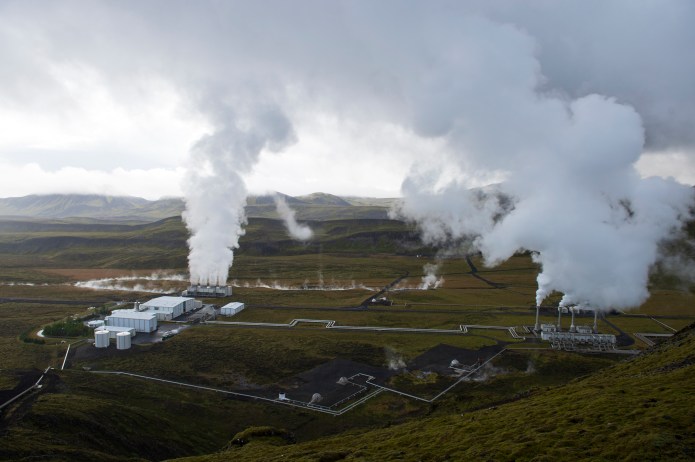
Key takeaways:
- Geothermal provides consistent, 24/7 power, addressing intermittency challenges from wind and solar, while advanced technologies are making geothermal less dependent on specific geology and geography.
- Scalability potential is increasing with advances in drilling and growing cost efficiencies.
- Investment opportunities span oil & gas services, equipment and engineering providers, requiring an active selective, value‑chain approach.
As electricity demand accelerates because of rapid AI development and deployment, rising data center and other electrification needs, the energy transition faces a familiar problem: a lack of a reliable 24-hour baseload power sources. While wind and solar energy are scaling, their intermittency still requires storage or other backup sources to deliver consistent, around the clock electricity – geothermal, by contrast, can deliver reliable power.
From location bound to location agnostic
Yet, until recently, geothermal energy was constrained by its own limitations. Historically, it has been a niche renewable, confined by the need for specific geological conditions: naturally occurring hot water reservoirs close to the surface – features found mostly in volcanically active regions like Iceland. For regions that met those conditions, geothermal provided impressive results. What is now emerging is something different: next generation geothermal. Enabled by advances in drilling and subsurface engineering, these technologies are reducing dependence on rare geological features.
Traditional geothermal systems rely on a rare combination of heat and water close to the surface. Two types of next-generation geothermal, namely enhanced geothermal systems (EGS) and closed loop designs, are beginning to overcome these constraints. EGS creates artificial reservoirs in hot, dry rock, while closed-loop systems circulate fluids through sealed underground loops. Together, these approaches materially expand the range of locations where geothermal could, in principle, be developed over time.
What’s increasingly interesting about next-generation geothermal is its potential to shift from a niche, location-specific resource to a scalable component of the global energy mix. If technological progress continues, it could unlock not only clean, baseload power, but also broader value across the energy system—from industrial heat to critical mineral recovery—strengthening both the economic and environmental case for investment.
Dara O’Rourke, Associate Professor at UC Berkeley’s Rausser College of Natural Resource
Exploring next generation geothermal energy
To enhance our desktop research, we have visited a next-generation geothermal project under development and engaged with companies and technical experts across the value chain. From these interactions we gained additional context on both the pace of technological progress and the remaining challenges around scaling and cost.
However, depth remains a critical barrier. At shallow depths, underground temperatures to support commercial power generation are hard to find. At depths of approximately four kilometers, temperature rises and options increase. Beyond seven kilometers, geothermal energy could theoretically be harnessed almost anywhere on Earth, subject to drilling technologies reaching these depths quickly, safely, and economically. Going deeper positions geothermal as a globally scalable energy source rather than one limited by geography.
Reaching such depths draws on expertise from an unexpected source: the oil and gas industry. According to the International Energy Agency, up to 80% of the capital investment and technical skills required for geothermal development overlap with capabilities already present in oil and gas, including drilling, well construction, and subsurface modeling. For regions navigating a gradual energy transition, this creates a rare opportunity to redeploy existing skills, infrastructure, and supply chains – a meaningful just transition win.
Economic sands are shifting
Industry estimates suggest next generation geothermal power could achieve cost levels competitive with nuclear, hydropower and even gas fired generation by the mid 2030s, particularly if drilling productivity continues to improve thereby lowering significant upfront capital cost. Operating lifespans could also compete with other large-scale power assets. Project timelines also make geothermal energy a viable option. While geothermal power plants typically take longer to develop than wind or solar projects, their timelines are broadly comparable with other large scale power assets.
Yet, risks remain. Enhanced geothermal can raise concerns around water use and induced seismicity. These risks are increasingly managed through improved mitigation protocols and advancements in monitoring learnt from shale drilling, alongside evolving regulatory and governance frameworks. Continued technological and operational advances will be critical to maintaining public and investor confidence.
More than just electrons
Geothermal’s value extends beyond electricity generation alone, and some of its non-power applications may prove equally compelling. At its core, geothermal is a heat source, converted to energy by steam turbines. That same heat can also support a wide range of industrial and residential applications. District heating systems powered by geothermal energy could replace gas-based heating, while hard-to-abate industrial processes such as hydrogen production and cement drying may also become viable applications.
Another emerging opportunity lies in geothermal brines. Heated underground fluids often contain lithium, creating the potential to extract critical battery materials without the need for traditional mining. Last year we visited Vulcan Resources’ geothermal project in Germany that will be extracting lithium from the hot brine whilst providing district heating to a nearby city. While still early stage, this dual revenue stream – heat or electricity plus minerals – could materially improve project economics for enhanced geothermal systems, or seen the other way, dramatically reduce the cost of producing a critical battery material like lithium.
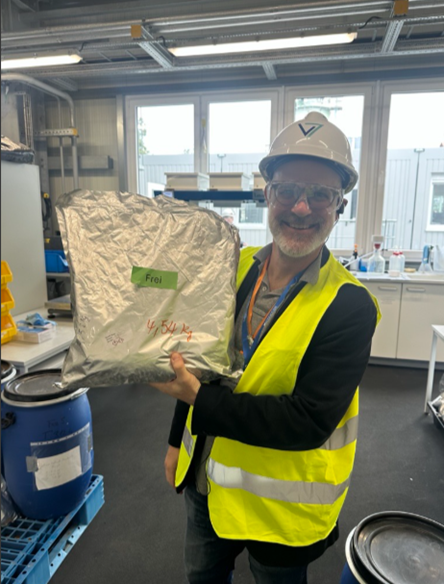
Tal on a visit to Vulcan Resources’ carbon-neutral, integrated lithium and geothermal project, which leverages a massive resource base and proprietary Direct Lithium Extraction (DLE) technology.
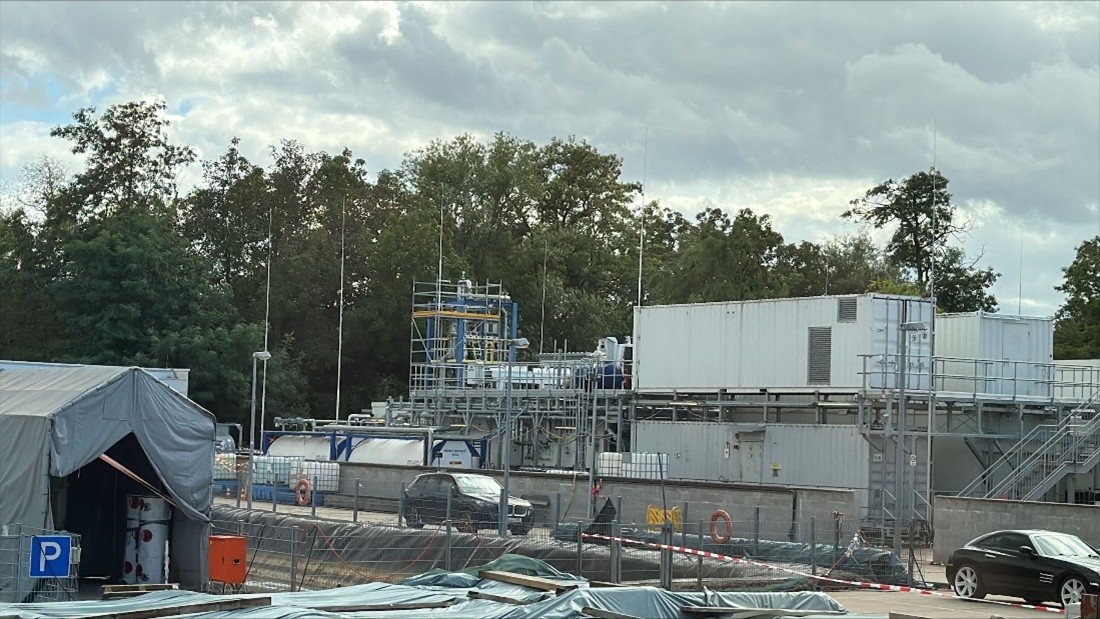
Vulcan Resources geothermal power plant – lithium extraction. Images credit: Tal Lomnitzer.
Where are the opportunities in geothermal energy?
For investors, the geothermal opportunity extends well beyond pure play developers. It spans the wider value chain, including drilling equipment manufacturers, subsurface engineering specialists, power plant suppliers, and more. Such expertise are often associated with oil and gas service providers. Companies with exposure to both conventional geothermal and next generation development may be particularly well positioned, with existing expertise and cash flow to fund innovation and scale up quickly. Nonetheless, investor discipline remains essential. Geothermal is unlikely to follow the rapid cost deflation curves seen in solar or wind. Its strategic value instead lies in providing reliability and optionality; characteristics that complement other energy sources.
The energy transition will not be driven by a single solution. It will require investment in existing and new technologies. As attention returns to what lies beneath our feet, geothermal is beginning to look less like a legacy technology – and more like a component of a diversified, resilient low-carbon energy system whose time is finally heating up.
References made to individual securities do not constitute a recommendation to buy, sell or hold any security, investment strategy or market sector, and should not be assumed to be profitable. Janus Henderson Investors, its affiliated advisor, or its employees, may have a position in the securities mentioned.
Baseload power: Electricity generated continuously to meet minimum demand.
Enhanced geothermal systems (EGS): Technology that creates artificial underground reservoirs to extract heat.
Closed-loop systems: Sealed systems that circulate fluid underground without relying on natural water sources.
Energy transition: The shift from fossil fuels to lower‑carbon energy sources.
Induced seismicity: Minor earthquakes that can result from subsurface drilling or fluid injection.