FIXED MATURITY BOND FUND (EUR) 2029:
A clear solution for generating income over time
Core Italian government bond exposure with a CDS overlay designed to enhance yield.
Limited offer period: 13 March 2026 to 15 June 2026.
With interest rates in Europe expected to plateau, investors are looking for opportunities to enhance their income.
The Janus Henderson Fixed Maturity Bond Fund (EUR) 2029 blends a core portfolio of primarily Italian government bonds with the yield uplift provided by credit default swaps, this aims to generate an enhanced income for investors over a defined time frame.
This fund aims to offer
Fixed maturity
Fixed maturity
Three-year fixed maturity with semi-annual coupon distribution.
Competitive net yield
Competitive net yield
Net yield after costs competitive with Italian government bonds (BTP) of equivalent maturity.
Solid credit rating
Solid credit rating
Average credit default swap (CDS) rating of BBB3/BBB-, offering an investment-grade quality portfolio with enhanced income potential.
*Source: Janus Henderson Investors. Indicative gross yield is 4.29% and indicative net yield is 3.39% (based on the representative share class, A2 EUR share class excluding other expenses of 0.15% maximum), as at 9 March 2026. Neither the income nor capital value at maturity is guaranteed. Net yields may vary and are subject to the Management Fee for the respective share class. Please refer to the Prospectus for the fees available to each respective share class. THE YIELD IS NOT GUARANTEED. Yields for BTPs can be found through the official website of the Ministry of Economy and Finance (MEF) – Department of the Treasury.
Looking for an income uplift?
Interest rates in Europe have fallen in recent years and the expectation is that they will plateau around current levels over the coming year.*
By looking beyond cash, investors can capture the income offered by bonds. This is typically progressively higher the more risk an investor assumes. High yield corporate bonds typically pay more income than investment grade corporate bonds, which pay more income than government bonds.
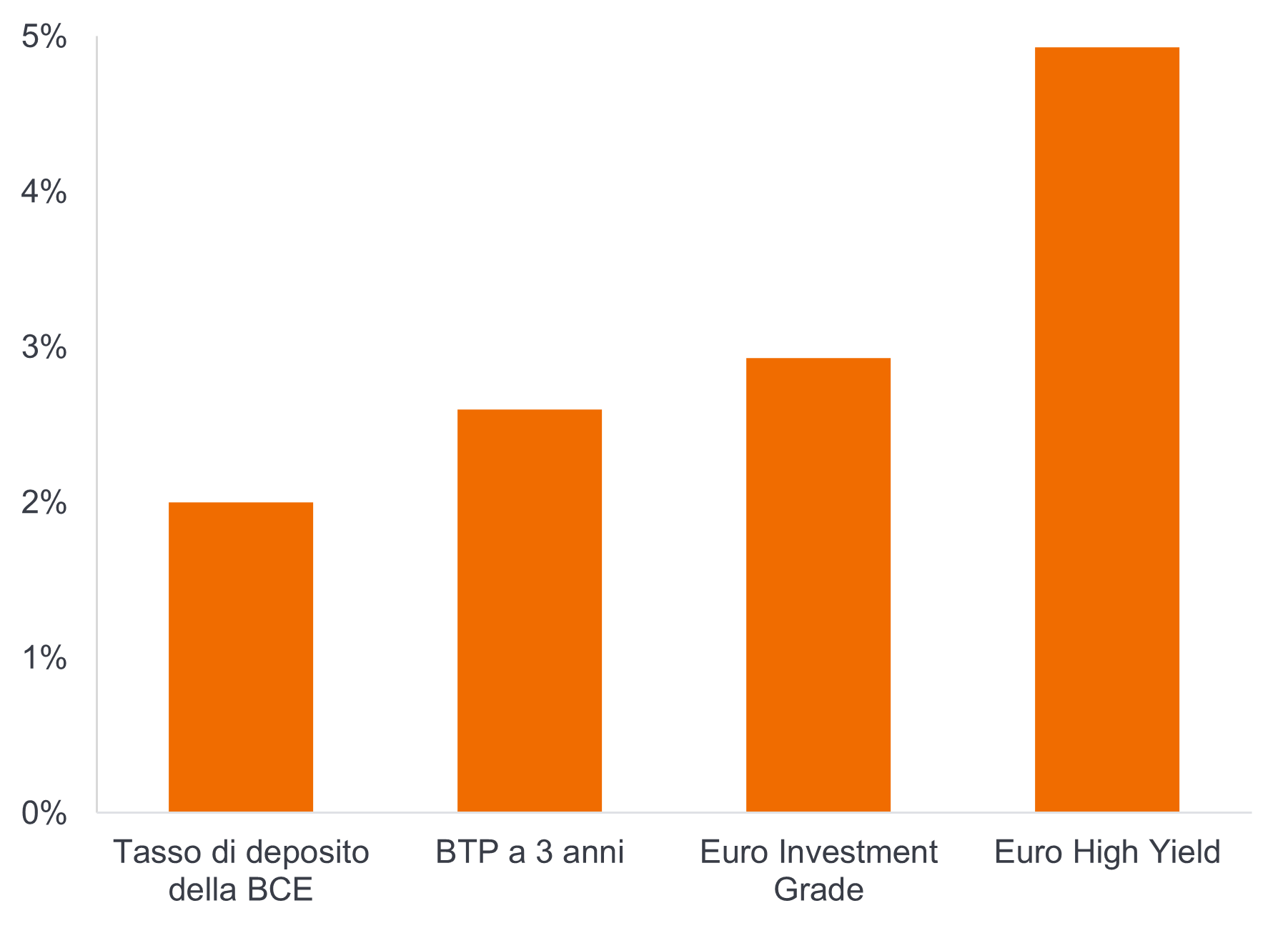
Source: Bloomberg, European Central Bank deposit rate, 3 year BTP, Euro investment grade: ICE BofA 1-3 Year BBB Euro Corporate Index, Euro high yeld: ICE BofA BB-B Euro High Yield Index, 10 March 2026. *Boomberg, World interest rate projections, correct at 10 March 2026. Yields and interest rates may vary over time and are not guaranteed. Past performance does not predict future returns.
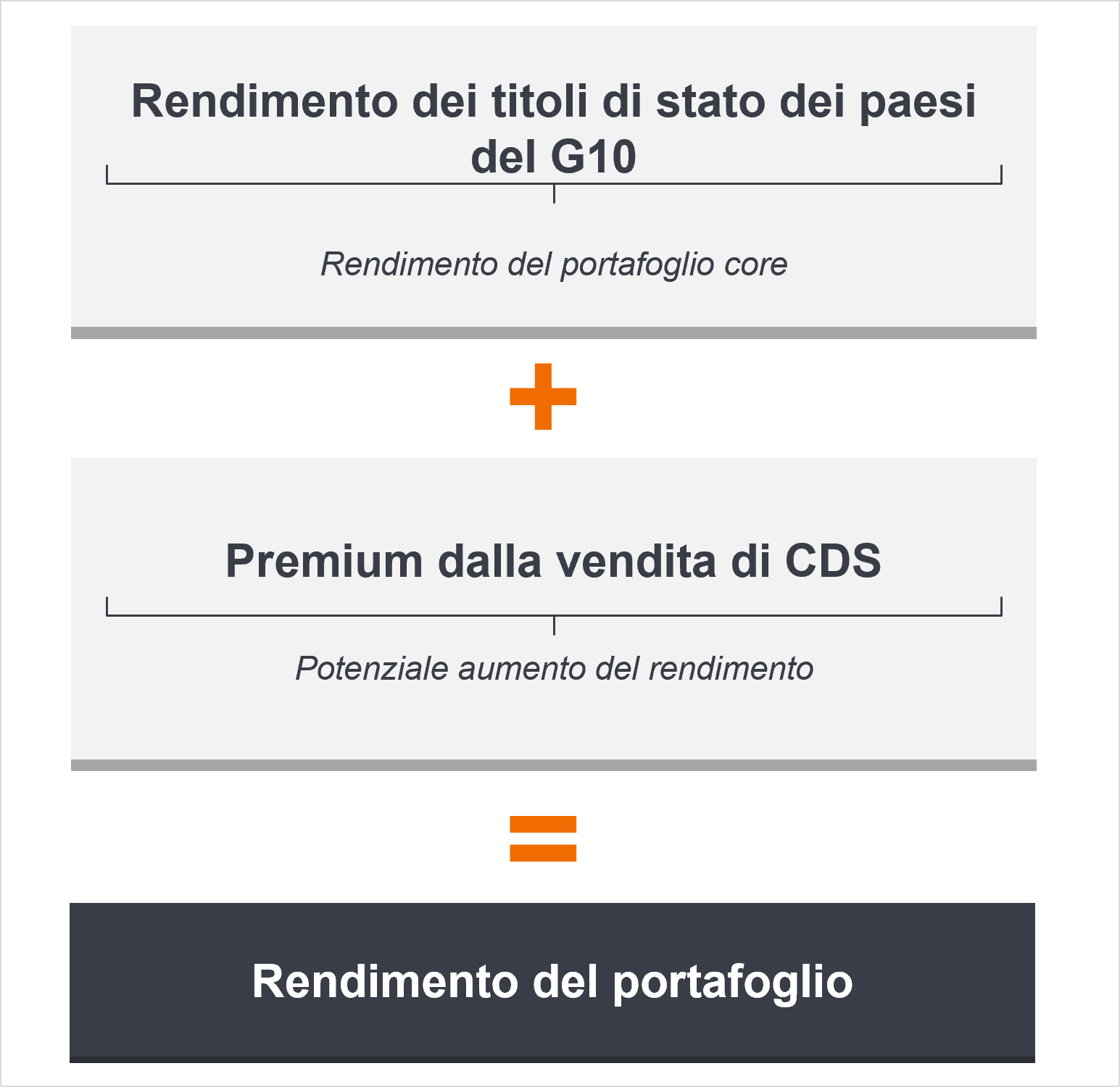
Source: Janus Henderson Investors. For illustrative purposes only. There is no assurance the stated objectives will be met. Actual results may vary, and the information should not be considered or relied upon as a performance guarantee.
Our approach to capturing income
With the Janus Henderson Fixed Maturity Bond Fund (EUR) 2029 we offer a balanced portfolio construction that prioritises quality while seeking yield enhancement.
The fund holds a core allocation to short-dated government bonds, principally Italian government bonds (BTPs), combined with a diversified credit default swap (CDS) overlay of 80-110 positions, primarily investment grade, carefully selected by our team of credit specialists.
A CDS is a derivative that allows the transfer of risk between parties. A seller of a CDS receives a premium in return for insuring a bond against default (when a bond issuer fails to meet repayments). The buyer of a CDS would be repaid the value of their bond if the bond defaults. Selling CDS allows us to create synthetic corporate bond exposure in an efficient way.
Why the fund uses credit default swaps
Selling CDS allows the fund to create a synthetic, diversified corporate bond exposure while generating income from the premiums. CDS are typically easier and cheaper to trade than physical bonds and we can closely align positions with the fund’s maturity date. This helps to reduce reinvestment risk – the challenge of achieving similar yield if interest rates are less favourable.
CDS are also unaffected by a bond being called early because unlike bondholders who when repaid need to identify another bond to invest in, the CDS seller continues to receive the premium from the counterparty to the end of the CDS contract. Additionally, the CDS seller can potentially monetise gains on the CDS contract if the creditworthiness of the bond improves (credit spreads tighten), although the buyer would benefit if credit spreads widen. If the bond defaults, the CDS seller must cover the default losses on the bond, which is why selling CDS is viewed as being akin to holding the bond.
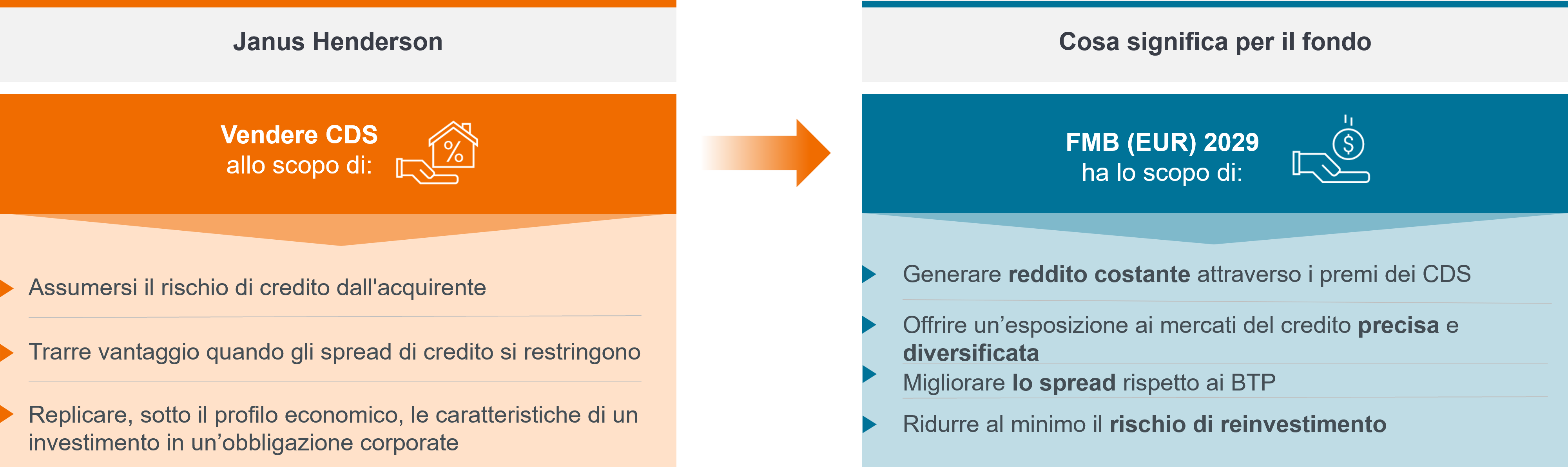
Source: Janus Henderson Investors. For illustrative purposes only. There is no assurance the stated objectives will be met. Actual results may vary, and the information should not be considered or relied upon as a performance guarantee.
Why invest in fixed maturity with Janus Henderson?
Building a robust portfolio upfront is important but circumstances change and we believe our more active approach can be beneficial in avoiding problem credits and optimising income.
Key benefits

Our Team
With over 15 years experience, our global credit team conduct a bottom-up research approach, leveraging industry insights to enhance portfolio yields and avoid negative credit events.

Disciplined repeatable process
A proactive and controlled risk‑monitoring process with a disciplined focus on avoiding defaults while strengthening resilience across economic and market cycles

Holistic approach to risk
By identifying pricing inefficiencies, quantitative analysis elevates credit research and shared risk ownership across portfolio managers and analysts encourages accountability.
Source: Janus Henderson Investors. Any risk management process discussed includes an effort to monitor and manage risk which should not be confused with and does not imply low risk or the ability to control certain risk factors. There is no assurance the stated objectives will be met. Actual results may vary, and the information should not be considered or relied upon as a performance guarantee. Please refer to glossary at the end for definitions.
Key parameters of the Janus Henderson Fixed Maturity Bond Fund (EUR) 2029
The fund invests in a portfolio of G10 government bond with a particular focus on Italy and credit default swaps (CDS) on single name, baskets and indices of corporate issuers. CDS will include both investment-grade and high-yield names to enhance income, with selection driven by quantitative analysis and market opportunities.
| Main parameters | |
|---|---|
| Fund objective | The Fund aims to provide a regular income while aiming to preserve the initial capital invested over the term. |
| Structure | Irish Investment Company (IIC) |
| Base currency | EUR |
| Offer period start date | 13 March 2026 |
| Investment date | 10 April 2026 |
| Offer period closing date | 5 June 2026 |
| Maturity date | 22 June 2029 |
| Indicative yield to worst before fees (all holdings hedged to EUR) | 4.29%* |
| Indicative yield to worst after fees (all holdings hedged to EUR) | 3.39%* |
| Coupon frequency | Semi-annual |
| Currency risk | Hedged to base |
| Typical holdings in CDS | 80-110** |
| Average rating of CDS | BBB3/BBB- |
| Maximum CDS high yield exposure | 40% |
| Expected portfolio turnover | 5-10% pa |
| Estimated efffective tax rate | 13.78%*** |
| Derivatives usage | Investment purposes, efficient portfolio management and hedging |
 |
WARNINGS TO INVESTORS ON THE RISK OF LIMITED MARKET EXPOSURE DURING THE MARKETING PERIOD: Please note that the Sub-fund does not propose to deploy capital during the offer period and can hold up to 100% of its assets in short-term deposits, cash and Money Market instruments (as set out in the prospectus) until the end of such offer period. *Neither the income nor capital value at maturity is guaranteed. Indicative yield to worst and net yield (based on A2 EUR share class noted in the table above excluding other expenses of 0.15% maximum), as at 9 March 2026. Net yields may vary and are subject to the Management Fee for the respective share class. Please refer to the Prospectus for the fees applicable to each respective share class. THE INDICATIVE YIELD IS NOT GUARANTEED. The final yield could be different as a result of changes that may occur in the assets held in the portfolio or the market evolution of interest rates and issuers’ credit.
**The fund can hold individual names as well as CDS indices. *** The estimated effective tax rate is to be applied to the total (gross return) of the fund. It is calculated on the basis of the percentage of eligible government securities included in the model portfolio, given that the relevant value for tax purposes is the market value (and not the notional value). The tax treatment indicated will apply upon publication of the first Italian Reduced Rate Percentage. In particular, starting from the first half of 2027, and subject to the publication of the financial statements as at 30 June 2026 confirming an exposure consistent with the model portfolio. ****Net yield excludes Expenses which are capped at 0.15%.
The estimated effective tax rate will apply to the coupon payments distributed by the fund. The estimated tax treatment assumes the taxpayer is domiciled in Italy for tax purposes, that the average portfolio weights are as described above, and that no changes are made to existing tax rules. The tax information above is based on information we have received and may be subject to change. Janus Henderson accepts no liability in relation to the effective tax rate being different from the figure quoted above. Please note this is not tax advice and investors should consult their own tax adviser if they are in any doubt about their tax position. Note that any differences among portfolio securities currencies, share class currencies and costs to be paid or represented in currencies other than your home currency will expose you to currency risk. Costs and returns may increase or decrease as a result of currency and exchange rate fluctuations. Please note that these ranges are reflective of the portfolio managers’ investment process and style at the time of publication. They may not be hard limits and are subject to change without notice. Please refer to the Prospectus for the broader parameters within which the strategy may operate. The Fund is designed to be held to 22 June 2029 (Maturity) and investors should be prepared to remain invested until such date. Fixed income investments made by the Fund would incur losses if interest rates rise, so that redemptions made before maturity may result in losses to the investor. Please note that the estimated (as the case may be) performance of the fund does not protect investors from the effect of inflations during the period to maturity and therefore the actual performance (i.e. discounting for inflation) could be lower or even negative. Fixed income investments made by the Fund would incur losses if interest rates rise, so that redemptions made before maturity may result in losses to the investor. Please note that the estimated (as the case may be) performance of the fund does not protect investors from the effect of inflations during the period to maturity and therefore the actual performance (i.e. discounting for inflation) could be lower or even negative. |
|||||||||||||||||||||||||||||||||||||||||||||||||||||||||||||||||||||||||||
Key risk considerations
Please consider the charges, risks, expenses and investment objectives carefully before investing. Please refer to the prospectus containing this and other information. Read it carefully before you invest or send money.
Offer process
- The fund will be available (for subscription) during the offer period.
- During the offer period, orders received before the investment date will be filled at prevailing net asset value (NAV).
- On the investment date the fund will invest its assets in accordance with the investment policy.
- Orders received on or after the investment date will be filled at prevailing NAV and may be subject to a dilution adjustment (as described in the prospectus).
- From the investment date the fund will be fully invested in the desired portfolio constituents.
- Further subscriptions will not be possible after the offer period has ended.
Swing pricing is applicable if shares are redeemed before the Maturity Date. Please refer to the prospectus for further details.
Meet the managers
Experienced portfolio managers supported by a globally integrated portfolio management and research team.
Portfolio Manager
Head of Investment Grade Credit | Portfolio Manager
Portfolio Manager
Portfolio Manager
Portfolio Manager
Definitions
Bond: A debt security issued by a company or a government used as a way of raising money. The investor buying the bond is effectively lending money to the issuer of the bond. Bonds offer a return to investors in the form of fixed-periodic payments (a coupon), and the eventual return at maturity of the original amount invested - the par value. Because of their fixed-periodic interest payments, they are also often called fixed-income instruments.
Bond yield: The level of income on a security expressed as a percentage rate. For a bond, at its most simple this is calculated as the coupon payment divided by the current bond price. There is an inverse relationship between bond yields and bond prices. Lower bond yields mean higher bond prices, and vice versa.
Call option: Callable bonds provide a bond issuer with the option (the right but not the obligation) to redeem a bond early, i.e. repay the bondholder the maturity value before the maturity date.
Corporate bond: A bond issued by a company. Bonds offer a return to investors in the form of periodic payments and the eventual return of the original money invested at issue on the maturity date.
Counterparty: The opposite party in a contract or financial transaction. Counterparty risk is the risk that one or more of the parties default on their obligations.
Coupon: A regular interest payment that is paid on a bond. It is described as a percentage of the face value of an investment. For example, if a bond has a face value of €100 and a 5% annual coupon, the bond will pay €5 a year in interest.
Credit Default Swap (CDS): A form of derivative contract between two parties used to manage the credit risk of a bond. The buyer makes regular payments to the seller, while the seller agrees to pay off the underlying debt if there is a default on the bond. A CDS is considered insurance against non-payment and is also a tradable security. This allows a fund manager to take positions on a particular issuer or index without owning the underlying security or securities.
Default: The failure of a debtor (such as a bond issuer) to pay interest or to return an original amount loaned when due. It can also relate to any failure to meet a contractual obligation.
Duration: Duration can measure how long it takes, in years, for an investor to be repaid a bond's price by the bond's total cash flows. Duration can also measure the sensitivity of a bond's or fixed income portfolio's price to changes in interest rates. The longer a bond’s duration, the higher its sensitivity to changes in interest rates and vice versa. A bond’s price rises when its yield falls, and vice versa.
High yield bond: A bond with a lower credit rating than an investment grade bond, also known as a sub-investment grade bond or ‘junk’ bond. These bonds usually carry a higher risk of the issuer defaulting on their payment, so they are typically issued with a higher interest rate (coupon) to help compensate for the additional risk..
Italian Government Bonds (BTPs): Debt securities issued by the Ministry of Economy and Finance to finance national debt, offering investors regular interest payments (coupons) and return of principal at maturity. Common types include BTPs (fixed-rate medium/long-term) and BOTs (short-term, zero-coupon).
Investment grade bond: A bond typically issued by governments or companies perceived to have a relatively low risk of defaulting on their payments. The higher quality of these bonds is reflected in their higher credit ratings when compared with bonds thought to have a higher risk of default, such as high-yield bonds.
Maturity: The maturity date of a bond is the date when the principal investment (and any final coupon) is paid to investors. Shorter-dated bonds generally mature within five years, medium-term bonds within five to 10 years, and longer dated bonds after 10+ years.
Net asset value (NAV): The total value of a fund's (or company’s) assets less its liabilities.
Portfolio turnover: The frequency with which portfolio assets are bought and sold over a specific period (typically a year).
Qualitative analysis: The use of mathematical and statistical techniques to analyse financial and economic date to help determine investment opportunities.
Spread/ credit spread: The difference in the yield of a corporate bond over that of a government bond of similar maturity.
Swing pricing: A process designed to help protect investors in a fund from the costs incurred when other investors buy or sell units in that fund.
Volatility: The rate and extent at which the price of a portfolio, security or index, moves up and down. If the price swings up and down with large movements, it has high volatility. If the price moves more slowly and to a lesser extent, it has lower volatility. The higher the volatility the higher the risk of the investment.
Yield: The level of income on a security over a set period, typically expressed as a percentage rate.
Yield to worst: The lowest yield a bond with a special feature (such as a call option) can achieve provided the issuer does not default. When used to describe a portfolio, this statistic represents the weighted average across all the underlying bonds held.
Additional fund information
Investment objective & policy
The Fund aims to provide a regular income while aiming to preserve the initial capital invested over the Term. The Fund is designed to be held until the end of the Term and investors should be prepared to remain invested until such date. The income amount or capital value is not guaranteed. The value of the shares at the end of the Term may be less than the value at the time of investment because of the Fund’s distribution policy or market movements.
The Fund invests in a portfolio of G10 government bonds and credit default swaps (CDS) on single name, baskets and indices of corporate issuers. In particular, the Fund will include Italian government bonds to which the Fund may have exposure of up to a maximum of 100% of its net asset value. The Fund may invest up to 100% in bonds issued or guaranteed by a single Member State, its local authorities, or a public international body of which one or more Member States are members. CDS will include both investment-grade and high-yield (non-Investment Grade) corporate issuers to enhance income. The CDS will generally have an average credit rating of BBB-/Baa3. The CDS may have up to 40% of its notional value in corporate issuers rated below Investment Grade. The Fund may also invest in high yield (non-Investment Grade) bonds, government bonds, municipal bonds, commercial paper, certificates of deposit and cash. The Fund may invest up to 10% of its net asset value in agency Mortgage-Backed Securities (which does not include Collateralised Mortgage Obligations). The Fund will not invest in contingent convertible bonds. The Fund may invest up to 10% in Collective Investment Schemes, including those managed by Janus Henderson. The Fund may invest up to 5% in unrated Debt Securities. The investment manager may use derivatives (complex financial instruments) to reduce risk, to manage the Fund more efficiently, or to generate additional capital or income for the Fund as well as for investment purposes.
The Fund is managed on a buy and maintain basis without reference to a benchmark.
Fund specific risks
An issuer of a bond (or money market instrument) may become unable or unwilling to pay interest or repay capital. If this happens or the market perceives this may happen, the value of the bond will fall. When interest rates rise (or fall), the prices of different securities will be affected differently. In particular, bond values generally fall when interest rates rise (or are expected to rise). This risk is typically greater the longer the maturity of a bond investment. While high yield (non-investment grade) bonds generally offer higher rates of interest than investment grade bonds, they are more speculative and more sensitive to adverse changes in market conditions.
Some bonds (callable bonds) allow their issuers the right to repay capital early or to extend the maturity. Issuers may exercise these rights when favourable to them and as a result the value of the Fund may be impacted. If the Fund holds assets in currencies other than the base currency of the Fund, or you invest in a share/unit class of a different currency to the Fund (unless hedged, i.e. seeks to mitigate exchange rate movements between the share/unit class currency and the base currency of the Fund), the value of your investment may be impacted by changes in exchange rates. Derivatives may be used to help achieve the investment objective. This can result in leverage (higher levels of debt), which can magnify an investment outcome. Gains or losses may therefore be greater than the cost of the derivative. Derivatives also introduce other risks, in particular, that a derivative counterparty may not meet its contractual obligations.
When the Fund, or a share/unit class, seeks to mitigate exchange rate movements of a currency relative to the base currency (hedge), the hedging strategy itself may positively or negatively impact the value of the Fund due to differences in short-term interest rates between the currencies. Securities could become hard to value or to sell at a desired time and price, especially in extreme market conditions when asset prices may be falling, increasing the risk of investment losses. Some or all of the ongoing charges and other costs of the Fund may be taken from capital, which may erode capital or reduce potential for capital growth. In addition to income, this share class may distribute realised and unrealised capital gains and original capital invested. Fees, charges and expenses are also deducted from capital. Both factors may result in capital erosion and reduced potential for capital growth. Investors should also note that distributions of this nature may be treated (and taxable) as income depending on local tax legislation.
For Investors

The The risk indicator refers to A2 EUR share class and assumes you keep the product until 22 June 2029. The summary risk indicator is a guide to the level of risk of this product compared to other products. It shows how likely it is that the product will lose money because of movements in the markets or because we are not able to pay you. We have classified this product as 2 out of 7, which is a low risk class. This rates potential losses from future performance at a low level and poor market conditions are very unlikely to impact the PRIIPs manufacturer to pay you. If the product currency differs from your home currency, the following applies: Be aware of currency risk. You will receive payments in a different currency, so the final return you will get depends on the exchange rate between the two currencies. This risk is not considered in the indicator shown above. This product does not include any protection from future market performance so you could lose some or all of your investment. If we are not able to pay you what is owed, you could lose your entire investment. Details of all relevant risks can be found in the Fund’s prospectus, available at www.janushenderson.com
Important information
All data sourced from Janus Henderson Investors (as at 9 March 2026), unless otherwise stated.
This product integrates ESG but does not pursue a sustainable investment strategy or have a sustainable investment objective or otherwise take ESG factors into account in a binding manner. ESG integration is the practice of incorporating material environmental, social and governance (ESG) information or insights in a non-binding manner alongside traditional measures into the investment decision process to improve long-term financial outcomes of portfolios. ESG related research is one of many factors considered within the investment process and in this materialwe seek to show why it is financially relevant.
Not for onward distribution. All content in this document is for information or general use only and is not specific to any individual client requirements. Janus Henderson Capital Funds Plc is a UCITS established under Irish law, with segregated liability between funds. This is a marketing communication. Please refer to the prospectus of the UCITS and to the KID before making any final investment decisions. Investors are warned that they should only make their investments based on the most recent Prospectus which contains information about fees, expenses and risks, which is available from all distributors and Paying/Facilities agents, it should be read carefully. An investment in the fund may not be suitable for all investors and is not available to all investors in all jurisdictions; it is not available to US persons. Past performance does not predict future returns. The rate of return may vary and the principal value of an investment will fluctuate due to market and foreign exchange movements. Shares, if redeemed, may be worth more or less than their original cost. This is not a solicitation for the sale of shares and nothing herein is intended to amount to investment advice. For sustainability related aspects please access Janushenderson.com. This document does not constitute investment advice or an offer to sell, buy or a recommendation, nor should it be taken as a basis to take (or stop taking) any decision, for securities, other than pursuant to an agreement in compliance with applicable laws, rules and regulations. Janus Henderson Group plc and its subsidiaries are not responsible for any unlawful distribution of this document to any third parties, in whole or in part, or for information reconstructed from this document and do not guarantee that the information supplied is accurate, complete, or timely, or make any warranties with regards to the results obtained from its use. As with all investments, there are inherent risks that each individual should address. The distribution of this document or the information contained in it may be restricted by law and may not be used in any jurisdiction or any circumstances in which its use would be unlawful. This document is strictly private and confidential and may not be reproduced or used for any purpose other than evaluation of a potential investment in any fund under the Janus Henderson Capital Funds umbrella structure. We may record telephone calls for our mutual protection, to improve customer service and for regulatory record keeping purposes. With effect from 1 January 2023, the Key Investor Information document (KIID) changed to the Key Information Document (KID), except in the UK where investors should continue to refer to the KIID.
Issued in Europe by Janus Henderson Investors International Limited (reg no. 3594615), Janus Henderson Investors UK Limited (reg. no. 906355), Janus Henderson Fund Management UK Limited (reg. no. 2678531), Tabula Investment Management Limited (reg. no. 11286661), (each registered in England and Wales at 201 Bishopsgate, London EC2M 3AE and regulated by the Financial Conduct Authority) and Janus Henderson Investors Europe S.A. (reg no. B22848 at 78, Avenue de la Liberté, L-1930 Luxembourg, Luxembourg and regulated by the Commission de Surveillance du Secteur Financier).
The Extract Prospectus, the key information documents, the Company’s Articles as well as the annual and semi-annual reports may be obtained free of charge from the Swiss Representative. The Swiss Representative is FIRST INDEPENDENT FUND SERVICES LTD., Feldeggstrasse 12, CH-8008 Zurich. The Paying Agent in Switzerland is Banque Cantonale de Genève, 17, quai de l’Ile, CH-1204 Geneva. In respect of the units offered in Switzerland, the place of performance is the registered office of the representative. The place of jurisdiction is at the registered office of the representative or at the registered office or place of residence of the investor. The last share prices can be found on www.fundinfo.com For Qualified investors, institutional, wholesale client use only. Copies of the Fund’s prospectus, Key Information Document, articles of incorporation, annual and semi-annual reports are available in English and other local languages as required from www.janushenderson.com. These documents can also be obtained free of charge from the Registered Office of the Company at 10 Earlsfort Terrace, Dublin 2, Ireland.They can also be obtained free of charge from the local Facilities Agents and the Swiss representative and paying agent. Janus Henderson Investors Europe S.A. (“JHIESA”), 78, Avenue de la Liberté, L-1930 Luxembourg, Luxembourg, is the Facilities Agent in Austria, Belgium Germany, Portugal, Sweden, Liechtenstein and Luxembourg. JHIESA is also the Facilities Agent for France (Sub – TA is CACEIS). FE fundinfo (Luxembourg) S.à.r.l., 6 Boulevard des Lumières, Belvaux, 4369 Luxembourg, is the Facilities Agent in Denmark, Finland, Netherlands, Norway, and Greece. State Street Bank International GmbH – Succursale Italia, Société Générale Securities Services S.p.A (SGSS S.p.A), Allfunds Bank S.A.U filiale di Milano, Caceis Bank Italy Branch, and Banca Sella Holding S.p.A. are the Sub Transfer Agents for Italy. Allfunds Bank S.A., Estafeta 6, La Moraleja, Complejo Plaza de la Fuente, Alcobendas 28109, Madrid, Spain is the Facilities Agent in Spain. Janus Henderson Capital Funds Plc is an Irish collective investment scheme (IIC) registered in the National Securities Market Commission's (CNMV) registry with registration number 265. The Hong Kong Representative is Janus Henderson Investors Hong Kong Limited of Unites 701-702, 7/F, LHT Tower, 31 Queen’s Road Central, Hong Kong. Janus Henderson Investors (Singapore) Limited (Company Registration No. 199700782N), whose principal place of business is at 138, Market Street #34-03/04, CapitaGreen, Singapore 048946, Singapore (Tel: 65 6813 1000). Any further dissemination of this document to other persons who do not qualify as professional investors is not permitted nor is authorised by Janus Henderson Investors. The summary of Investors Rights is available in English from https://www.janushenderson.com/summary-of-investors-rights-english. Janus Henderson Investors Europe S.A. may decide to terminate the marketing arrangements of this Collective Investment Scheme in accordance with the appropriate regulation.
Janus Henderson® and any other trademarks used herein are trademarks of Janus Henderson Group plc or one of its subsidiaries. © Janus Henderson Group plc. For more information or to locate your country’s Janus Henderson Investors representative contact information, please visit www.janushenderson.com
W-0525-1265002-05-31-2026