Key takeaways:
- Economic Focus: When demand clashes with supply – higher yields are back
- Australian yields are reflecting Australia’s role as the leader of the rates peloton in this inflationary cycle.
- RBA risks are to the upside near term, but late 2027 sees an easing cycle.
Economic Focus: When demand clashes with supply – higher yields are back
A changing global landscape is raising yield structures; Australia is not immune and local policy can’t halt their impact. The confluence of higher demand and lower supply events are pushing central bank rate expectations upwards, as well as increased term premia. We expect higher rates are here to stay as developed markets re-enter a period of higher inflation and less policy certainty.
The first major factor we categorise as global government fragmentation, where government policy is less co-ordinated internationally and less efficient. Its aims are centred on nationalistic outcomes, rather than global goals which have typically simultaneously enhanced domestic outcomes. This change in emphasis has led to trade wars, actual wars, and rising fiscal deficits to name a few outcomes. Governments are less sensitive to rising interest rates and more likely to expand fiscal policy to achieve their goals, with less attention to cost and inflationary pressures. These policies add to aggregate demand for capital, as Government debt competes in the same market as other interest rate insensitive debt.
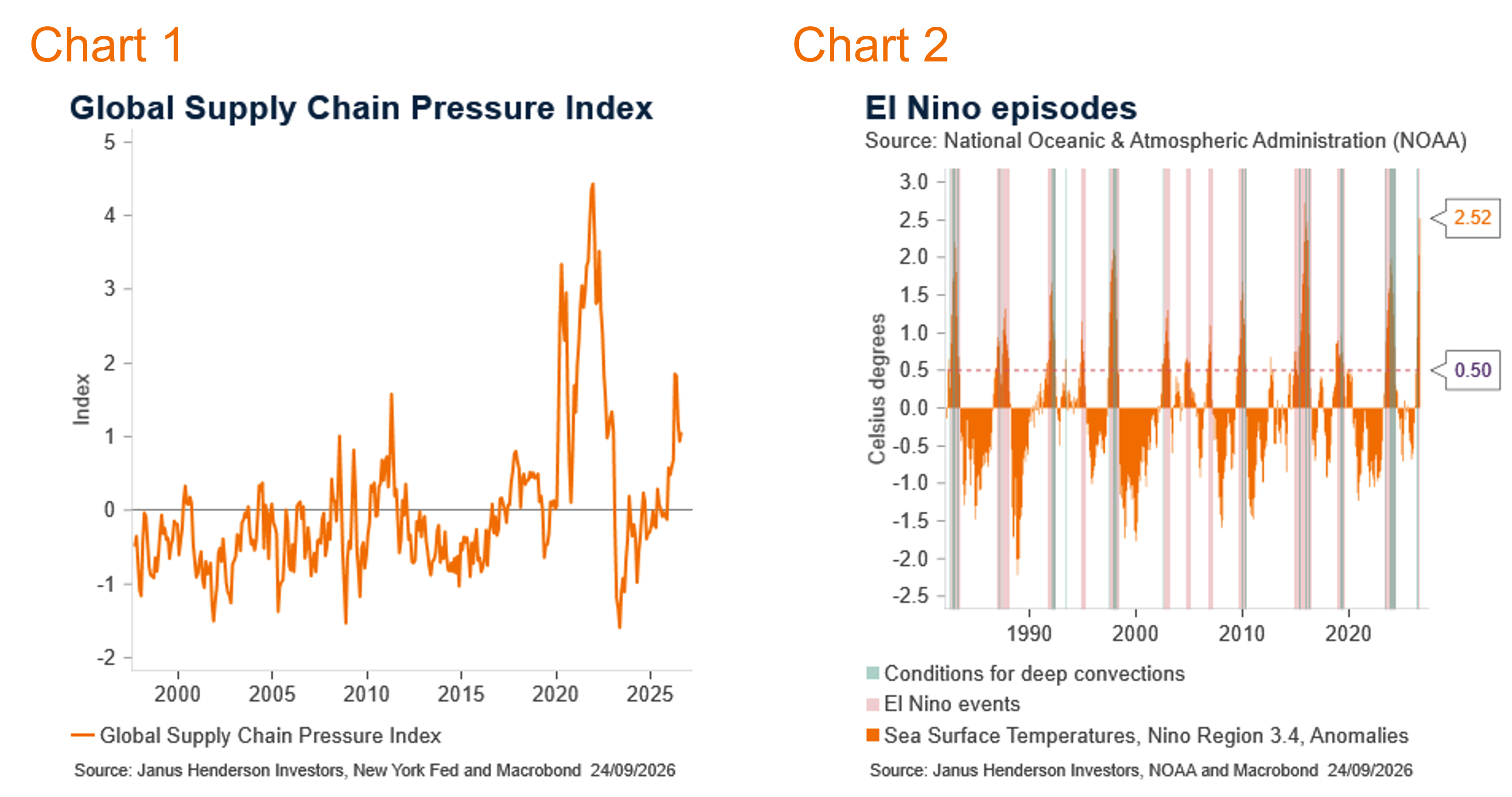
The change in emphasis has also contributed to more fragmented supply chains. Conflict in Europe, and in the Middle East has hampered supplies of everything from wheat and barley to crude oil and fertiliser. While some of these supply chains will improve, there is now a permanently higher probability of some form of restriction occurring somewhere along the supply chain globally. A higher level of restriction is associated with higher levels of inflationary forces, and higher interest rates.
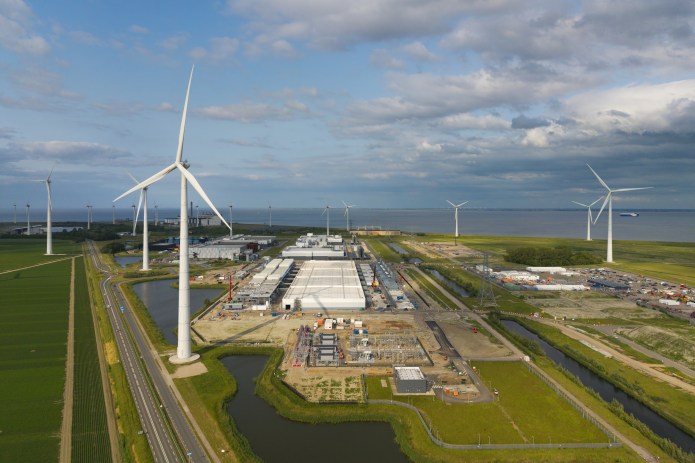
A second strong driver of capital demand is the AI transformation. The AI super cycle is here in force, raising demand for capital, at seemingly interest rate insensitive levels. The push to lead the way in the AI race, in a winner takes most competition, is fuelling a strong push in both AI advancement and infrastructure. Australia is experiencing infrastructure demand through datacentres, for example, but also the software buildout. Capital to fund this growth has moved beyond cash reserves into the credit sphere globally, such as Alphabet’s inaugural Australian dollar bond issue in August. This explosive issuance competes with Governments for the marginal dollar saved. The outcome is a tight global savings and investment balance, and one which is arguably tipping into deficit and inevitably higher interest rates.
The AI super cycle is also fuelling economic growth, which might otherwise have been lacklustre. Increased production of inputs to AI, like chips, and infrastructure, is having a flywheel effect on the rest of the economy. This is most evident in the US, but is also supporting growth elsewhere. In Australia this can be seen in the private sector capital expenditure data, currently doing its best to imitate the earlier stages of the mining boom.
Thirdly, weather impacts from global warming are having an impact on global supplies. The ocean warming El Nino indicator recently hit its highest ever recording and is making its presence felt. There are currently droughts in a number of countries, while water levels in the Panama Canal are low enough to limit transits, as they are in other waterways in Europe and Indonesia. Increased droughts are expected to widen in the Southern Hemisphere as Summer approaches. The impact on crop output, as well as shipping restrictions are both supply constraints, further raising inflation.
There are also capital demand implications from this present weather event. Global climate changes haven’t gone away even if there has been a decrease in emphasis on addressing it at a global level. The energy transition requires capital investment to diversify the energy base and adding a third source of less interest rate elastic capital demand.
The current rise in market yields are based on the increased probability of higher central bank cash rates, precipitated by higher inflation risks over the last month. But, they are also indicative of the global environment where there are multiple sources of demand for capital vying for the same pool of savings. We account for this via higher yield curve term premia and not just a higher central bank cash rate.
Central banks are having to raise interest rates to address heightened inflation, indeed the RBA has been leading the pack on this cycle. However, the more structural fundamental economic changes suggest that some of the lift in yields is a return to a higher overall yield structure across tenors.
After accounting for both the cash rate cycle, and there will still be cycles, as well as a higher term premia, there are still pockets of value coming into the yield curve.
Market review
The Reserve Bank of Australia (RBA) raised the cash rate 25 basis points (bps) to 4.60%. Three-month bank bills reflected the hike, rising 22bps to 4.77%, while six-month bank bill rates rose 25bps to 5.12%. Australian three-year government bond yields increased 27bps to 4.93%, while 10-year yields also rose 26bps to 5.35%. The 10-year inflation-linked bond yield rose to 2.40%.
Australian yields are reflecting Australia’s role as the leader of the rates peloton in this inflationary cycle. Australia’s inflation has been elevated as the RBA previously opted to preserve its labour market mandate. With rising global inflationary risks and capacity constraints biting, the RBA led the pack in the hiking cycle and dragged yields up with them. Bond yields reflect the domestic risks, but the more recent moves have also lifted to represent the global repricing to account for the non-interest rate sensitive investment cycle (both AI, and fiscal), and less economically efficient government policy which includes the Middle East conflict but also a plethora of other inward focussed policies. This changing world requires a higher term risk premia. We feel this is now accounted for in yields.
Domestic data continues to show heightened inflation, with monthly headline CPI at 4.0% but the more important trimmed mean remained at 3.6%yoy, a level that the RBA has accounted for. The labour market is still characterised as “tight” with an unemployment rate of 4.6%, but the range of employment indicators are loosening at the margins. Confidence levels remain understandably poor in a higher rate, higher inflation environment, and are seemingly disconnected to activity for now. The housing market is slowing, with credit growth dropping sharply, and prices falling across almost all capital cities into September.
Key themes driving global risk markets remained the AI trade, Middle-East / energy market tensions, and lifting global bond yields. In Australia, a softening property market and rising stress in the private credit sector focused investor attention. Adjusted for the semi-annual roll, the Australian iTraxx Index closed 1bp tighter at 72bps, while the Australian fixed and floating rate credit indices returned -0.54% and +0.37% respectively.
Market outlook
We believe that while the RBA risks future hiking, we are more toward the end of the cycle than the beginning, unlike other central banks such as the US Federal Reserve. We presently see a base case of a peak in the cash rate to 4.60%, and a 25% chance of the high case, with a peak in the cash rate of 5.35%. There is a substantial amount priced in right across the Australian curve. The curve is also suggesting that the current tight monetary policy conditions will be held, almost permanently, across time. And while we see policy rates now in a higher band than previously, we do see a period in the future where the RBA will be able to move back toward a less restrictive policy.
We have slowly been raising our long duration position as yields have been rising, with a focus on the mid-curve. We have a modest long position at present and will continue to add as more opportunities present themselves if yields rise further.
We expect volatility to remain structurally elevated as geopolitical and macro risks persist whilst left-tail risks continue to proliferate. To the latter, we would add disruption risks (and opportunities) related to the accelerating impact of AI on a significant part of the global economy. In recognition of the complex and bifurcated investment environment, our credit strategy remains skewed towards high-quality, investment grade issuers who benefit from resilient moats, solid earnings power and conservative balance sheets. Conversely, we are avoiding economically-sensitive, lower credit quality and leveraged corporate and consumer focused sectors where default stress remains elevated, or which are highly exposed to Artificial Intelligence disruption. Credit spreads and all-in yields particularly in low/no default-risk Australian Investment Grade credit remain reasonably attractive versus global credit. In our view, high quality Australian credit will remain resilient through a range of macro-economic environments. While we remain constructive and are well-invested across our client portfolios, we are becoming increasingly discerning on new portfolio additions and have actively re-built ample capacity to take advantage of likely periods of opportunity. Lastly, we have prudently elected to maintain material levels of inexpensive credit protection to protect against downside left-tail risks.
Views as at 1 October 2026.
All opinions and estimates in this information are subject to change without notice and are the views of the author at the time of publication. Janus Henderson is not under any obligation to update this information to the extent that it is or becomes out of date or incorrect. The information herein shall not in any way constitute advice or an invitation to invest. It is solely for information purposes and subject to change without notice. This information does not purport to be a comprehensive statement or description of any markets or securities referred to within. Any references to individual securities do not constitute a securities recommendation. Past performance is not indicative of future performance. The value of an investment and the income from it can fall as well as rise and you may not get back the amount originally invested.
Whilst Janus Henderson believe that the information is correct at the date of publication, no warranty or representation is given to this effect and no responsibility can be accepted by Janus Henderson to any end users for any action taken on the basis of this information.