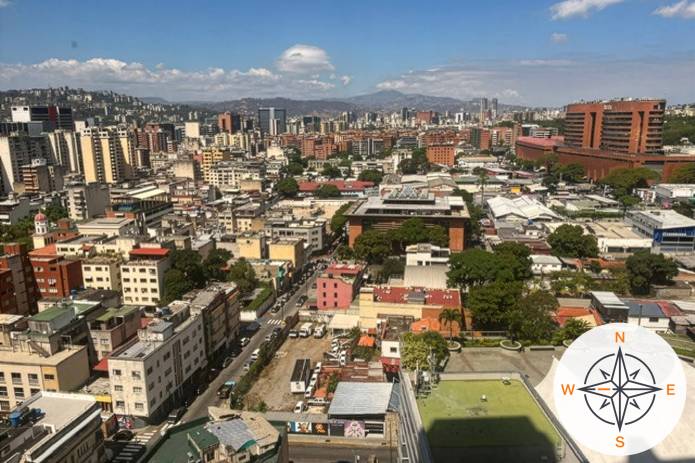
Key takeaways:
- Back in 2017 during our last visit, Venezuela was moving towards collapse, hyperinflation, repression and institutional breakdown. Today, the conversation has profoundly shifted toward recovery, re-engagement and reconstruction.
- A more assertive US approach to the Western Hemisphere – one that many would frame in Monroe Doctrine terms – has materially changed the outlook, while the capture of Nicolás Maduro has opened space for economic normalisation and political transition.
- With the world’s largest oil reserves, the Middle East crisis has strengthened Venezuela’s strategic importance. Yet this remains a high-friction story: optimism is rising, but political challenges, inflation, exchange-rate distortions, weak institutions and infrastructure constraints remain limiting.
A changed trajectory since 2017
Returning to Venezuela after last visiting in 2017 was a reminder of just how dramatically a country’s narrative can change – and how quickly a market long treated as uninvestable can move back into the realm of serious strategic discussion. For me personally, Venezuela has long been one of the most frustrating cases in my 14 years of investing in emerging markets debt: a country with extraordinary potential – not only in oil and gas, but across human capital, geography, and natural resources – repeatedly undermined by non‑democratic governance, policy missteps, isolation, and ultimately economic collapse.
In 2017, Venezuela felt trapped inside a cycle of collapse. Hyperinflation was hollowing out incomes and savings. Sanctions and isolation later deepened external disconnection. The private sector was still operating, but in a defensive way. Institutions were weak, capital had fled, and the national mood was one of exhaustion. A series of elections held after 2017 repeatedly failed to translate popular discontent into political change, reinforcing a sense of stasis rather than renewal. The central question then was not how recovery might unfold, but whether the country could stabilise at all.
That is no longer the dominant narrative.
Nevertheless, the scars of that period remain everywhere. Poverty is still profound. Public services remain weak. Confidence in institutions is thin, and the economic system continues to function, albeit with debilitating distortions.. But what has changed is that recovery is now being discussed as a credible scenario, not as a theoretical one and I could feel the optimism on the ground.
US strategy reshapes the path forward
Much of the change in sentiment can be traced to the evolving US view of the Western Hemisphere. What had looked like a region of secondary importance has returned to the strategic foreground. Energy security, geopolitical competition and a renewed willingness to shape outcomes closer to home have all contributed to a more forceful US posture.
That shift has already mattered enormously for Venezuela. Washington has moved quickly to operationalise progress – working at pace on targeted sanctions relief, re‑establishing diplomatic presence through the reopening of the US embassy and signalling a willingness to support early normalisation steps. Just as importantly, US officials appear to have encountered a high degree of pragmatism on the Venezuelan side, with the authorities demonstrating clear intent to work constructively with the US to unlock development.
The capture of Maduro has created an opening that would have seemed improbable not long ago. It has altered the political balance, accelerated diplomatic engagement and made it possible to discuss transition not as abstract theory, but as a live process. In practice, that has begun to reshape how investors, corporates and policymakers view the country. Venezuela is increasingly seen not only as a distressed sovereign or sanctions case, but as a potential reconstruction and reopening story.
The timing is also notable. The crisis in the Middle East has further reinforced the strategic logic of supporting additional energy supply, particularly from countries that matter to US hemispheric policy. That does not remove Venezuela’s risks. But it does make the country more relevant than it has been for years, both to Washington and to global energy markets.
Oil as the engine of stabilisation
If there is a single sector on which the entire recovery story currently hinges on, it is oil and gas.
That should not be surprising. Venezuela’s hydrocarbon endowment has always been the foundation of its economic relevance, even if years of mismanagement, underinvestment and institutional deterioration rendered that endowment largely inert. Today, the sector is again being viewed as the country’s most plausible engine of stabilisation.
The logic is straightforward. Venezuela needs hard currency, export revenue and a source of growth large enough to begin repairing the broader economy. Oil and gas remain the only sectors capable of delivering that at scale. They are also central to the country’s ability to restore fiscal revenues, improve the external balance, strengthen the financial system and, ultimately, support a more durable political transition.
But the path forward is not simply about drilling new wells. It is about repairing an ecosystem. Electricity must become more reliable. Gas handling and compression systems need to function if oil production is to rise sustainably. Logistics, customs, payments channels and legal frameworks all need to improve.
The first phase of recovery is likely to come from rehabilitation and brownfield investment, but sustained expansion will require much deeper rebuilding. What struck us when in Caracas was how decisively the global energy industry is already re‑engaging; conversations are active, technical teams are returning, and interest – across operators, service companies, and financiers – is intense, even if final investment decisions are still gated by infrastructure, contracts, and enforcement.
That is why the Venezuela story today is best understood as high-potential but execution-dependent. The oil reserves and strategic interest are there. The policy momentum is increasingly evident. The question is whether implementation can keep up.
Momentum builds, but bottlenecks persist
One of the most encouraging aspects of the trip was the degree of confidence visible in parts of the private sector. Across industries, there was a strong sense that Venezuela has moved from stagnation toward possibility. The argument was not that the country has already normalised, but that the direction of travel has changed and many sectors are now positioned for recovery if key barriers continue to ease.
This applies far beyond hydrocarbons. Banking, transport, logistics, aviation, industry, tourism, mining and consumer-facing businesses all appear to offer meaningful upside potential from today’s depressed base. In many cases, installed capacity still exists, even if it has been damaged, neglected or underutilised. In others, the more important story is entrepreneurial resilience: businesses have learned to operate in highly adverse conditions and may be able to scale quickly if financing and regulation improve.
Optimism for recovery, however, should remain measured. Venezuela is still not a normal operating environment, and while the current political configuration appears more aligned with US interests, it largely rests on the same actors who preceded President Maduro’s removal.
Inflation remains high, while the exchange-rate regime remains fragmented. Access to financing for corporates is limited and expensive. Regulatory friction continues to weigh on activity. Infrastructure constraints, especially in electricity, remain critical. Banking channels for cross-border payments are only gradually improving. We believe capital can become interested in Venezuela faster than Venezuela can become easier to invest in.
Stabilisation before political transition
We visited the Presidential Palace in Caracas and met with acting President Delcy Rodríguez along with a number of other officials. Politically, the country appears to be in an unusually fluid moment. The collapse of the old equilibrium has created space for reform, dialogue and repositioning. There is more openness to economic pragmatism, more discussion of institutional rebuilding, and more recognition that Venezuela’s failed economic model cannot simply be preserved. At the same time, the political transition remains unresolved.
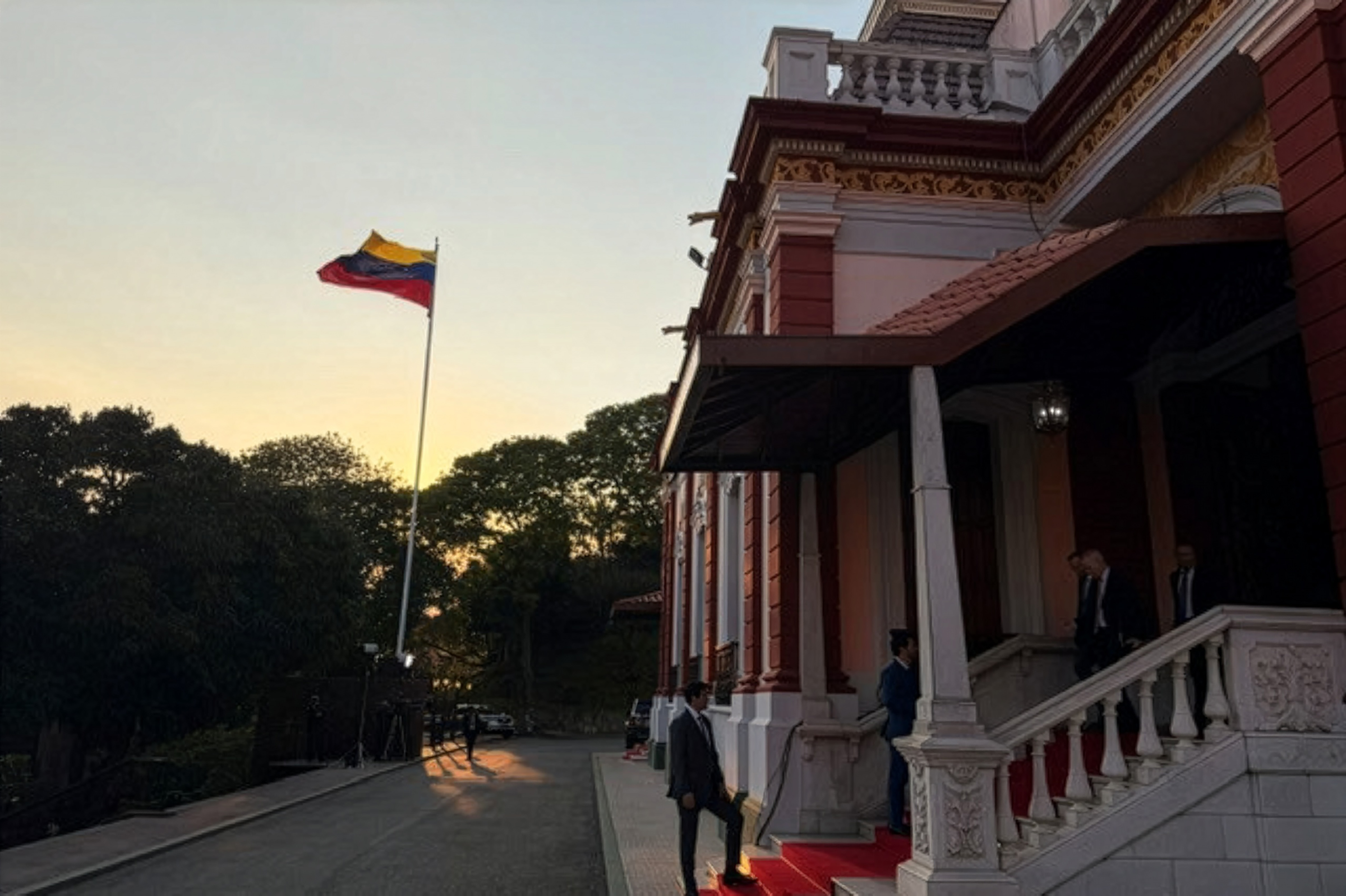
Meetings at the Presidential Miraflores Palace, (Palacio de Miraflores) in Caracas, Venezuela.
A central idea arising throughout the trip was that economic stabilisation should come before full political contestation (or open competition for political power and influence). A rush into polarisation before the economy improves could destabilise the process and make reform harder to sustain. In that view, the sequence should be:
- stabilise the economy,
- create room for reconciliation,
- rebuild institutions,
- and only then move toward a more definitive electoral phase.
Notably, even parts of the political opposition appear willing to show patience, accepting a sequencing in which political transition is treated as the final step of normalisation rather than its starting point.
Whether events unfold so neatly is another matter. Venezuela still faces deep distrust, weak institutions, and the lingering risk that politics once again outpaces implementation. The debt overhang also remains in the background: too large to ignore indefinitely, but probably difficult to tackle meaningfully before the country has regained some administrative capacity, legal clarity and economic momentum.
A difficult, uneven reopening
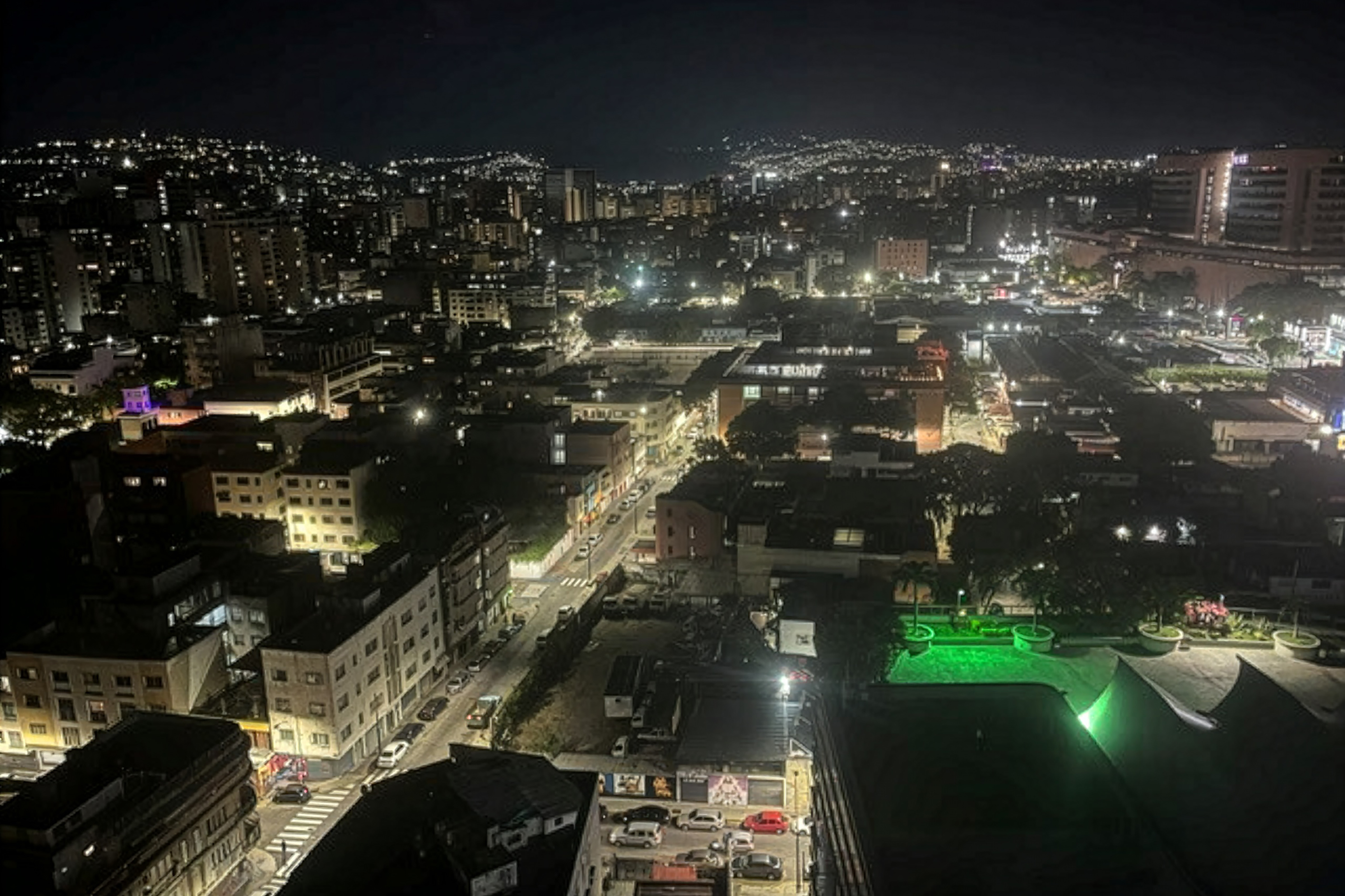
Caracas at night.
The most accurate way to describe Venezuela today is as a difficult, but promising reopening. Compared to 2017, the change is unmistakable. The country feels less closed, less static and less trapped in a downward spiral. US foreign policy has shifted. The political landscape has opened. The oil sector is again being treated as a realistic anchor for recovery. The private sector, though battered, retains a surprising amount of energy and adaptability. And the global backdrop – particularly the value of additional energy supply in an unstable geopolitical environment – has made Venezuela more strategically relevant than at any point in recent years.
It remains, however, a fragile, high-friction environment with substantial macroeconomic, institutional and political risks. Recovery, if it comes, is unlikely to be linear. Setbacks are almost certain. Execution will matter more than announcements. Still, the shift in direction is real. Venezuela is no longer a story of collapse. It is increasingly a story of optionalities reopening – and that, in itself, is a major change.
IMPORTANT INFORMATION
Sovereign: Typically refers to debt issued by a national government. Sovereign bonds are backed by the country’s creditworthiness and ability to repay.
Emerging market investments have historically been subject to significant gains and/or losses. As such, returns may be subject to volatility.
Sovereign debt securities are subject to the additional risk that, under some political, diplomatic, social or economic circumstances, some developing countries that issue lower quality debt securities may be unable or unwilling to make principal or interest payments as they come due.
Fixed income securities are subject to interest rate, inflation, credit and default risk. The bond market is volatile. As interest rates rise, bond prices usually fall, and vice versa. The return of principal is not guaranteed, and prices may decline if an issuer fails to make timely payments or its credit strength weakens.
Foreign securities are subject to additional risks including currency fluctuations, political and economic uncertainty, increased volatility, lower liquidity and differing financial and information reporting standards, all of which are magnified in emerging markets.
Venezuela has the world’s largest oil reserves: US Energy Information Administration (EIA), ‘Country Analysis Brief: Venezuela’, 8 February 2024.
Bond: A debt security issued by a company or a government used as a way of raising money. The investor buying the bond is effectively lending money to the issuer of the bond. Bonds offer a return to investors in the form of fixed-periodic payments (a coupon), and the eventual return at maturity of the original amount invested—the par value. Because of their fixed-periodic interest payments, they are also often called fixed-income instruments.
Capital means money and financial resources that can be invested in an economy, whether by domestic residents or foreign investors.
Debt overhang: A situation in which a country’s (or company’s) existing debt burden is so large that it discourages new investment and slows recovery, because the benefits of any improvement are expected to accrue mainly to creditors rather than to the borrower.
Emerging market: The economy of a developing country that is transitioning to become more integrated within the global economy. This can include making progress in areas such as depth and access to bond and equity markets and development of modern financial and regulatory institutions.
External balance is an economic state where a country’s transactions with the rest of the world (current account) are sustainable, typically meaning exports roughly equal imports, preventing excessive debt or surpluses.
Fiscal revenues: The total income a government receives, primarily through taxation (income tax, VAT, corporate tax) and non-tax sources (fees, fines, sales of goods), which are used to fund public services, infrastructure, and debt repayment.
Hard currency: Widely accepted currencies used in global trade/finance (e.g., USD, EUR) rather than local currency.
Hyperinflation is an extreme, rapid, and uncontrollable economic event where prices for goods and services rise by more than 50% per month.
Inflation: The rate at which the prices of goods and services are rising in an economy. The consumer price index (CPI) and retail price index (RPI) are two common measures; the opposite of deflation.
The Monroe Doctrine, issued by US President James Monroe on 2 December 1823 is a foundational foreign policy warning European powers against further colonisation or interference in the Western Hemisphere.
All opinions and estimates in this information are subject to change without notice and are the views of the author at the time of publication. Janus Henderson is not under any obligation to update this information to the extent that it is or becomes out of date or incorrect. The information herein shall not in any way constitute advice or an invitation to invest. It is solely for information purposes and subject to change without notice. This information does not purport to be a comprehensive statement or description of any markets or securities referred to within. Any references to individual securities do not constitute a securities recommendation. Past performance is not indicative of future performance. The value of an investment and the income from it can fall as well as rise and you may not get back the amount originally invested.
Whilst Janus Henderson believe that the information is correct at the date of publication, no warranty or representation is given to this effect and no responsibility can be accepted by Janus Henderson to any end users for any action taken on the basis of this information.