Key takeaways:
- The energy transition is increasingly being driven by costs, profitability and energy demand, not just environmental goals and policy.
- Businesses that help customers generate more sustainable energy, use fewer resources, improve efficiency or strengthen supply chains are well suited to benefit from long-term investment trends like decarbonisation and the the transition to a lower-carbon, more resource-efficient economy.
- By combining high-conviction stock selection, aligned with structural themes complemented by risk-managed exposure, investors can build a more diversified global equity portfolio. This can offer differentiated sources of returns beyond mega-cap technology and traditional benchmark concentrations.
How do you build a portfolio that offers better global diversification and uncorrelated returns?
Investors’ list of wants in a global equity allocation are relatively simple: a portfolio that can deliver differentiated, uncorrelated returns and consistent alpha. But too often they find that existing active strategies either resemble the benchmark too closely, or introduce excessive concentration and factor risk.
We believe a more truly diversified global equity portfolio can be constructed by combining high-conviction stock selection with disciplined risk management. This enables holdings to differ materially from the mega-cap-heavy portfolios common among global active and passive funds, providing differentiated and potentially less correlated sources of return. Notably, to achieve improved diversification, exposure to a select set of structural themes beyond technology and artificial intelligence (AI) is required.
Key to this approach would be optimisation of position sizes so that performance is not overly dependent on any single stock, manager, investment style, sector, region or macroeconomic factor. By balancing higher risk holdings with lower-risk holdings, the portfolio has the potential to remain resilient across a range of market conditions while preserving an investment managers’ strongest stock ideas.
Complementary to this approach, secular themes act as the idea-generation framework, helping to identify structural areas of growth. But notably, while themes would guide idea generation, stock selection should ultimately be a result of bottom-up, conviction-led views.
Net Zero 2.0: Pragmatic clean energy and sustainability solutions
Previously, we discussed how Sovereignty as an investment theme is creating opportunities for companies that enable customers to enhance supply chain resilience, regionalise production and navigate an increasingly complex geopolitical environment.
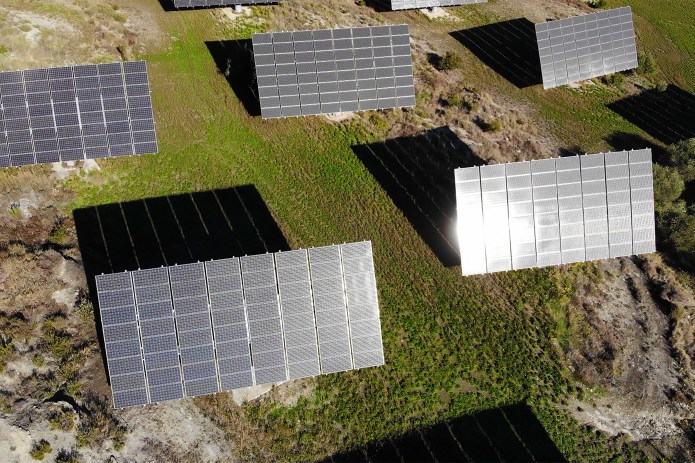
Another investment theme that is well positioned to benefit from long-term structural shifts is Net Zero 2.0. The transition toward a lower-carbon economy used to be a climate policy-led transition. Today it is increasingly becoming a market-driven one, underpinned by cost competitiveness, growing power demand and the need for more resilient energy systems. Solar has become the default source of new power capacity, while AI, data centres and electrification are driving a fundamental shift in energy demand.
At the same time, there is a significant opportunity for companies that view sustainability as an opportunity to innovate rather than just a challenge to overcome. Despite the cost-of-living crisis, consumers are willing to pay an average of 9.7% more on products that are sustainably manufactured or sourced, according to a global survey by consultancy firm PwC.1
What makes Net Zero 2.0 a compelling long-term investment theme?
In an increasingly multipolar world dominated by a few major nations or regions, supply chains and energy security are back in focus. Particularly as supply disruptions have spread, from the Ukraine/Russia conflict, and conflicts in the Middle East. Whichever direction these conflicts take, we expect companies within sub-sectors related to energy security, resilience and efficiency, as well as those that are innovating to improve sustainability, to come more into focus.
1. Rising global energy demand
Energy security, AI infrastructure and decarbonisation are three key factors reshaping energy demand and supply. McKinsey & Company’s Global Energy Perspective 2026 report suggests that volatile market conditions and multiple grey swan events (foreseeable, yet with a low probability of occurring) are increasing the need for energy transition to meet the growing demand for power. In 2025, global energy demand grew by 2.7%, with both renewables and non-renewables expanding. Meanwhile, data centres, the physical backbone supporting AI, are estimated to make up 10 to 15% of global power demand by 2030.2
2. Energy security and resilience
Geopolitics and regional conflicts have exposed the vulnerability of fossil-fuel supply chains. As a result, we are seeing more investment in power generation, storage and grid infrastructure, as well as solutions that reduce energy, water, land and chemical inputs. Expectations for further increases in global energy prices mean energy optimisation is increasingly becoming a longer-term objective for consumers, companies and governments.
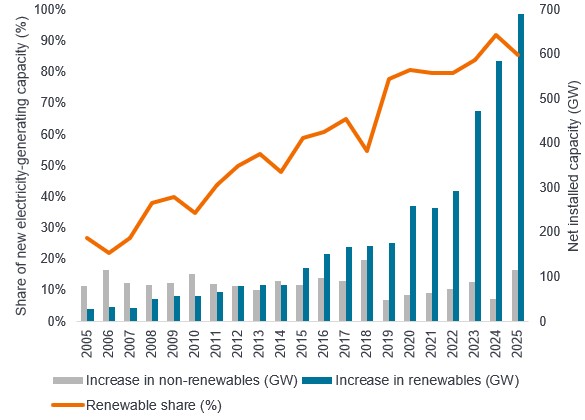
Hence in recent years, renewable power capacity expansion has continued to outpace non-renewables, reflecting a growing opportunity in energy security, resilience and efficiency.
Figure 1: Renewable share of annual power capacity expansion
Source: IRENA, Renewable capacity highlights; 31 March 2026.
3. Decarbonisation as a competitive advantage
There is a clear business case for designing products and services facilitating decarbonisation. PwC research shows that products featuring sustainability attributes can achieve a revenue uplift of 6% to 25%+ over products without such attributes.2 Such companies are benefiting from stronger product differentiation, premium pricing, and additional revenue streams, opening up new avenues for growth.
Decarbonisation progress is being advanced by innovation and market demand for products that have lower environmental impact through their lifecycles by being more sustainable, using less energy, utilising fewer natural resources and creating less waste.
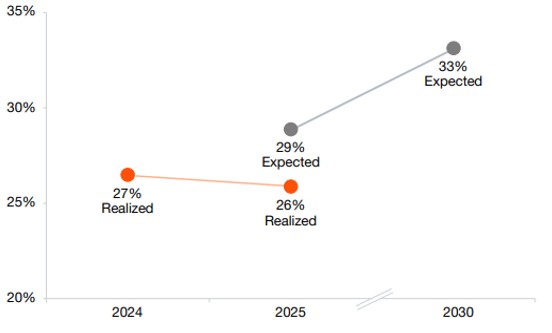
While progress in revenue growth aligned with climate transition lagged between 2024 and 2025, companies are still anticipating strong growth into 2030, reflecting their confidence in future growth opportunities.
Figure 2: Realised and expected revenue aligned with the climate transition (2024–2030)
% revenue aligned with climate transition
Source: PwC’s Third Annual State of Decarbonization Report; PwC analysis, CDP (2024, 2025, including projections to 2030).
Three diverse companies that are enabling the energy transition and offering sustainability solutions
Nextpower – optimising solar energy yields and potential growth from complementary platform technologies
Nextpower makes solar infrastructure cheaper, faster and more reliable at scale. The company supplies solar-tracking systems that rotate panels to follow the sun, where a tracked panel can generate up to 25% more energy than a fixed one.3 On a solar farm spanning thousands of acres, this has the potential to significantly increase energy yield. Additionally, expansion into foundations, electrical systems, inverters, battery storage and software is creating a broader integrated platform. The recent acquisition of Prevalon Energy transitions Nextpower from a solar-tracking specialist into a provider of integrated clean energy infrastructure capable of serving rapidly expanding, energy-intensive AI data centres and hyperscalers. The launch of its AI and robotics business has seen acquisitions in autonomous drone inspection, robotic panel cleaning and 3D site mapping brought into the platform. Execution on acquisitions, project timing, policy changes and customer concentration remain important risks.
Novonesis – leveraging microbiology and science for healthier lives and a healthier planet
Novonesis is the global leader in industrial enzymes and microbial solutions, with almost 50% market share.4 Its products aim to reduce energy usage, emissions, pollution and waste, helping customers improve yields and performance across a broad range of areas such as food and beverages (eg. food that stays fresher for longer), household care (cleaner, softer laundry), bioenergy, agriculture and feed (healthier soil and better animal welfare), pharmaceuticals, human health (improving mental and physical health from birth to old age). With its headquarters in Denmark, the company operates 30 R&D (research and development) and application centres across more than 20 manufacturing locations.
The company’s growth is not being driven by a single cycle or end market. Growth stems from multiple structural themes, such as higher protein and probiotic food consumption; biofuel adoption driven by national energy security objectives; household care penetration of biological solutions; animal nutrition efficiency gains; and also, continuous innovation and customer co-development. The ability to help customers increase productivity (more protein from milk, more ethanol from corn, better animal feed conversion, etc.) makes Novonesis’ solutions relevant throughout economic cycles.
Novonesis has benefited from strong competitive positioning based on customer intimacy, technical support, co-development and manufacturing scale, rather than price (its products are typically 20-30% more expensive than competitors). With a heavy capital expenditure (capex) commitment (circa 12-14% of sales to capex in FY26-FY27), investors will be looking for evidence that today’s investment intensity can translate into higher future earnings and free cash flow.5
5N Plus – enabling the energy transition through critical materials for solar power, satellites, and data centres
Toronto-listed 5N Plus is a leading global producer of specialty semiconductors and performance materials, with R&D facilities in Canada, the US and Germany, which we have visited. The two main businesses are Specialty Semiconductors (terrestrial renewable energy, space solar power and imaging and sensing) and Performance Materials (health and pharmaceutical, and technical materials).
5N Plus supplies high purity specialty semiconductors materials like cadmium telluride or cadmium selenide to First Solar, the leading photovoltaic (PV) solar technology and manufacturing company in the US, to manufacture thin-film PV solar modules integrated to its semiconductor stack.
As utility-scale solar demand grows, with solar plus battery storage one of the cheaper and faster to deploy technologies for adding electricity generation to the grid, 5N Plus has been growing its backlog (confirmed orders yet to be fulfilled) and production capacity into a higher commodity price environment. In space solar power, where it supplies high-end materials used to make solar panels for satellites, management described the market as having few competitors, all of whom are at capacity, with further expansion plans for 5N Plus triggered by confirmed contracts. Additionally, there is also the potential from an emerging gallium business – gallium nitride looks set to become a core technology in future AI power architectures because it can deliver substantially higher power density than conventional silicon solutions.
Conclusion
The energy transition will not progress in a straight line, or depend on climate commitments alone. The US government has rolled back many of its environmental commitments, and climate seems to have fallen far down the global agenda. But there is still strong policy commitment from other regions, with corporates remaining committed to decarbonisation. We are seeing strong momentum in clean technology investment, while innovative companies that offer sustainable solutions are benefiting from this competitive edge.
In our view, a high-conviction global equities portfolio can provide more diversified equity exposure by combining multiple earnings drivers aligned with structural themes reshaping the global economy, such as Net Zero 2.0. When paired with risk-managed portfolio construction, this approach has the potential to deliver better risk-adjusted returns for investors.
IMPORTANT INFORMATION
There is no guarantee that past trends will continue, or forecasts will be realised.
References made to individual securities do not constitute a recommendation to buy, sell or hold any security, investment strategy or market sector, and should not be assumed to be profitable. Janus Henderson Investors, its affiliated advisor, or its employees, may have a position in the securities mentioned.
Diversification neither assures a profit nor eliminates the risk of experiencing losses.
1 PwC.com; Consumers willing to pay 9.7% sustainability premium, even as cost-of-living and inflationary concerns weigh: PwC 2024 Voice of the Consumer Survey; 15 May 2024.
2 McKinsey & Co. Global Energy Perspective 2026; 30 September 2026.
3 Global Solar Council; Solar PV Technology Updates: Empowering People with Innovative, More Efficient and Reliable Solar Systems; 12 December 2022.
4 Morningstar.com; stock profile Novonesis (Novozymes); 1 October 2026.
5 Janus Henderson Investors research; 1 October 2026.
Alpha: The difference between a portfolio’s return and its benchmark index after adjusting for the level of risk taken. This measure is used to help determine whether an actively-managed portfolio has added value relative to a benchmark index, taking into account the risk taken. A positive alpha indicates that a manager has added value.
Bottom-up: Bottom-up fund managers build portfolios by focusing on the analysis of individual securities rather than broader macroeconomic or market factors in order to identify the best opportunities in an industry, country, or region.
Climate transition: The structural shift in an economy, industry, or organisation from high-carbon operations to a low-carbon, sustainable model aligned with global climate goals.
Decarbonisation: The process of reducing the amount of carbon, mainly carbon dioxide (CO2), sent into the atmosphere, to combat global warming and climate change.
Diversification: A way of spreading risk by mixing different types of assets or asset classes in a portfolio on the assumption that these assets will behave differently in any given scenario. Assets with low correlation should provide the most diversification.
Energy transition: The shift from relying on fossil fuels to using clean, renewable energy sources like wind, solar, hydropower, and biomass. This transition is essential for reducing greenhouse gas emissions, combating climate change, building energy security into the system globally, and creating a sustainable energy system.
Net zero: A state in which greenhouse gases, such as carbon dioxide (CO2), being released into the atmosphere are balanced by their removal from the atmosphere.
Uncorrelated returns: Correlation refers to how far the price movements of two variables (e.g., equity or fund returns) move in relation to each other. A correlation of +1.0 means that both variables have a strong association in the direction they move. If they have a correlation of –1.0, they move in opposite directions. A figure near zero suggests a weak or non-existent relationship between the two variables (uncorrelated).
These are the views of the author at the time of publication and may differ from the views of other individuals/teams at Janus Henderson Investors. References made to individual securities do not constitute a recommendation to buy, sell or hold any security, investment strategy or market sector, and should not be assumed to be profitable. Janus Henderson Investors, its affiliated advisor, or its employees, may have a position in the securities mentioned.
Past performance does not predict future returns. The value of an investment and the income from it can fall as well as rise and you may not get back the amount originally invested.
The information in this article does not qualify as an investment recommendation.
There is no guarantee that past trends will continue, or forecasts will be realised.
Marketing Communication.
Important information
Please read the following important information regarding funds related to this article.
- Shares can lose value rapidly, and typically involve higher risks than bonds or money market instruments. The value of your investment may fall as a result.
- Shares of small and mid-size companies can be more volatile than shares of larger companies, and at times it may be difficult to value or to sell shares at desired times and prices, increasing the risk of losses.
- Derivatives may be used with the aim of reducing risk or managing the portfolio more efficiently. However, this introduces other risks, in particular, that a derivative counterparty may not meet its contractual obligations.
- If the Fund holds assets in currencies other than the base currency of the Fund, or you invest in a share/unit class of a different currency to the Fund (unless hedged, i.e. seeks to mitigate exchange rate movements between the share/unit class currency and the base currency of the Fund), the value of your investment may be impacted by changes in exchange rates.
- When the Fund, or a share/unit class, seeks to mitigate exchange rate movements of a currency relative to the base currency (hedge), the hedging strategy itself may positively or negatively impact the value of the Fund due to differences in short-term interest rates between the currencies.
- Securities could become hard to value or to sell at a desired time and price, especially in extreme market conditions when asset prices may be falling, increasing the risk of investment losses.
- Losses could be incurred if a counterparty became unwilling or unable to meet its obligations, or as a result of failure or delay in operational processes or the failure of a third party provider.
- This fund is designed to be used only as one component of several in a diversified investment portfolio. Investors should consider carefully the proportion of their portfolio invested into this fund.
Specific risks
- Shares can lose value rapidly, and typically involve higher risks than bonds or money market instruments. The value of your investment may fall as a result.
- Shares of small and mid-size companies can be more volatile than shares of larger companies, and at times it may be difficult to value or to sell shares at desired times and prices, increasing the risk of losses.
- Derivatives may be used with the aim of reducing risk or managing the portfolio more efficiently. However, this introduces other risks, in particular, that a derivative counterparty may not meet its contractual obligations.
- If the Fund holds assets in currencies other than the base currency of the Fund, or you invest in a share/unit class of a different currency to the Fund (unless hedged, i.e. seeks to mitigate exchange rate movements between the share/unit class currency and the base currency of the Fund), the value of your investment may be impacted by changes in exchange rates.
- When the Fund, or a share/unit class, seeks to mitigate exchange rate movements of a currency relative to the base currency (hedge), the hedging strategy itself may positively or negatively impact the value of the Fund due to differences in short-term interest rates between the currencies.
- Securities could become hard to value or to sell at a desired time and price, especially in extreme market conditions when asset prices may be falling, increasing the risk of investment losses.
- Losses could be incurred if a counterparty became unwilling or unable to meet its obligations, or as a result of failure or delay in operational processes or the failure of a third party provider.
- This fund is designed to be used only as one component of several in a diversified investment portfolio. Investors should consider carefully the proportion of their portfolio invested into this fund.
Specific risks
- Shares can lose value rapidly, and typically involve higher risks than bonds or money market instruments. The value of your investment may fall as a result.
- Shares of small and mid-size companies can be more volatile than shares of larger companies, and at times it may be difficult to value or to sell shares at desired times and prices, increasing the risk of losses.
- The Fund is focused towards particular industries or investment themes and may be heavily impacted by factors such as changes in government regulation, increased price competition, technological advancements and other adverse events.
- The Fund follows a responsible investment approach, which may cause it to be underweight in certain sectors (due to the avoidance criteria employed) and thus perform differently than funds that have a similar financial objective but which do not apply any avoidance criteria when selecting investments.
- Derivatives may be used with the aim of reducing risk or managing the portfolio more efficiently. However, this introduces other risks, in particular, that a derivative counterparty may not meet its contractual obligations.
- If the Fund holds assets in currencies other than the base currency of the Fund, or you invest in a share/unit class of a different currency to the Fund (unless hedged, i.e. seeks to mitigate exchange rate movements between the share/unit class currency and the base currency of the Fund), the value of your investment may be impacted by changes in exchange rates.
- When the Fund, or a share/unit class, seeks to mitigate exchange rate movements of a currency relative to the base currency (hedge), the hedging strategy itself may positively or negatively impact the value of the Fund due to differences in short-term interest rates between the currencies.
- Securities could become hard to value or to sell at a desired time and price, especially in extreme market conditions when asset prices may be falling, increasing the risk of investment losses.
- The Fund may incur a higher level of transaction costs as a result of investing in less actively traded or less developed markets compared to a fund that invests in more active/developed markets.
- Losses could be incurred if a counterparty became unwilling or unable to meet its obligations, or as a result of failure or delay in operational processes or the failure of a third party provider.