
Key takeaways:
- The U.S. Federal Reserve (Fed)’s hawkish pivot and a less certain global inflation path keep rate volatility elevated. In this environment, floating-rate assets, including loans and collateralized loan obligations (CLOs), and shorter-duration assets allow investors to earn carry with less exposure to rate volatility.
- At a broad level, we lean toward EUR-denominated assets over USD-denominated assets based on relative value. We continue to believe many securitized sectors offer attractive income per unit of risk and are supported by structural appetite.
- Robust economic growth, strong earnings and resilient consumers continue to support corporate credit fundamentals. Recent spread widening and lower bond prices have improved valuations, creating more opportunities within corporate credit.
Rates support floating rate assets, but corporate valuations are improving
The ongoing U.S.-Iran conflict led to elevated oil prices and with little sign of resolution in sight, markets grew concerned about second round effects on inflation. Against this backdrop, and with the global economy resilient, central banks pursued rate hikes, with the U.S. Federal Reserve raising rates in September. Markets priced in further hikes over the next 12 months, a remarkable shift from just a few months earlier.
This environment of elevated rate volatility reinforces our preference for selective securitized and floating rate assets, including loans and collateralized loan obligations. The combination of coupons resetting higher, lower duration risk and supportive industry flows enhances their appeal.
The picture, however, is evolving. Yields across fixed income assets are at or approaching the highs of the past decade, potentially reawakening interest among income-driven investors. At a spread level, valuations in corporate credit no longer look so stretched after recent spread widening. Corporate fundamentals remain strong, with earnings surprising positively and purchasing manager indices painting a robust outlook. Given the recent cheapening of corporate credit, together with a large element of the 2026 issuance already achieved, valuations and technicals are becoming more favorable. So while we continue to prefer securitized asset and loans, we are growing more constructive on corporates.
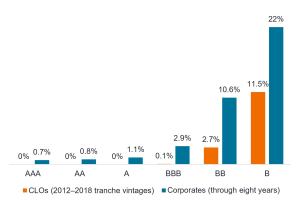
In our quarterly “Perspectives” document we share our views on the fixed income market and our quarterly asset allocation rankings. We highlight a timely chart to watch, explore relative value opportunities, and provide insight on our latest asset allocation scores by fixed income sub-sector.
IMPORTANT INFORMATION
Fixed income securities are subject to interest rate, inflation, credit and default risk. As interest rates rise, bond prices usually fall, and vice versa. High-yield bonds, or “junk” bonds, involve a greater risk of default and price volatility and can experience sudden and sharp price swings. Foreign securities, including sovereign debt, are subject to currency fluctuations, political and economic uncertainty and increased volatility and lower liquidity, all of which are magnified in emerging markets.
Securitized products, such as mortgage- and asset-backed securities, are more sensitive to interest rate changes, have extension and prepayment risk, and are subject to more credit, valuation and liquidity risk than other fixed-income securities.
Diversification neither assures a profit nor eliminates the risk of experiencing investment losses.
Related insights


These are the views of the author at the time of publication and may differ from the views of other individuals/teams at Janus Henderson Investors. References made to individual securities do not constitute a recommendation to buy, sell or hold any security, investment strategy or market sector, and should not be assumed to be profitable. Janus Henderson Investors, its affiliated advisor, or its employees, may have a position in the securities mentioned.
Past performance does not predict future returns. The value of an investment and the income from it can fall as well as rise and you may not get back the amount originally invested.
The information in this article does not qualify as an investment recommendation.
There is no guarantee that past trends will continue, or forecasts will be realised.
Marketing Communication.
Important information
Please read the following important information regarding funds related to this article.
Janus Henderson Capital Funds Plc is a UCITS established under Irish law, with segregated liability between funds. Investors are warned that they should only make their investments based on the most recent Prospectus which contains information about fees, expenses and risks, which is available from all distributors and paying/facilities agents, it should be read carefully. This is a marketing communication. Please refer to the prospectus of the UCITS and to the KIID before making any final investment decisions. The rate of return may vary and the principal value of an investment will fluctuate due to market and foreign exchange movements. Shares, if redeemed, may be worth more or less than their original cost. This is not a solicitation for the sale of shares and nothing herein is intended to amount to investment advice. Janus Henderson Investors Europe S.A. may decide to terminate the marketing arrangements of this Collective Investment Scheme in accordance with the appropriate regulation.
- An issuer of a bond (or money market instrument) may become unable or unwilling to pay interest or repay capital. If this happens or the market perceives this may happen, the value of the bond will fall.
- When interest rates rise (or fall), the prices of different securities will be affected differently. In particular, bond values generally fall when interest rates rise (or are expected to rise). This risk is typically greater the longer the maturity of a bond investment.
- While high yield (non-investment grade) bonds generally offer higher rates of interest than investment grade bonds, they are more speculative and more sensitive to adverse changes in market conditions.
- Asset-Backed Securities (ABS) and other forms of securitised investments may be subject to greater credit / default, liquidity, interest rate and prepayment and extension risks, compared to other investments such as government or corporate issued bonds and this may negatively impact the realised return on investment in the securities.
- Some bonds (callable bonds) allow their issuers the right to repay capital early or to extend the maturity. Issuers may exercise these rights when favourable to them and as a result the value of the Fund may be impacted.
- High exposure to a particular country or geographical region carries a higher level of risk than a more broadly diversified portfolio.
- Derivatives may be used to help achieve the investment objective. This can result in leverage (higher levels of debt), which can magnify an investment outcome. Gains or losses may therefore be greater than the cost of the derivative. Derivatives also introduce other risks, in particular, that a derivative counterparty may not meet its contractual obligations.
- When the Fund, or a share/unit class, seeks to mitigate exchange rate movements of a currency relative to the base currency (hedge), the hedging strategy itself may positively or negatively impact the value of the Fund due to differences in short-term interest rates between the currencies.
- Securities could become hard to value or to sell at a desired time and price, especially in extreme market conditions when asset prices may be falling, increasing the risk of investment losses.
- The Fund may incur a higher level of transaction costs as a result of investing in less actively traded or less developed markets compared to a fund that invests in more active/developed markets.
- Some or all of the ongoing charges and other costs of the Fund may be taken from capital, which may erode capital or reduce potential for capital growth.
- In addition to income, this share class may distribute realised and unrealised capital gains and original capital invested. Fees, charges and expenses are also deducted from capital. Both factors may result in capital erosion and reduced potential for capital growth. Investors should also note that distributions of this nature may be treated (and taxable) as income depending on local tax legislation.
- Losses could be incurred if a counterparty became unwilling or unable to meet its obligations, or as a result of failure or delay in operational processes or the failure of a third party provider.