Please ensure Javascript is enabled for purposes of website accessibility Inside Henderson Far East Income: balancing income and growth in Asian markets | Janus Henderson Investment Trusts | UK Investment Trusts

HFEL

Henderson Far East Income Limited

Inside Henderson Far East Income: balancing income and growth in Asian markets

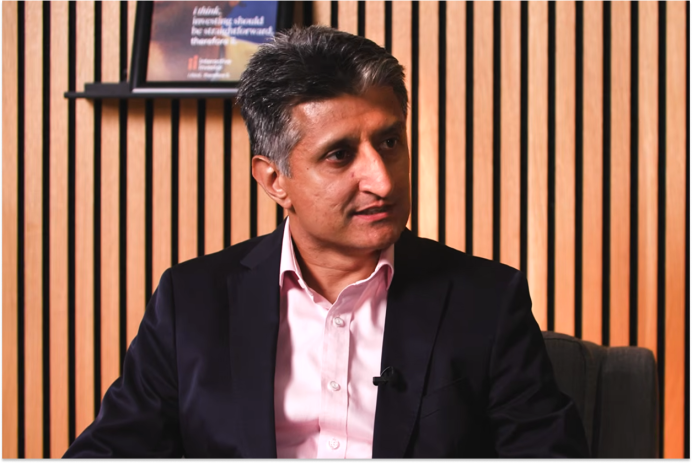
In the second part of a recent interview with interactive investor, Sat Duhra discusses how he is positioning the portfolio to capture long-term growth opportunities while maintaining a focus on income. He shares his views on investment opportunities across Asia, portfolio positioning, and some of the structural trends shaping the region's future.

Watch the video here.

For more on the long-term themes shaping the portfolio, read From growth to income – the structural forces reshaping Asian markets.

If you missed the first part of the interview, you can watch it here.

Portfolio

A grouping of financial assets such as equities, bonds, commodities, properties, or cash. Also often called a ‘fund’.

Important information

Henderson Far East Income Limited (the ‘Company’), is a Jersey domiciled closed-ended investment company (a ‘Fund’), with registered offices at IFC1, The Esplanade, St Helier, Jersey, JE1 4BP. The fund is regulated by the Jersey Financial Services Commission.

Use of third party names, marks or logos is purely for illustrative purposes and does not imply any association between any third party and Janus Henderson Investors, nor any endorsement or recommendation by or of any third party. Unless stated otherwise, trademarks are the exclusive property of their respective owners.

These are the views of the author at the time of publication and may differ from the views of other individuals/teams at Janus Henderson Investors. References made to individual securities do not constitute a recommendation to buy, sell or hold any security, investment strategy or market sector, and should not be assumed to be profitable. Janus Henderson Investors, its affiliated advisor, or its employees, may have a position in the securities mentioned.


Before investing in an investment trust referred to in this article, you should satisfy yourself as to its suitability and the risks involved, you may wish to consult a financial adviser. Please refer to the AIFMD Disclosure document and Annual Report of the AIF before making any final investment decisions. Tax assumptions and reliefs depend upon an investor’s particular circumstances and may change if those circumstances or the law change.


Past performance does not predict future returns. The value of an investment and the income from it can fall as well as rise and you may not get back the amount originally invested.


The information in this article does not qualify as an investment recommendation.


There is no guarantee that past trends will continue, or forecasts will be realised.


Marketing Communication.


Glossary


Important information

Please read the following important information regarding funds related to this article.

Before investing in an investment trust referred to in this document, you should satisfy yourself as to its suitability and the risks involved, you may wish to consult a financial adviser. This is a marketing communication. Please refer to the AIFMD Disclosure document and Annual Report of the AIF before making any final investment decisions. Henderson Far East Income Limited is a Jersey fund, registered at Liberté, 19-23 La Motte Street, St Helier, Jersey JE2 4SY and is regulated by the Jersey Financial Services Commission] Ref: 34V
    Specific risks
  • The portfolio has significant exposure to Emerging Markets, which tend to be less stable than more established markets. These markets can be affected by local political and economic conditions as well as variations in the reliability of trading systems, buying and selling practices, and financial reporting standards.
  • Losses could be incurred if a counterparty became unwilling or unable to meet its obligations, or as a result of failure or delay in operational processes or the failure of a third party provider.
  • Some of the administrative expenses are taken from capital. This allows more income to be paid but it may also restrict capital growth or even reduce the capital over time.
  • If a Company's portfolio is concentrated towards a particular country or geographical region, the investment carries greater risk (as well as the potential for greater reward) than a portfolio that is diversified across more countries.
  • The Company may use options for efficient portfolio management and to increase income. Options can be volatile and may sometimes result in loss of capital.
  • This investment should be held as part of a broader diversified portfolio. Balancing it with investments that have different risk profiles can help reduce the impact of any single investment underperforming.
  • The Company may borrow to invest, which could magnify gains or losses.
  • As the Company may borrow to invest, changes in interest rates could increase or decrease the cost of any borrowings.
  • The Company invests in the shares of other companies. These shares may become hard to value or to sell at a desired time and price, especially in extreme market conditions when asset prices may be falling, increasing the risk of investment losses.
  • Your return on investment is directly related to the market price of the Company's shares, which may be higher (trading at a premium) or lower (trading at a discount) than the value of its underlying net asset value assets. This means your returns may differ from the performance of those assets.
  • While active management techniques are typically positive for performance, this approach may also result in periods of underperformance relative to the benchmark and comparable passive and index-tracking funds, particularly during unexpected market shifts.
  • Shares can gain and lose value rapidly, and typically involve higher risks than bonds or money market instruments. The value of your investment may rise and fall in line with the underlying equity markets.
  • If the companies in which the portfolio is invested persistently reduce their dividend payments, the Company will find it more difficult to maintain or grow its own dividend payments each year.
  • The portfolio invests in currencies other than sterling, meaning fluctuations in exchange rates could affect returns.
  • The Company maintains a portfolio with a bias towards income-generating companies. This may result in the Company significantly underperforming or outperforming the wider market.