
Key takeaways:
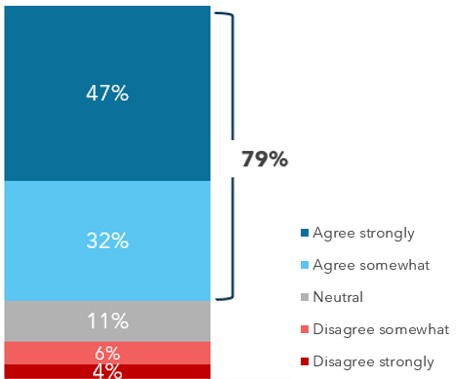
- Nearly 80% of respondents to our latest Investor Survey would be upset to hear their advisor was using AI without disclosing it. Yet very few advisors are having conversations with clients about whether/how they are using AI.
- These trends present an opportunity for advisors to lead with transparency around AI use at the practice level, starting with a formal inventory of the tools they are using and their specific use cases.
- As advisors integrate AI into their practices and communicate how they are using it to clients, the focus should be on positioning AI as an augmentation – not a replacement – of human expertise.
Recently I was talking with an advisor about using artificial intelligence (AI) in his practice. We were covering tactical things like agents, prompts, use cases, etc. But then at a certain point in the conversation, I asked a question that seemed to throw this individual for a loop.
I asked: “How do clients feel about you using AI in your practice?”
The advisor stopped and said, “Oh. I hadn’t thought about that!”
Honestly, it’s not the first time an advisor has said this during a conversation about AI usage. Because while many of us in the industry are reading about, talking about, and starting to experiment with AI, there has been precious little discussion around how our clients – that is, the core of our business – are feeling about it.
But it is, of course, an important question. And that’s why we sought to explore it in detail in our latest Investor Survey.
Janus Henderson’s 2026 Investor Survey: Perspectives on AI
Among the many questions we asked our survey participants about AI, the one I’d like to delve into here is this:
“To what extent do you agree with each of the following statements about your advisor and AI?”
I would be upset if my advisor used AI without disclosing it.
Source: Janus Henderson Investor Survey, 2026.
The idea that nearly 80% would be upset to hear their advisor was using AI without disclosing it should give all of us pause.
The logical follow-up question is, Have advisors talked to their clients about using AI in their practices?
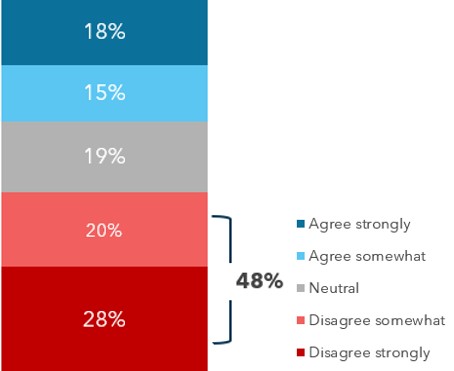
My FA has discussed how they use AI in their practice.
Source: Janus Henderson Investor Survey, 2026.
As you can see, nearly 50% of clients strongly or somewhat disagree with this statement, meaning the conversation has not occurred. This dynamic – clients demanding disclosure and transparency around AI while most advisors fail to even broach the subject – could create significant issues within the advisor/client relationship.
Clearly, there is a significant opportunity for advisors to have these important conversations with clients. And the main question advisors need to be able to answer is, “How I am using AI in my advisory practice?”
I think the answer to this question starts with a formal review of AI usage at the practice level. Advisors should be able to:
1. Provide a list of AI tools currently in use and their specific applications.
2. Define permitted AI tools and their potential use cases.
3. Develop and implement written AI policies and procedures, including approved tools, data entry rules, recordkeeping, and security standards.
From this formal review, advisors can then begin to work on the more informal, yet equally important, talking points they can use to address questions around AI use that come up during client conversations.
As advisors develop these talking points, it is critical to be able to explain to clients how your use of AI affects them: their personal information, their finances, and your ability to meet their financial goals.
How to talk to clients about using AI
Many advisors are using platforms like Copilot, Zoom, Jump.ai, Zocks, and others to transcribe meetings. This may be the first experience clients are having with AI in your practice, so simply asking, “Do you mind if we use AI to help us take notes from our meeting?” may be an important first step.
From there, you might frame your use of AI along these lines:
“We are using AI more in our practice. We have found it allows us to be more efficient and allows us to spend more time interacting with clients at a human level. This helps us better understand your goals and create financial plans to help you reach those goals.”
Asking clients if they are using AI in their personal or professional life may be another easy way to broach the subject. It’s also important to understand how comfort levels will vary from client to client and adjust your approach accordingly. With some clients, you may need to focus on practical, low-risk use cases to build trust over time.
In all cases, words matter. Notice that in the statement above, we say that AI is helping us – not replacing us as advisors – and the help it provides is allowing us to better serve our clients.
To put it simply, “High tech can mean high touch.”
The AI opportunity – and obligation – for advisors
We hear every day how AI is going to change our lives. Virtually every company is pushing employees to use AI as much as possible, both for efficiency’s sake and to see some return on the significant technological investments that have been made.
But as we are running full speed ahead with AI, we must be careful not to forget those who are along for the ride: Our clients.
The opportunity for financial advisors is clear: We need to lead with transparency around AI’s place in our practices and position AI as an augmentation – not a replacement – of human expertise.

Artificial intelligence (“AI”) focused companies, including those that develop or utilize AI technologies, may face rapid product obsolescence, intense competition, and increased regulatory scrutiny. These companies often rely heavily on intellectual property, invest significantly in research and development, and depend on maintaining and growing consumer demand. Their securities may be more volatile than those of companies offering more established technologies and may be affected by risks tied to the use of AI in business operations, including legal liability or reputational harm.